Acting credits
10
Early stage
Smaller on-screen catalog so far.

Acting
These indicators come from TMDB. They are relative signals, not review ratings.
Acting credits
10
Early stage
Smaller on-screen catalog so far.
TMDB popularity
0.4
Low visibility
TMDB internal trend index. Higher usually means more searches and page activity now.
TMDB ID: 2783234
IMDb ID: nm0843264
Known for: Acting
Born: June 20, 1934
Died: November 30, 2020
Age: 86
Place of birth: Lyon, Rhône, France
Gender: Female
Adult content flag: No
Career span: 1959 - 2020
Years active: 62
Wikidata: Q547034
Also known as
Anne-Marie Thérèse Beugras • Anne-Marie Beugras
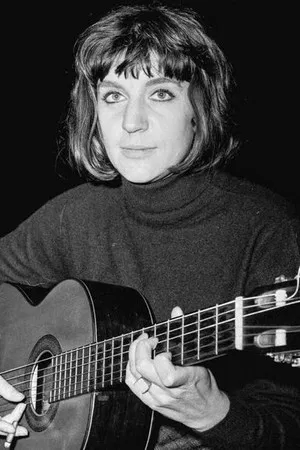
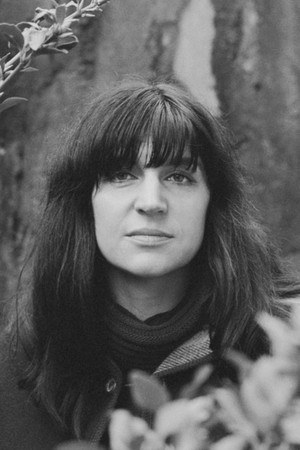
Anne Sylvestre (born Anne-Marie Beugras; 20 June 1934 – 30 November 2020) was a French singer-songwriter. Anne Sylvestre was born in Lyon on 20 June 1934. She was the daughter of Albert Beugras and the sister of writer Marie Chaix. Her father was a politician turned collaborationist during the Occupation of France. Marie Chaix wrote a book about their father's role during the Occupation, Les Lauriers du lac de Constance (1974). While studying Literature in Sorbonne University, Anne Sylvestre started singing in cabarets in the fifties and was discovered by Michel Valette. Jean-Claude Pascal recorded her song "Porteuse d'eau" (Waterbearer) under the title "La terre" (The Dirt, 1958). She started recording in 1959, and Georges Brassens wrote a preface for her second album (1962). Since 1962, she also wrote and sang for children (Fabulettes). She wrote a song for Serge Reggiani, "La Maumariée" (The Wrongly-Wed Bride, 1968). She recorded a comical duet with Boby Lapointe, "Depuis l'temps que j'l'attends mon prince charmant" (I've been waiting for my prince charming for ages, 1969). In 1973, she created her own recording company to release her albums. In 1976, along with Isabelle Aubret, she recorded album Fabulettes et Chansons d'Anne Sylvestre. In 1987, she put on a show with singer Pauline Julien from Quebec (Gémeaux croisées, Crossed Gemini, 1987-1988). With fellow singer Michèle Bernard, she put on a show aimed at children, Lala et le Cirque du vent (Lala and the Wind's Circus, 1992-1996). She also sang on scene with Agnès Bihl in the show Carré de Dames (Four of Queens, 2012). Her songs encompass a large range of subjects. Her love songs are often in a nostalgic mode ("Le Pêcheur de perles", The Pearl Fisher, 1967; "La Chambre d'or", Golden Room, 1969). Some of her songs could not be broadcast because of their strong engagement, and others contain profanity, for instance "Les Gens qui doutent" (Doubting People, 1977). Some songs deal with difficult subjects such as poverty ("Porteuse d'eau", Waterbearer, 1961), homelessness ("Pas difficile", Not difficult, 1986), education in a consumer society ("Abel Caïn, mon fils", Abel Cain, my son, 1971), war ("Berceuse de Bagdad", Lullaby from Baghdad, 2003). Numerous songs give a feminist take on women's life: "Non, tu n'as pas de nom" (You have no name, 1973) about abortion, "La Vache engagée" (Engaged Cow, 1975), "Une sorcière comme les autres" (A Witch like any other one, 1975) about maternity, "La Faute à Ève" (Eve's Fault, 1978) about women's rights, "Rose" (1981) about teen pregnancy, or "Juste une femme" (Only a woman, 2013) about sexism.[13] She also supported same-sex marriage ("Gay marions-nous", 2007). Source: Article "Anne Sylvestre" from Wikipedia in English, licensed under CC-BY-SA 3.0.



Movie credits linked with Anne Sylvestre.
Series credits linked with Anne Sylvestre.

as Self • 18 eps

as Self • 1 eps

as Self • 1 eps

as Self • 2 eps

as Self • 2 eps
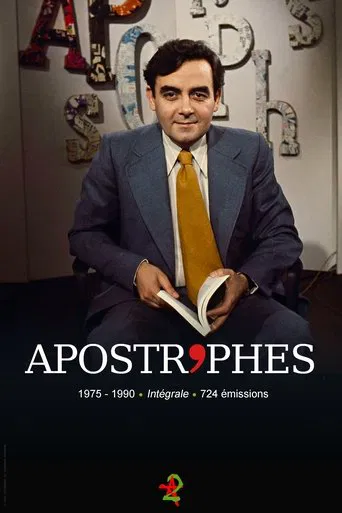
as Self • 1 eps
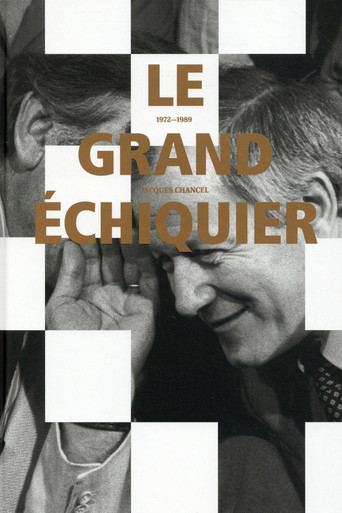
as Self • 1 eps

as Self • 2 eps

