Acting credits
2
Early stage
Smaller on-screen catalog so far.

Directing
These indicators come from TMDB. They are relative signals, not review ratings.
Acting credits
2
Early stage
Smaller on-screen catalog so far.
TMDB popularity
3.6
Moderate attention
TMDB internal trend index. Higher usually means more searches and page activity now.
TMDB ID: 589089
IMDb ID: nm0307246
Known for: Directing
Born: July 2, 1930
Died: December 30, 2019
Age: 89
Place of birth: Mukachevo, Zakarpatskaya oblast, USSR [now Ukraine]
Gender: Male
Adult content flag: No
Career span: 1957 - 2023
Years active: 67
Average TMDB rating: 6.3
Wikidata: Q828580
Other jobs
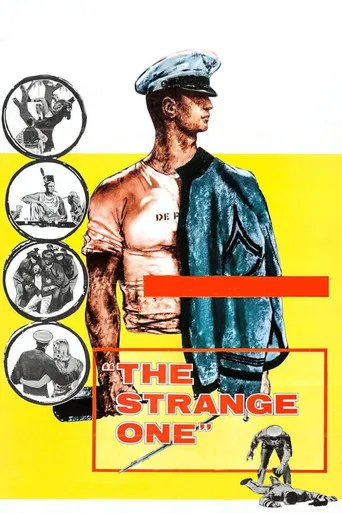
Jakob Garfein[1] (July 2, 1930 – December 30, 2019) was an American film and theatre director, acting teacher, and a key figure of the Actors Studio. Growing up in Bardejov, Czechoslovakia during the rise of Nazism,[2] Garfein was deported to Auschwitz at the age of 13 and survived 11 concentration camps. In 1946, as an orphaned teen, he was among an early group of Holocaust[3] survivors to arrive in the U.S, and he obtained his American citizenship in 1952. After studying at the Dramatic Workshop[4] in New York, Garfein became the first theater director to be awarded membership in the Actors Studio. He put on its first-ever play to move to Broadway, End as a Man (1953), and expanded the influence of Method Acting to Hollywood with the founding of Actors Studio West, alongside Paul Newman, in 1966. He was a teacher to actors Sissy Spacek, Ron Perlman, Irène Jacob, James Thierrée, Laetitia Casta, and Samuel Le Bihan. He directed Uta Hagen, Herbert Berghof, Shelley Winters, Jessica Tandy, Hume Cronyn, Ralph Meeker, Mark Richman, Mildred Dunnock, and Elaine Stritch, and discovered Steve McQueen, Bruce Dern, George Peppard, Ben Gazzara, Pat Hingle, Albert Salmi, and Paul Richards. He also gave James Dean his first acting role in End as a Man (1953). Working in Hollywood, Garfein collaborated with directors Elia Kazan and George Stevens[5] on the sets of Baby Doll (1956) and Giant (1956). Shortly after, he authored two both politically and artistically challenging films that did not spare Hollywood's conservatism and led to censorship. In The Strange One (1957), he tackled the question of racism in America. As a Jew who survived the Holocaust, he was shocked by segregation upon his arrival in the United States, and he fought for the right for African-American actors to be featured in the film. The Strange One was censored by the Motion Picture Production Code for general "homosexual overtones" and "excessive brutality and suggestive sequences [that] tend to arouse disrespect for lawful authority."
Movie credits linked with Jack Garfein.