Acting credits
12
Active
Consistent number of acting credits.

Directing
These indicators come from TMDB. They are relative signals, not review ratings.
Acting credits
12
Active
Consistent number of acting credits.
TMDB popularity
1.0
Low visibility
TMDB internal trend index. Higher usually means more searches and page activity now.
TMDB ID: 90694
IMDb ID: nm0690597
Known for: Directing
Born: November 19, 1919
Died: October 12, 2006
Age: 86
Place of birth: Pisa, Italy
Gender: Male
Adult content flag: No
Career span: 1946 - 2018
Years active: 73
Average TMDB rating: 6.61
Wikidata: Q53031
Also known as
질로 폰테코르보 • جيلو بونتيكورفو
Other jobs
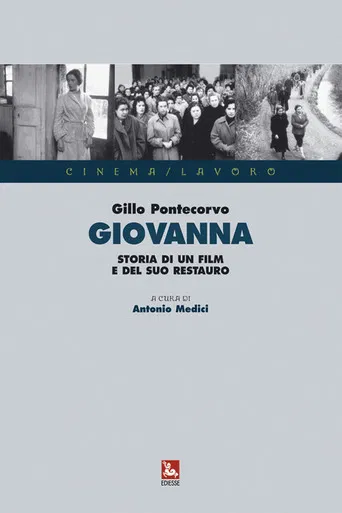
Gillo Pontecorvo, born November 19, 1919 in Pisa and died October 12, 2006 in Rome, is an Italian filmmaker. Of Italian Jewish origin, Gillou Pontecorvo is the brother of Bruno Pontecorvo, a nuclear physicist working for the USSR, and Guido Pontecorvo, an Italian-British geneticist, as well as the grandson of the Jewish industrialist Pellegrino Pontecorvo. He has three sons: Marco (cinematographer and director), Simone (painter) and Ludovico (physicist). A chemist by training, he quickly turned to journalism and became correspondent in Paris for several Italian publications. In 1941, he joined the Italian Communist Party (PCI), and participated in anti-fascist activities in northern Italy. After the Soviet repression of the Budapest uprising in 1956, he broke with the PCI, while continuing to claim Marxism. He started in cinema after the Second World War as assistant to Yves Allégret1 and Mario Monicelli in particular. From 1953, he produced his first documentary essays (Giovanna, MM, 1956). In 1956, he contributed to an episode of Die Windrose, supervised by Alberto Cavalcanti. The following year, he directed his first feature film, A Called Squarcio (La grande strada azzurra, produced by Maleno Malenotti, based on a novel by Franco Solinas). Then he describes the concentration camp world in the film Kapò (1960), the story of a Jewish woman who becomes an auxiliary of the Nazis. The film was nominated for an Oscar for best foreign language film in 1961. It gave rise to a famous controversy over the "Kapò tracking shot", which Jacques Rivette had deemed unworthy in an article in Cahiers du cinéma entitled "De l' abjection.” In 1966, he directed his most important film, The Battle of Algiers (La Battaglia di Algeri), a reconstruction of the police action of the French army during the Battle of Algiers which was a fundamental episode of the war. from Algeria. This film was awarded the Golden Lion at the Venice Festival, but remained banned in France for a long time and its exploitation caused a lot of uproar linked to the scenes of torture committed by the French army. In Queimada (1969), dominated by the interpretation of Marlon Brando, he once again attacks colonialism, with an evocation of the Haitian revolution at the beginning of the 19th century. Faced with the commercial failure of Queimada, Pontecorvo stopped making films. He still directed a secondary film, Operation Ogre (Ogro, 1979), on the assassination of Luis Carrero Blanco by ETA during Francoism, and collaborated on the film L'addio a Enrico Berlinguer (1984). In 1992, he was appointed director of the Venice Film Festival. In 1993, during the 50th edition of the Mostra, Pontecorvo presented Steven Spielberg with an honorary Golden Lion, at the time of the release of Schindler's List. He died on October 12, 2006, at the age of 86, in Rome, Italy.


Movie credits linked with Gillo Pontecorvo.
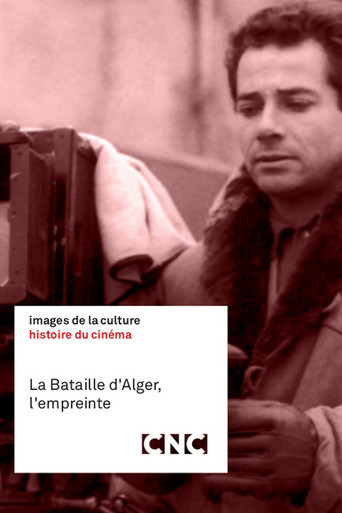
as Self (archive footage)
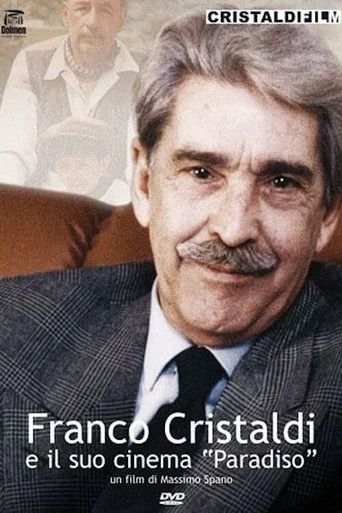
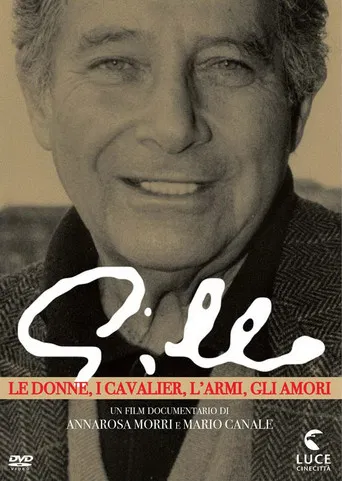
as Self

as Self
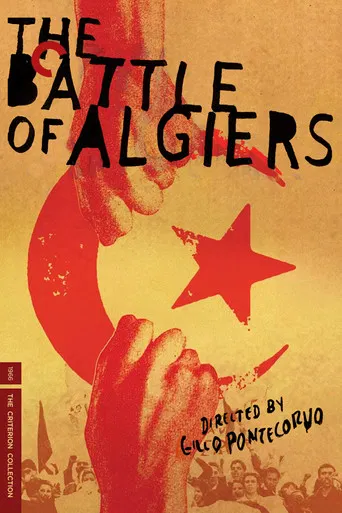
as Self

as Self
as Talk show guest
as Himself
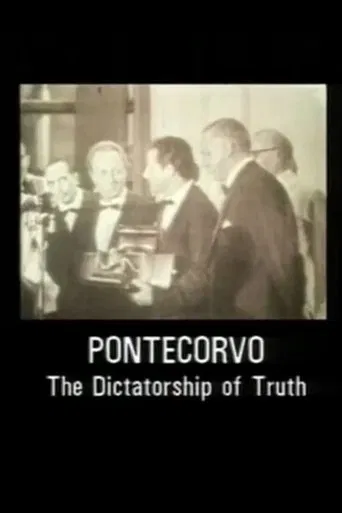
as Self
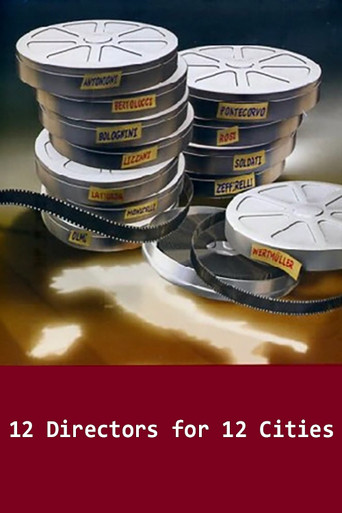
Director
as Self

Director
Director
Director

Writer

Director
as (uncredited)

Director

First Assistant Director
Writer

Assistant Director
First Assistant Director

Assistant Director
as Pietro