Directed credits
4
Emerging
Beginning to build directing work.

Directing
These indicators come from TMDB. They are relative signals, not review ratings.
Directed credits
4
Emerging
Beginning to build directing work.
TMDB popularity
0.5
Low visibility
TMDB internal trend index. Higher usually means more searches and page activity now.
TMDB ID: 142865
IMDb ID: nm0897118
Known for: Directing
Born: April 26, 1905
Died: October 5, 1934
Age: 29
Place of birth: Paris, France
Gender: Male
Adult content flag: No
Career span: 1930 - 2015
Years active: 86
Average TMDB rating: 6.87
Wikidata: Q55395
Also known as
장 비고
Frequent jobs
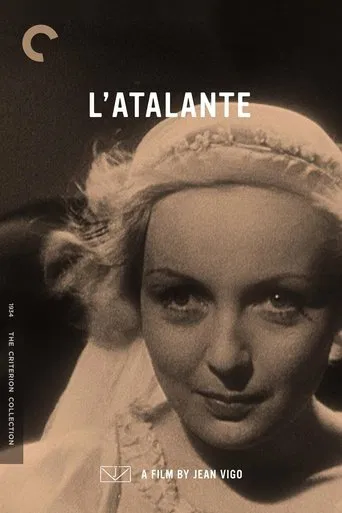
Jean Vigo was a French film director who helped establish poetic realism in film in the 1930s; he was a posthumous influence on the French New Wave of the late 1950s and early 1960s. Vigo was born to Emily Clero and the prominent Catalan militant anarchist Eugeni Bonaventura de Vigo i Sallés (who adopted the name Miguel Almereyda—an anagram of "y'a la merde", which translates as "there's shit"). Much of Jean's early life was spent on the run with his parents. His father was imprisoned and murdered in Fresnes Prison on 13 August 1917. The young Vigo was subsequently sent to boarding school under an assumed name, Jean Sales, to conceal his identity. Vigo is noted for two films that affected the future development of both French and world cinema: Zero for Conduct (1933) and L'Atalante (1934). Zero for Conduct was approvingly described by critic David Thomson as "forty-four minutes of sustained, if roughly shot anarchic crescendo." L'Atalante was Vigo's only full-length feature. The simple story of a newly married couple splitting and reuniting is notable for the way it effortlessly merges rough, naturalistic filmmaking with shimmering, dreamlike sequences and effects. Thomson described the result as "not so much a masterpiece as a definition of cinema, and thus a film that stands resolutely apart from the great body of films." His career began with two other films: À propos de Nice ("about Nice," 1930), a subversive silent film inspired by Soviet newsreels which considered social inequity in the resort town of Nice; and Jean Taris, Swimming Champion (1931), a study of swimmer Jean Taris. None of his four films were financial successes; at one point, with his and his wife's health suffering, Vigo was forced to sell his camera. Vigo was married and had a daughter, Luce Vigo (a film critic) in 1931. Zero for Conduct was banned by the French government until after the war, and L'Atalante was mutilated by its distributor. By this point, Vigo was too ill to strenuously fight the matter. Both films have outlived their detractors; L'Atalante was chosen as the 10th-greatest film of all time in Sight & Sound's 1962 poll, and as the 6th-best in its 1992 poll. In the late 1980s a 1934 copy of L'Atalante was found in the British National Film and Television Archive, and became a key element in the restoration of the film to its original version. Writing on Vigo's career in The New York Times, film critic Andrew Johnston stated: "The ranks of the great film directors are short on Keatses and Shelleys, young artists cut off in their prime, leaving behind a handful of great works that suggest what might have been. But one who qualifies is Jean Vigo, the French director who died of tuberculosis at age 29 in 1934.” 2011 Parajanov-Vartanov Institute Award posthumously honored Jean Vigo for Zero for Conduct and was presented to his daughter Luce Vigo.
Movies directed by Jean Vigo.
Highest rated movies linked with Jean Vigo.
Most viewed movie titles linked with Jean Vigo.
Additional movie credits for Jean Vigo.
Movie cast credits for Jean Vigo.