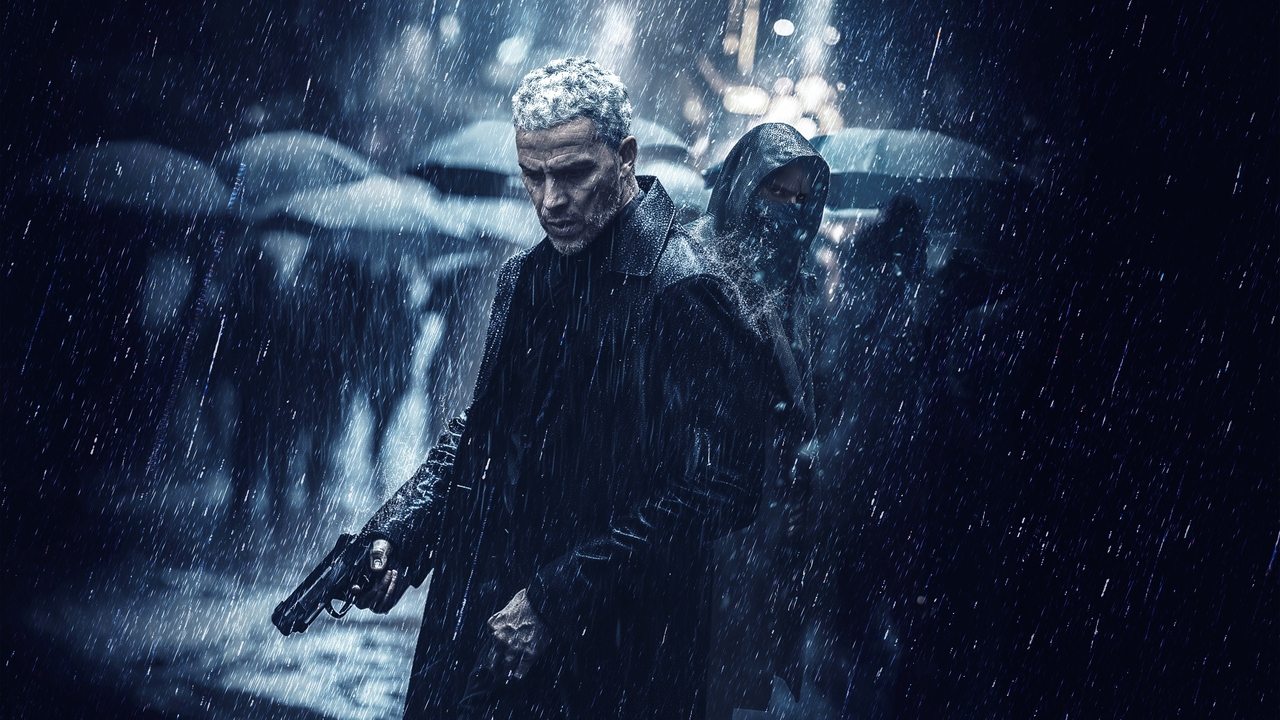
The Weight of SilenceIn the modern landscape of the thriller, where narrative often surrenders to the kinetic blur of action sequences, Juan Carlos Medina’s *Abyss* (released as *Six jours* in its native France) dares to slow the pulse. It is a film that trades the adrenaline of the chase for the suffocation of regret. Medina, a director whose previous work like *Painless* (2012) demonstrated a unique ability to weave historical trauma with genre mechanics, here turns his lens toward a more intimate, rain-slicked noir. He does not simply ask who committed the crime; he asks what remains of a soul when justice is delayed by a decade of silence.
The film’s premise—a race against time to solve a cold case before the statute of limitations expires—is a familiar trope, echoing the structural tension of its source material, the South Korean film *Montage*. However, Medina strips away the kinetic energy of Korean cinema and replaces it with a distinctly European melancholy. The setting is not just a backdrop but a character: a northern France that seems perpetually weeping, where the grey sky presses down on the characters like a physical weight. The visual language creates a suffocating sense of reality; the camera lingers on water pooling on pavement and the weary lines on inspector Malik’s face, suggesting that the past is not something that fades, but something that accumulates like floodwater.
At the center of this atmospheric pressure cooker is Sami Bouajila as Malik. Bouajila, one of France’s most formidable actors, delivers a performance of quiet devastation. He avoids the clichés of the "renegade cop"; instead, he plays Malik as a man hollowed out by failure. His obsession with the unsolved kidnapping of a young girl eleven years prior is not driven by ego, but by a desperate need for atonement. When a new kidnapping occurs that mirrors the old case, Malik isn’t energized—he is haunted. The film succeeds most when it focuses on this internal landscape, using the external investigation as a mirror for Malik’s own fractured psyche.

While the narrative mechanics occasionally creak under the strain of genre expectations—certain plot twists feel inevitable rather than earned—the film redeems itself through its emotional texture. The relationship between Malik and the grieving mother (Julie Gayet) is handled with a refreshing lack of melodrama. They are two planets orbiting the same black hole of loss, connected by a shared inability to move forward. The screenplay complicates our sympathies, blurring the line between justice and vengeance, and asking difficult questions about the utility of punishment when the damage is already absolute.
Ultimately, *Abyss* is a moody, atmospheric entry into the canon of French *polar* (crime thrillers). It may not reinvent the wheel of the procedural, but it spins it with a grim, hypnotic elegance. It serves as a reminder that in the face of tragedy, the true abyss isn't the crime itself, but the long, silent years that follow, where the survivors must learn to live with the ghosts of the unresolved.