The Armor of VulnerabilityIf *My Octopus Teacher* was a liquid dream of personal healing, Philippa Ehrlich’s latest directorial effort, *Pangolin: Kulu’s Journey*, is a dusty, desperate walk through the stark realities of the Anthropocene. Released on Netflix in 2025, the film initially threatens to be another entry in the "cute animal rescue" subgenre. However, Ehrlich quickly dispels this notion, trading the ethereal kelp forests of her Oscar-winning debut for the unforgiving heat of the South African bushveld. The result is a tactile, anxiety-inducing meditation on stewardship that asks a profound question: how do you save a creature whose primary defense mechanism—curling into a ball—is exactly what makes it so easy to destroy?
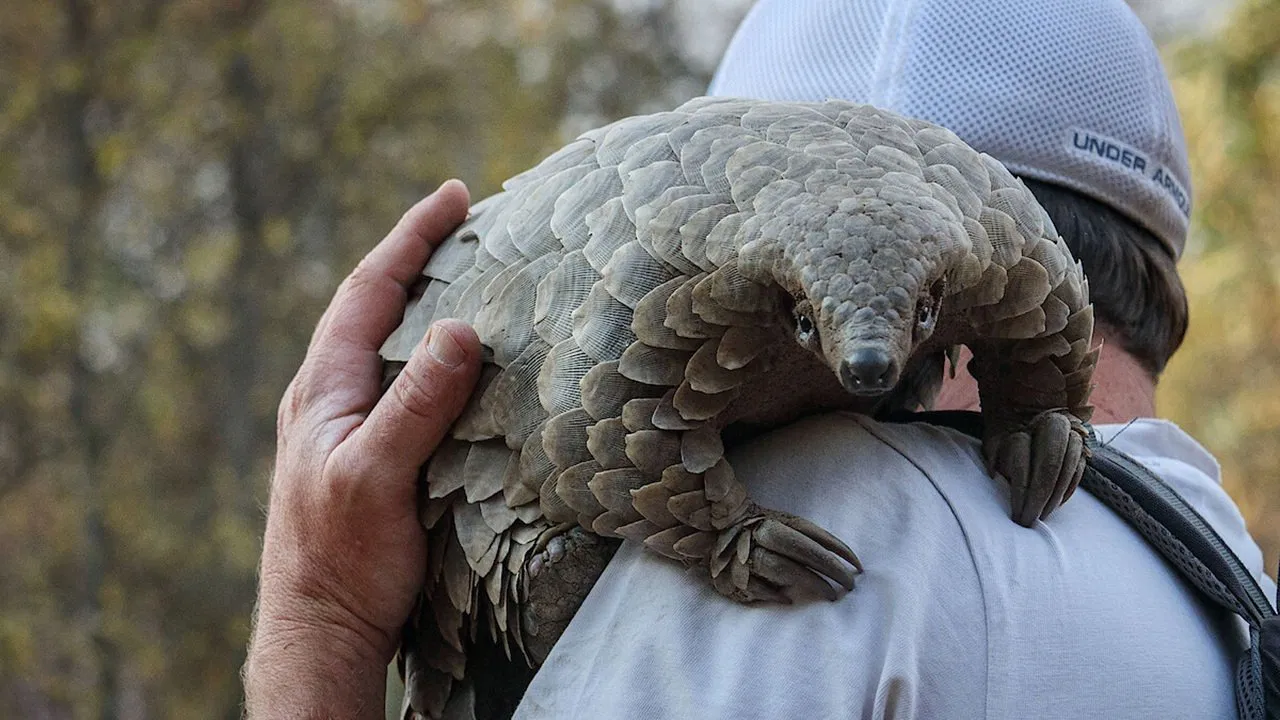
The film follows Gareth Thomas, a conservationist who becomes the surrogate mother to Kulu, a pangolin pup rescued from the illegal wildlife trade. Ehrlich’s camera treats Kulu not as a specimen, but as an alien intelligence. The visual language is low-slung and immersive, forcing the viewer down to the dirt level where ants and termites loom like skyscrapers. We are mesmerized by the pangolin’s physiology—the overlapping keratin scales that click like tumbled stones, the sticky, searching tongue, and the bipedal, T-Rex-like gait that feels prehistoric.
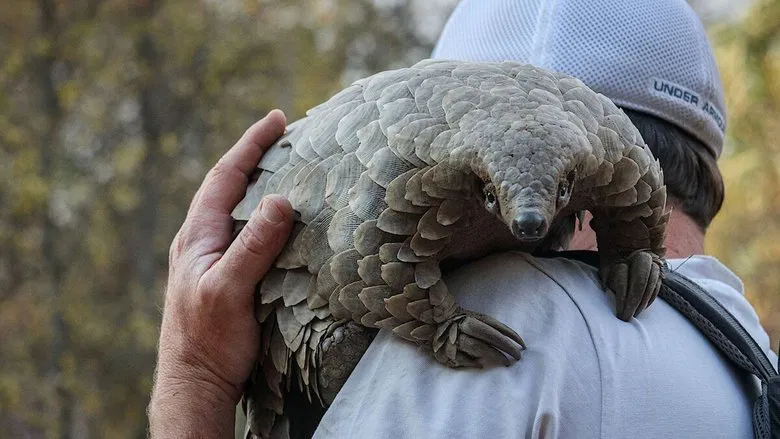
Unlike the fluid curiosity of the octopus in Ehrlich’s previous work, Kulu is defined by trauma. The narrative tension does not come from a traditional three-act structure, but from the agonizing slowness of trust. The film eschews the broad strokes of "franchise conservation" documentaries that bombard the viewer with statistics about the pangolin being the world's most trafficked mammal. Instead, it relies on the specific to illuminate the universal. By focusing entirely on one animal, the abstraction of extinction becomes unbearably personal.
One particular sequence anchors the film's emotional weight: the electric fence incident. In the wild, modern agricultural boundaries are invisible killers. When Kulu wanders too close to a livestock fence, the documentary shifts from observation to panic. Thomas’s intervention—throwing his own body into the equation—shatters the "observe, don't interfere" rule of traditional nature filmmaking. It is a moment of raw, frantic humanity that underscores the film’s central thesis: in a world we have broken, passive observation is no longer an option. We are obligated to be active participants in the repair.

The film’s "heart" lies in the inevitable separation. Rehabilitation implies a return to the wild, a severance of the bond that Thomas has meticulously forged. The final act is not a triumphant orchestral swell, but a quiet, bittersweet release that feels like a parent sending a child into a war zone. We are left with the silence of the bush and the terrifying realization of Kulu’s solitude.
*Pangolin: Kulu’s Journey* succeeds because it refuses to romanticize the labor of care. It depicts conservation not as a noble abstraction, but as a series of exhausting, muddy, terrifying days. Ehrlich has crafted a film that is less about the resilience of nature and more about the necessary stubbornness of hope. It suggests that while we cannot armor the world against our own greed, we can, occasionally, guide one small, scaled life back to the freedom it was promised.