✦ AI-generated review
The Architecture of Shame
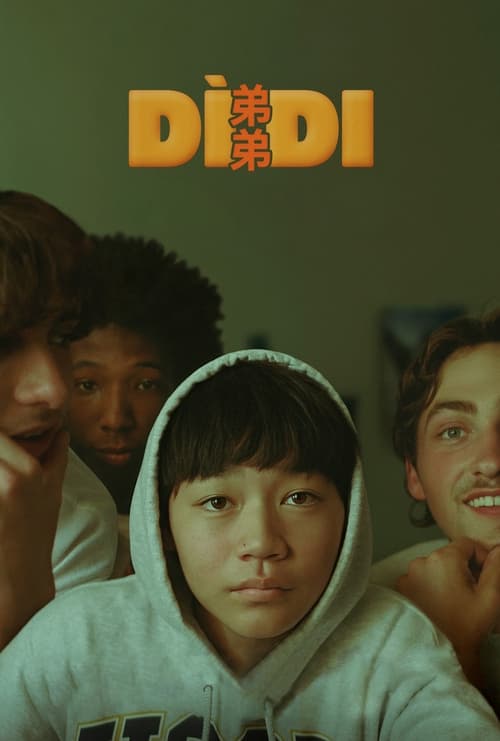
The "coming-of-age" film is a genre in danger of suffocating under its own conventions. We know the beats: the first crush, the betrayal of a best friend, the screaming match with a parent, the tearful reconciliation. It is a rhythm so familiar it often feels like a product rather than a portrait. Yet, in *Dìdi (弟弟)*, writer-director Sean Wang manages to electrify these tired tropes by grounding them in a specific, suffocating reality: Fremont, California, in the summer of 2008. Wang’s debut feature is not merely a nostalgia trip for millennials who remember the screech of dial-up; it is a forensic examination of how the early internet taught a generation to hide.
The film follows Chris Wang (a revelation in Izaac Wang), a 13-year-old Taiwanese American boy navigating the treacherous weeks before high school. To his family, he is "Dìdi" (little brother)—a nuisance, a baby, a disappointment. To his friends, he is "Wang Wang"—a mascot, a punchline. Desperate to carve out an identity that commands respect, Chris retreats into the glowing safety of his computer screen.
Wang’s visual language is striking because it treats the digital interface as a physical landscape. The film doesn’t just show us AIM chat windows or MySpace "Top 8" rankings; it forces us to inhabit the terrifying pauses between messages. We watch the blinking cursor with the same anxiety Chris feels, understanding that in 2008, a "status update" was a desperate plea for validation. The grainy, handheld aesthetic of Chris’s skateboarding videos—shot on MiniDV tapes—serves as a counterpoint to the polished cinematography of his home life. These low-res pixels are the only place where Chris feels he has control, a blurry kingdom where he can edit out his failures.
However, the film’s true power lies not in its digital texture, but in its analog heart. At the center of the narrative is the fracturing relationship between Chris and his mother, Chungsing, played by the legendary Joan Chen. Chen delivers a performance of shattering vulnerability. She is an artist whose dreams have been slowly eroded by the demands of immigrant motherhood and the biting criticism of her own mother-in-law (played by the director’s real grandmother, Chang Li Hua).
There is a scene that serves as the film’s emotional anchor: Chris, stinging from a rejection by a girl who tells him he is "cute for an Asian," lashes out at his mother with a cruelty that is physically painful to watch. He weaponizes his assimilation, mocking her accent and her sacrifices. It is a moment of pure, distilled shame—the shame of being "other," projected onto the one person who loves him unconditionally. Wang does not flinch from showing us Chris’s ugliness, understanding that to sanitize adolescence is to lie about it.
Unlike many films in this genre that rush toward a neat resolution, *Dìdi* earns its peace. The climax is not a grand speech, but a quiet surrender. The final moments, where mother and son sit in a silence that is no longer hostile but shared, suggest that growing up is largely about learning to forgive your parents for being human.
Sean Wang has crafted a film that feels less like a movie and more like a retrieved memory—jagged, embarrassing, and deeply tender. *Dìdi* asserts that while the technology of our youth may become obsolete, the ache of wanting to be seen remains permanent.