The Shadow of the SymbolIf superheroes are the modern myths of our time, then *My Hero Academia* has always been our most earnest examination of what it costs to live inside a legend. In *My Hero Academia: You’re Next*, the fourth cinematic entry in this sprawling saga, the question is no longer about how one becomes a hero, but what happens when heroism itself is hijacked. Directed by Tensai Okamura (a veteran whose résumé includes the noir-infused *Darker than Black*), the film is a kinetic, often overwhelming meditation on the toxicity of idolatry. It suggests that a symbol, once detached from the soul that forged it, can become a weapon.

Okamura brings a distinct visual volatility to the franchise, departing slightly from the polished consistency of previous director Kenji Nagasaki. The animation here feels sharper, more jagged, and occasionally surreal. The film’s antagonist, Dark Might, constructs a floating fortress that engulfs entire cities—a visual metaphor for an ego that leaves no room for anything else. Okamura captures the sheer suffocating scale of this threat, using wide shots that dwarf the protagonists against a backdrop of golden, gaudy excess. The action sequences are not just fights; they are frantic struggles against a reality that is being rewritten by a madman. The sound design complements this, contrasting the familiar, inspiring musical cues of the series with distorted, mechanical echoes that accompany Dark Might’s presence.
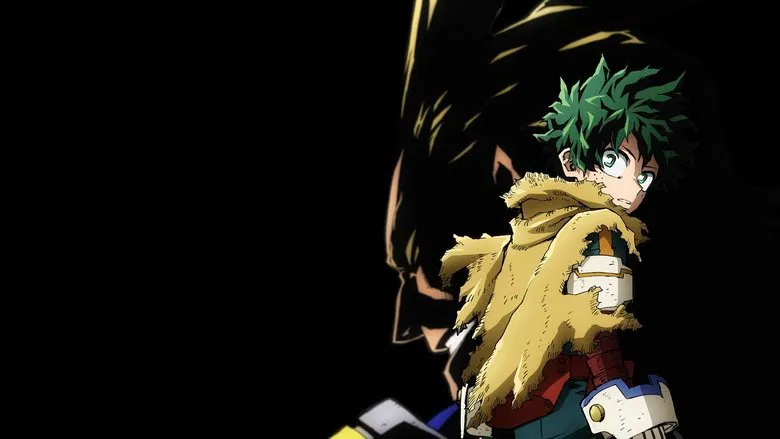
At the narrative's heart lies a disturbing distortion of the series' central thesis. When the retired hero All Might pointed to a camera and told the world, "You're next," it was a baton pass to a generation of selfless protectors. Dark Might (a surprisingly chilling villain who literally wears the skin of the hero) interprets this not as a call to service, but as a coronation. The film is at its best when it explores this ideological chasm. Izuku Midoriya, the true successor, is forced to fight a man who looks exactly like his father figure but embodies none of his grace. It is a conflict that goes beyond punching harder; it is about reclaiming the definition of strength from those who view it as a right to rule rather than a duty to serve.

Ultimately, *You’re Next* suffers slightly from the pacing issues inherent to anime feature films—the need to escalate stakes to world-ending levels within ninety minutes can feel exhausting. However, it succeeds where it counts: in its emotional clarity. By pitting the students of Class 1-A against a grotesque parody of their greatest inspiration, the film validates their growth. They are no longer just imitating All Might; they are defending the very spirit of what he stood for against a world that would commodify it. It is a loud, colorful, and surprisingly thoughtful reminder that the mask does not make the man.