Love in the Time of ContrivanceThe "bottle episode" is a storied tradition in television—stripping away the budget and the supporting cast to trap characters in a single room, forcing them to confront their interpersonal demons. When applied to cinema, particularly the romance genre, this isolationist structure promises a raw, voyeuristic look at the architecture of a relationship. In *What If?*, director Manny Palo attempts to harness this claustrophobic energy, stranding a pair of newlywed musicians on a remote island in Panglao during a typhoon. Yet, instead of a study in human nature, the film presents a curious paradox: a visually lush, color-graded paradise that feels emotionally barren.
Palo, a veteran of Filipino melodrama, brings a distinct polished sheen to the film. The visual language of *What If?* is undeniably seductive. The cinematography captures the wet, verdant greens of the island and the brooding grays of the incoming storm with a glossy precision that seems tailor-made for the high-definition demands of modern streaming. The setting—a rustic, "Instagrammable" cottage—initially serves as a romantic sanctuary before transforming into a damp prison. However, there is a disconnect between the lens and the story it observes. The beauty of the frame often betrays the ugliness of the narrative, creating a dissonance where the film looks like a travelogue but moves like a tragedy.
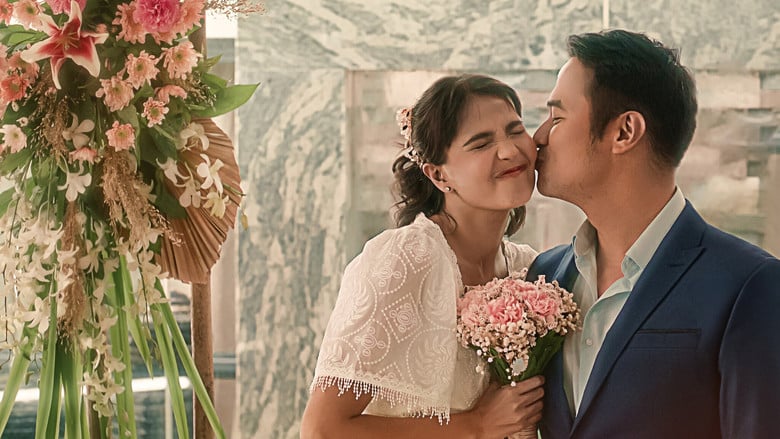
The narrative centers on Billie (Alessandra de Rossi) and Jecs (JM de Guzman), whose marital bliss evaporates with shocking velocity the moment the rain begins to fall. The film’s central failing is not in its premise—that isolation breeds contempt—but in the mechanical way it manufactures conflict. The script treats their marital issues not as organic weeds growing from the cracks of their union, but as grenades thrown into the room by the writers.
The transition from starry-eyed lovers to bitter adversaries happens with a whiplash-inducing speed that denies the audience the necessary connective tissue of empathy. We are asked to invest in their heartbreak without having truly witnessed their heart. Alessandra de Rossi, a performer capable of profound vulnerability, does her best to ground Billie’s trauma—specifically her struggle with premature ovarian failure and the external pressure of Jecs’ overbearing mother. Yet, even her formidable talents struggle against dialogue that feels less like human conversation and more like bullet points of "relatable relationship struggles."

Ultimately, *What If?* collapses under the weight of its own contrivances. The film posits the storm as a metaphor for the couple's turmoil, but the symbolism is blunt and unyielding. The conflicts—ranging from social media jealousy to deep-seated family trauma—are resolved or escalated through convenient plot devices rather than emotional labor. When the climax arrives, triggered by a tragedy outside the island, it feels like a narrative shortcut rather than a earned resolution.
The film stands as a testament to the difficulty of the chamber drama. It proves that you can trap two actors on a beautiful island and batter them with rain, but without a script that understands the slow, quiet erosion of love, you are merely filming weather. *What If?* leaves us with a melancholy realization: sometimes the most devastating storms are the ones that feel entirely synthetic.