The following is a critical essay in the style of a cultural commentator.
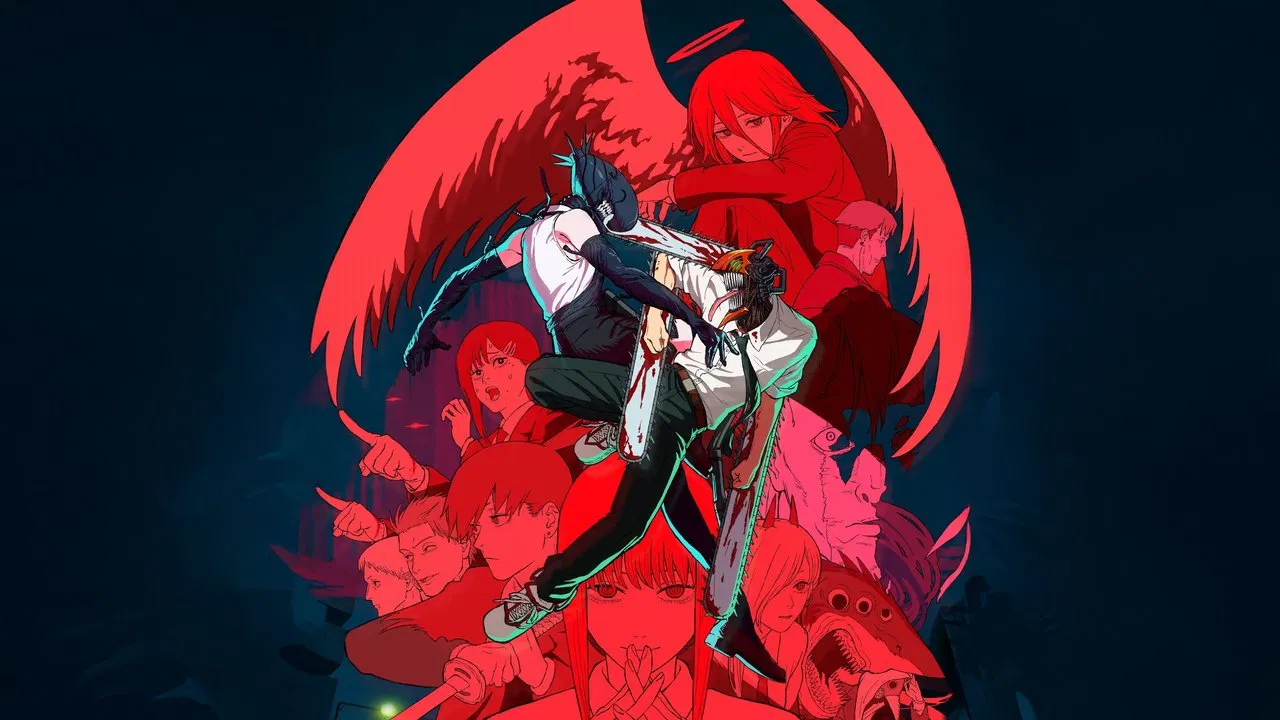
The Boy Who Dreamed of the Country MouseThere is a specific, suffocating loneliness that defines the modern shonen protagonist, but few wear it as nakedly as Denji, the ruffian hero of *Chainsaw Man*. If the first season of the anime was a study in the banality of violence—a Kubrickian lens applied to a grindhouse script—then *Chainsaw Man - The Movie: Reze Arc* is its delirious, heartbreaking counterpoint. Directed by Tatsuya Yoshihara, taking the reins from Ryu Nakayama, this film abandons the cool, detached cinema verité of its predecessor for something far more volatile: the blinding, saturation-bombed ecstasy of first love. It is a film that asks not if a monster can be a hero, but if a weapon can learn to hold a flower without crushing it.
The visual shift is immediate and jarring, a deliberate rejection of the "live-action" aesthetic that polarized fans of the television series. Yoshihara, known for his kinetic energy in *Black Clover*, floods the screen with vibrant, almost aggressive color. The lines are thicker, the expressions more rubbery, the action less grounded in physics and more indebted to the chaotic smear-frames of pure animation. This is not a regression; it is a thematic necessity. We are no longer observing Denji’s life through the cold lens of Public Safety bureaucracy. We are seeing the world through the dopamine-flooded eyes of a teenage boy who has just met a girl who smells like gunpowder and coffee.

The narrative centers on Reze, a mysterious waitress who enters Denji’s life with the precision of a surgical strike. Their courtship is the film's emotional anchor, played out in montages that feel dangerously like a traditional rom-com. They break into a school at night; they swim in a pool under the moonlight. These moments are rendered with a tenderness that feels almost illicit in a franchise defined by gore. But the genius of the *Reze Arc* lies in the dramatic irony that hangs over every smile. We know, even before the pin is pulled, that Reze is the Bomb Devil, a Soviet weapon forged in the same dehumanizing fires that birthed Denji.
This parallel is where the film finds its crushing human core. Both Denji and Reze are "country mice" forced to survive in the city's trap. They are tools of the state—one Japanese, one Soviet—who find a fleeting, impossible autonomy in each other. The tragedy isn't that Reze betrays Denji; it’s that her betrayal is a job requirement, while her love is a glitch in the programming. When the facade inevitably drops, the resulting violence is spectacular—a neon-soaked nightmare of explosions that turn the city into a kaleidoscope of destruction—but it feels tragic rather than triumphant. The "coolness" of the action is undercut by the realization that these are just two traumatized children destroying the world because they don't know how to live in it.

The film’s climax is not the explosive battle, but the quiet devastation of the aftermath. The "cafe scene," a promise of a new life that never comes to pass, is directed with a cruelty that Hitchcock would admire. Yoshihara utilizes the medium of animation to manipulate time, stretching the seconds of waiting into an eternity. When the resolution arrives, it does not come with a bang, but with the silent, terrifying appearance of Makima in an alleyway. Here, the film reasserts the horror of the franchise's universe: the true monster is not the girl who explodes, but the system that quietly disposes of the pieces.
*Chainsaw Man - The Movie: Reze Arc* succeeds because it refuses to treat its characters as action figures. It understands that Denji’s desire is not for sex or power, but for the intimacy of being known. By the time the credits roll, we are left with the uneasy feeling that we have just watched a coming-of-age story that was strangled in the crib. It is a dazzling, violent, and profoundly sad piece of cinema that proves animation is the only medium capable of capturing the explosive contradictions of the teenage heart.