The Architect of Illusions in ChainsThere is a perilous trap in the "great man" biopic: the tendency to treat the subject as a statue before the marble has even been quarried. In *The Captive* (*El Cautivo*), Alejandro Amenábar avoids this calcification by ignoring the literary giant Miguel de Cervantes became, and focusing instead on the desperate, terrified young soldier he was. Returning to the historical sweep of *Agora* but with the psychological intimacy of *The Sea Inside*, Amenábar presents a film that is less about the history of literature and more about the primal, life-sustaining necessity of fiction.
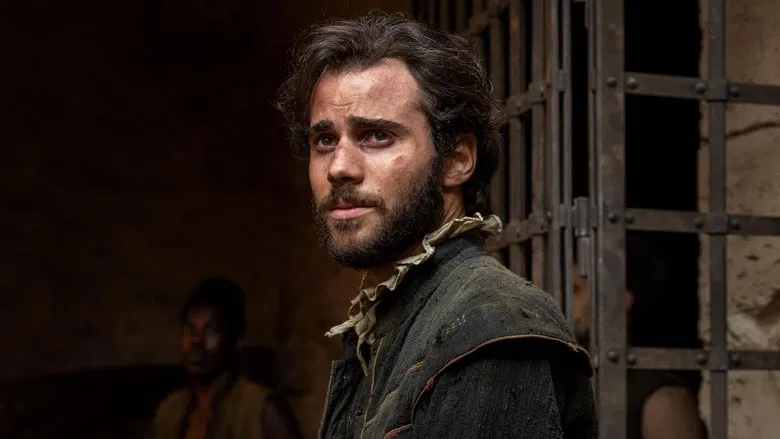
Amenábar’s visual language here is one of stark, suffocating contrasts. Working with cinematographer Álex Catalán, he juxtaposes the grime of the Algiers prison cells—washed in ochres and deep shadows—with the blinding, sun-drenched opulence of the Ottoman court. It is a polished, perhaps too pristine aesthetic, yet it serves a narrative purpose: it heightens the surreal nature of Cervantes’ (Julio Peña) imprisonment. The camera often lingers on the horizon of the Mediterranean, a taunting blue line that represents a freedom tantalizingly out of reach. The film does not rely on the shaky-cam grit of modern war dramas; instead, it adopts a classical, almost operatic staging that elevates the squalor of captivity into a stage for the mind.
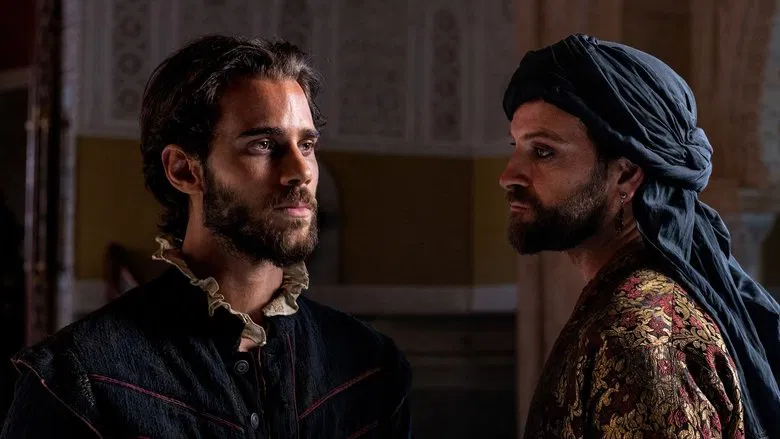
At the film's center is a duel, not of swords, but of wits and seduction. Julio Peña imbues the future author of *Don Quixote* not with the wisdom of a sage, but with the frantic energy of a Scheherazade. He creates to survive. However, the film’s true electric charge comes from the interplay between Cervantes and his captor, Hassan Pasha (Alessandro Borghi). Amenábar makes a bold, historically debated choice to frame their dynamic through a lens of homoerotic tension. This is not merely a prisoner and a warden; it is a relationship defined by a dangerous curiosity. Borghi plays Hassan with a serpentine elegance, a man bored by power and captivated by the one thing he cannot conquer: Miguel's imagination.
The script cleverly posits that the "Knight of the Sad Countenance" was born not in a library, but in a dungeon. We see the seeds of Quixote in the way Miguel spins grandiose lies to maintain the morale of his fellow Christian captives. He constructs alternate realities where escape is imminent and heroism is real. Amenábar suggests that for Cervantes, fiction was the only armor strong enough to withstand the absurdity of his suffering. The film’s most poignant moments are not the failed escape attempts, but the quiet scenes where storytelling becomes a communal act of resistance—a way to deny the captors their ultimate victory: the breaking of the spirit.

If *The Captive* stumbles, it is perhaps in its refusal to fully embrace the madness of its subject. At times, the pacing feels too measured, too respectful of the prestige drama template to truly capture the chaotic genius that would eventually birth the modern novel. Yet, the emotional resonance remains intact. By the time the credits roll, we understand that Cervantes did not write about giants and windmills because he was delusional, but because he knew that sometimes, the world as it is simply isn't enough. Amenábar has crafted a handsome, thoughtful tribute to the idea that while the body can be chained, the narrative impulse remains unconquerable.