✦ AI-generated review
The Face Beneath the Mask
For nearly four decades, the Yautja—better known to audiences as the Predator—has existed as a sort of intergalactic slasher villain. He was a creature defined by his silhouette: the dreadlocks, the mandibles, the heat-vision POV. He was the "other," a terrifying force of nature that arrived to test the mettle of sweaty action heroes. But in *Predator: Badlands*, director Dan Trachtenberg has done something radical, perhaps even revolutionary for a franchise of this age: he has removed the humans entirely, and in doing so, finally shown us the person beneath the bio-mask.
Trachtenberg, who already revitalized the series with the primal efficiency of *Prey* (2022), here attempts a high-wire act of empathy. By casting Dek (Dimitrius Schuster-Koloamatangi), a "runt" exiled from his clan, as the protagonist, the film forces the audience to align their sympathies with a character who communicates in clicks, growls, and subtitles. The result is a film that feels less like a traditional sci-fi actioner and more like a silent-era survival epic, echoing the visual storytelling of *Wall-E* or the primal journey of *Conan the Barbarian*.
Visually, the film is a suffocating triumph. The planet Genna, a "death world" of hostile flora and razor-sharp fauna, is rendered with a vibrancy that makes recent Marvel cosmic entries look flat by comparison. Trachtenberg understands that if you remove the human element, the environment must bridge the gap. We feel the humidity of the alien jungle and the weight of Dek’s isolation. The action is not staged for "coolness"—though it is undeniably stylish—but for struggle. Every fight Dek engages in, particularly the early, brutal sparring matches with his brother and the terrifying encounters with the local "Kalisk" wildlife, is desperate. This is not the invincible hunter of 1987; this is a desperate child trying to survive a universe that wants him dead.
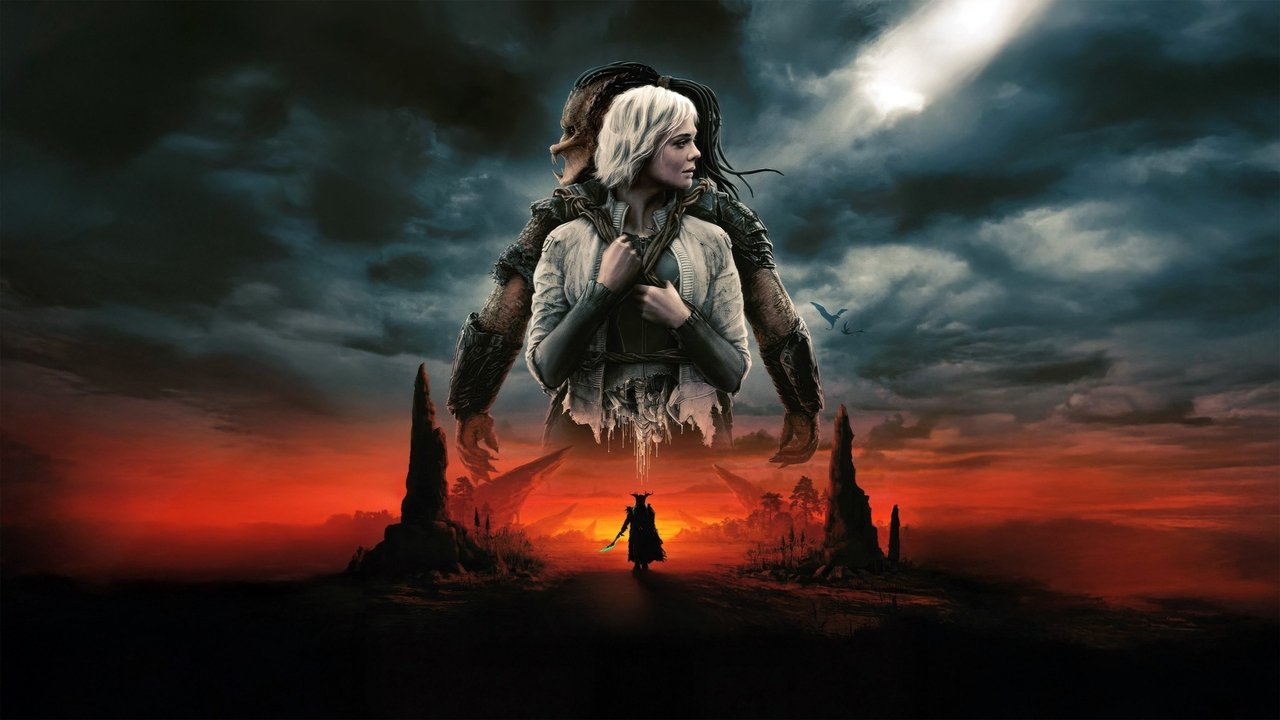
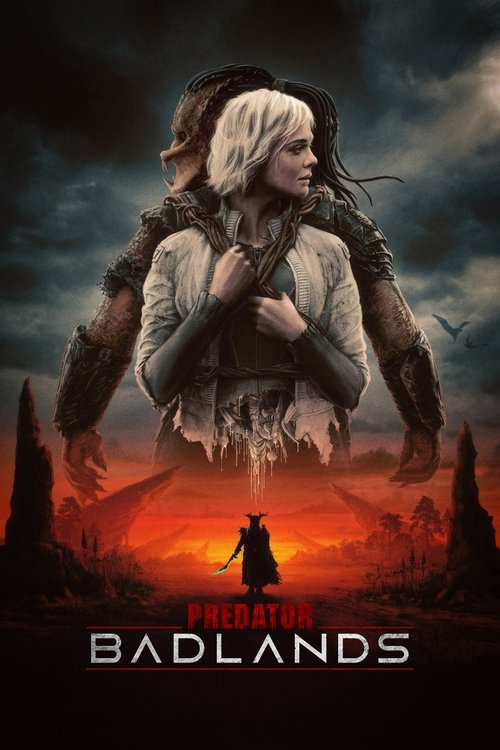
However, the film’s true emotional anchor lies in the unlikely partnership between Dek and Thia, a damaged Weyland-Yutani synthetic played with remarkable duality by Elle Fanning. Fanning, who also plays Thia’s militant sister Tessa, brings a fragile, mechanical grace to the role. The relationship between a disgraced alien hunter and a broken corporate robot could have easily devolved into buddy-cop camp. Instead, it becomes a poignant meditation on obsolescence and purpose. They are two discarded tools—one biological, one technological—learning to reject the programming of their creators.
The "conversation" around this film will inevitably focus on its connection to the *Alien* universe via the Weyland-Yutani branding, but to focus on the lore implications is to miss the point. The presence of the androids isn't just fan service; it’s a thematic mirror. Thia’s struggle against her programming parallels Dek’s struggle against the toxic, hyper-masculine expectations of his father, Njohrr. The scene where Dek chooses to carry the crippled Thia, physically bearing the weight of his "prey" rather than claiming a trophy, is the moment the franchise finally matures. It redefines "honor" from a code of violence to an act of compassion.
*Predator: Badlands* is not perfect; its ambition occasionally outpaces its execution, and the third act’s shift into a more traditional "boss battle" feels slightly less inspired than the survivalist first half. Yet, it stands as a fierce rebuttal to the idea that long-running franchises must simply repeat the hits. By turning the camera around and letting us look out through the Predator’s eyes, Trachtenberg hasn't just expanded the lore; he has given a soul to the monster.