**The Weight of Invisible Labor
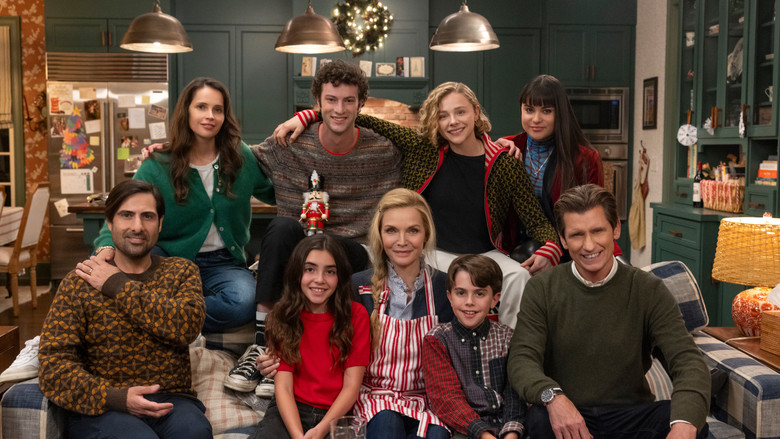
There is a moment early in Michael Showalter’s *Oh. What. Fun.* that feels like a betrayal of its own premise. Claire Clauster (Michelle Pfeiffer), the matriarch of a sprawling, chaotic Texas family, is frantically orchestrating the "perfect" Christmas. The camera tracks her movement through the house with a dizzying, suffocating proximity—wrapping gifts, basting turkeys, diffusing arguments—while her husband (Denis Leary) and adult children exist in the periphery, consumed by their own trivial anxieties. It is a visual language that promises a sharp, biting satire of the domestic burden placed on women. Yet, as the film unfolds, this promise dissolves into a safe, algorithm-friendly holiday product that refuses to let its characters actually suffer the consequences of their selfishness.
Showalter, a director who has oscillated between the absurdist brilliance of *Wet Hot American Summer* and the polished sentimentality of *The Big Sick*, seems at war with himself here. He wants to critique the commercialization of the "Holiday Mom," yet the film itself feels like it was manufactured in a lab to sell Prime memberships. The cinematography, often flat and overly lit, robs the story of the grit needed to make Claire’s emotional breakdown feel dangerous. Instead of the claustrophobic tension of a woman on the edge, we are given the glossy sheen of a greeting card, where even resentment is color-corrected to a festive warmth.

The central conceit—that Claire is accidentally left behind "Home Alone" style while her family attends a gala she organized—should be the catalyst for a dark night of the soul. However, the script pulls its punches. When Claire realizes her abandonment, Pfeiffer delivers a masterclass in silent devastation; her eyes hold a lifetime of swallowed indignities. But the film doesn't know what to do with her rage. Instead of allowing her to dismantle the patriarchy of her household, the narrative sends her on a detour of mild hijinks involving a daytime TV host (Eva Longoria) that feels like a distraction from the real story.
The tragedy of *Oh. What. Fun.* is that the "fun" is entirely absent for the character who deserves it most. The film argues that Claire is the glue holding the family together, but it fails to ask why the family is worth saving in the first place. The children, played by capable actors like Felicity Jones and Dominic Sessa, are written as caricatures of millennial helplessness, their dialogue often reduced to whining that lacks the specific, painful texture of real family dysfunction. When they finally realize their mother is missing, their panic feels less like love and more like the anxiety of a staff losing their manager.
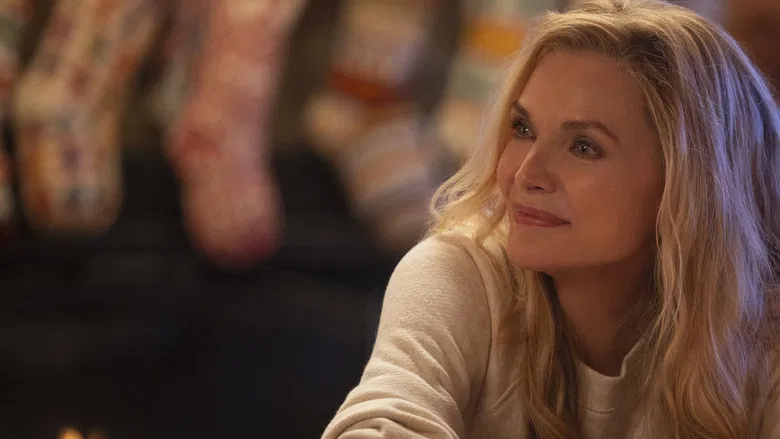
Despite the script's failures, Michelle Pfeiffer remains a miracle. She infuses Claire with a weary dignity that transcends the material. In the climactic confrontation, when she finally voices her exhaustion, she isn't just speaking for a character; she is channeling the collective sigh of every woman who has ever been told that her labor is love, and therefore requires no thanks. It is a performance of profound empathy in a movie that ultimately settles for easy answers.
In the end, *Oh. What. Fun.* is a film that identifies a deep, festering cultural wound—the invisibility of maternal labor—and tries to heal it with a band-aid of forced reconciliation. It suggests that a single apology can erase decades of neglect. While it may serve as background noise for a distracted holiday afternoon, it misses the opportunity to be something truly essential: a mirror held up to the audience, asking us to see the people we claim to love, before they have to leave the room to be noticed.