The Geography of GriefIf cinema has taught us anything about parental loss, it is that the void left by a missing child usually manifests as silence—the untouched bedroom, the breakfast table set for one too many. James Kent, a director best known for the restrained, period-piece elegance of *Testament of Youth*, initially approaches *Stolen Girl* with this same quiet reverence. He understands that the abduction of a child is not an event, but an atmosphere. However, as the film unfurls, it abandons this delicate study of absence for the kinetic noise of a rescue thriller, resulting in a work that is at war with its own identity. It is a film that wants to be both a meditation on a mother's purgatory and a passport-stamping action vehicle, ultimately proving that while grief may be universal, the cinematic language used to express it requires a chosen dialect.
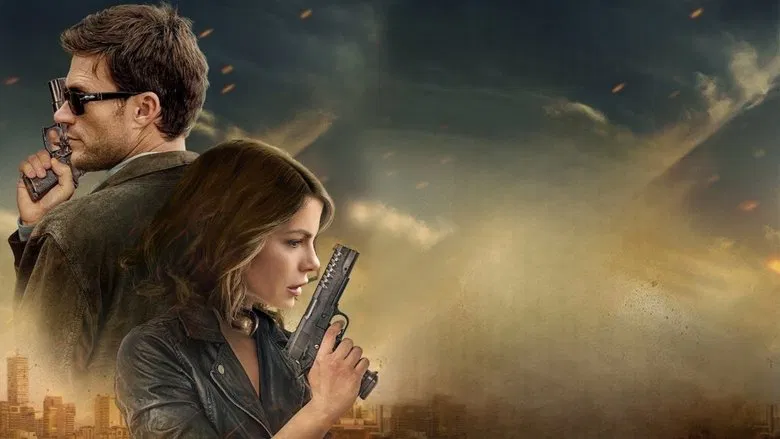
The film’s visual language, particularly in the first act, is strikingly claustrophobic. Kent and cinematographer Teo Delgado shoot Maureen (Kate Beckinsale) as if she is a ghost haunting her own life. In 1990s Ohio, the color palette is drained of vitality, mirroring Maureen’s internal stasis after her ex-husband smuggles their daughter, Amina, out of the country. These early scenes are the film’s strongest, where the horror isn't a gunfight, but the bureaucratic indifference of a legal system that shrugs at international borders. Beckinsale, often underutilized in her blockbuster career, here taps into a reservoir of weary fury. She plays Maureen not as a "warrior mom" archetype initially, but as a woman eroding under the friction of hopelessness.
However, the narrative pivots sharply—and somewhat jarringly—with the arrival of Robeson (Scott Eastwood), a recovery specialist who operates in the gray zones of international law. Here, the film sheds its indie-drama skin to reveal the bones of a generic thriller. The transition from the suffocating interiors of Ohio to the sun-bleached, dusty expanses of the Middle East signals a shift in genre that the script struggles to justify. Kent attempts to maintain his sophisticated framing even as the plot devolves into extraction mechanics, creating a dissonance. We are watching a director trying to conduct a symphony while the screenplay is demanding a rock concert. The aesthetic beauty of the locations often feels at odds with the ugliness of the trade being depicted, sanitizing the grittiness that a film like *Taken* or *Sound of Freedom* might have leaned into.

The central conflict, therefore, is not just between Maureen and the abductors, but between the film’s reality and its spectacle. The script, inspired by the harrowing true story of Maureen Dabbagh, creates a tension that feels almost exploitative when it forces Beckinsale’s character into action-hero tropes. There is a profound emotional truth in the scenes where Maureen must "play" a mother to other rescued children to secure help for her own—a cruel transactional emotional labor that begs for deeper exploration. Yet, the film rushes past this psychological complexity to get to the next checkpoint. Eastwood, tasked with playing the rugged, morally ambiguous guide, feels imported from a different movie entirely, his presence flattening the nuance whenever he enters the frame.

Ultimately, *Stolen Girl* stands as a testament to the difficulty of adapting real-life trauma into entertainment. It succeeds in moments of stillness—the look in a mother's eyes when she realizes the law cannot help her—but stumbles when it tries to resolve that trauma with gunpowder and gasoline. It is a film of two halves that never quite cohere, leaving the audience with a sense of emotional whiplash. We leave the theater not thinking about the thrill of the rescue, but the tragedy of the time lost—both for the characters and, perhaps, for a director who seemingly compromised his own vision to meet the demands of the genre.