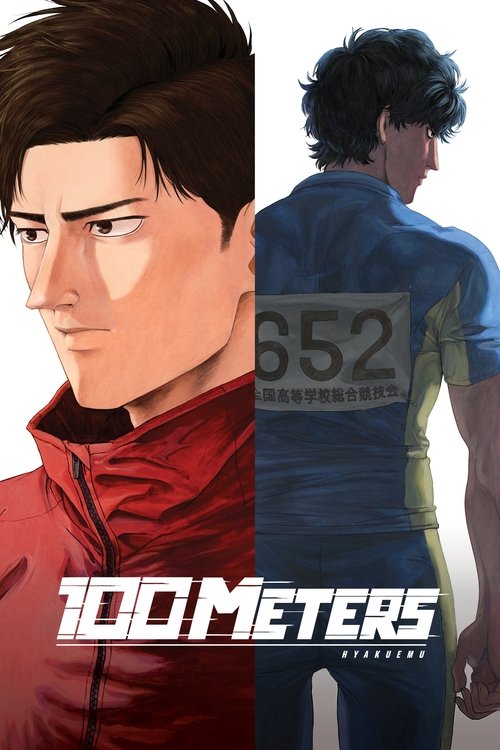
The Philosophy of VelocitySports cinema, particularly in the animated realm, often seduces us with a comfortable lie: that effort equals victory, and victory cures the soul. We are accustomed to the slow-motion glory of the finish line, the swelling orchestral score, and the tearful embrace of rivals. Kenji Iwaisawa’s *100 Meters* has no interest in these seductions. Arriving five years after his slacker-rock anthem *On-Gaku: Our Sound*, Iwaisawa has traded garage band lethargy for the blistering intensity of the track, yet his gaze remains fixated on the human condition’s jagged edges. This is not a film about winning a gold medal; it is a meditation on the terror of a straight line and the existential dread that waits at the finish.
Iwaisawa’s visual language is the film's most striking antagonist. Eschewing the polished, "on-model" perfection typical of high-budget anime, he doubles down on the rotoscoping technique that defined his debut. The result is an animation style that feels startlingly biological. When the characters run, they do not glide; they heave, contort, and ugly-cry. The rotoscoping captures the grotesque reality of maximum physical exertion—the way a face ripples under G-force, the way muscles tremble near failure. By tracing over live-action footage, Iwaisawa strips away the gloss of animation to reveal the sweaty, desperate humanity underneath.

This aesthetic reaches its zenith in the film’s widely discussed rain sequence. In a genre that usually cuts rapidly to generate excitement, Iwaisawa dares to hold the gaze. The sequence, an unbroken, circling take of the runners preparing in a downpour, transforms the track into a coliseum of gray strokes and drowning noise. It is a suffocating visual metaphor for the film’s central thesis: the world outside the lane dissolves when you are running, but so does your sense of self. The "kinetic energy" critics have praised is not just about speed; it is about the violence of moving your body faster than it wants to go.
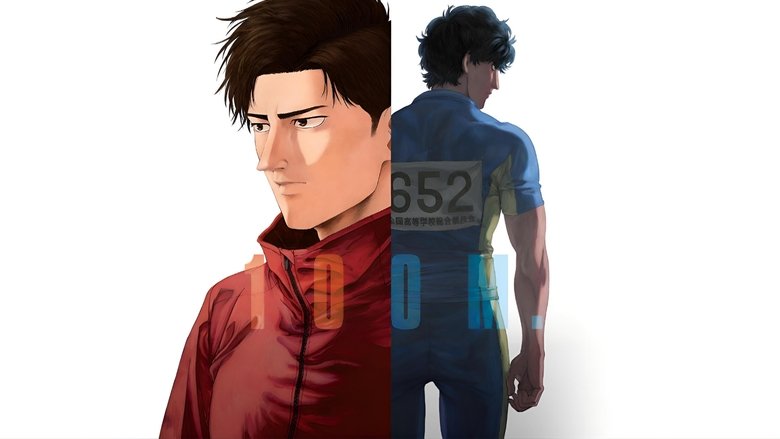
At the narrative core lies the friction between Togashi and Komiya, a relationship that subverts the standard "rivals to friends" trope. Togashi, the natural prodigy, runs with a terrifying, hollow ease. For him, speed is a burden of birthright, not a passion. Komiya, conversely, is the untalented striver who runs to escape the noise of his own insecurity. Adapted from Uoto’s manga, the script spans decades, watching these men age from grade-school dreamers to broken-down adults. The tragedy here is not failure, but the realization that talent is a finite resource, while obsession is bottomless.
The film is relentless in asking *why* we dedicate our lives to things that ultimately yield no tangible reward. As the characters age, the 100-meter dash—a mere ten seconds of existence—becomes a "magic tunnel" that distorts their perception of time. Iwaisawa frames their adult lives as a series of long, quiet waits punctuated by violent bursts of sprinting. It is a rhythmic structure that mimics the sport itself. The silence between races is deafening, filled with the unspoken acknowledgment that they are destroying their bodies for a glory that evaporates the moment they stop moving.
*100 Meters* is a challenging, abrasive, and deeply moving piece of cinema. It rejects the commercial safety of "fan service" or easy emotional payoffs. Instead, it offers a raw, rotoscoped mirror to our own obsessions. It suggests that perhaps the point of running isn’t to get somewhere, but simply to outpace the emptiness for a few seconds more. In the modern landscape of animation, where polish often masks a lack of purpose, Iwaisawa’s jagged, ugly, beautiful film is a breathless victory.