✦ AI-generated review
The Geometry of Affection
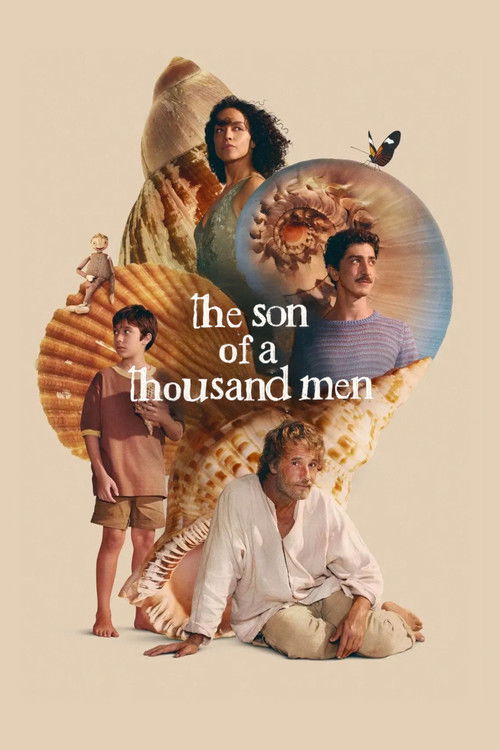
Cinema has long been obsessed with the nuclear family, treating it as the default setting for human drama. But every so often, a film arrives to dismantle this geometry, suggesting that the strongest bonds are not inherited, but forged in the fires of shared solitude. "The Son of a Thousand Men" (*O Filho de Mil Homens*), directed by Daniel Rezende, is one such architectural reimagining. Adapting Valter Hugo Mãe’s beloved novel, Rezende moves away from the pop-culture vibrancy of *Bingo: The King of the Mornings* to craft a quiet, saline fable about the families we build when the world leaves us behind.
Rezende’s visual language here is less about plot mechanics and more about atmospheric immersion. The film is drenched in the aesthetics of a coastal dreamscape—a "postcard" reality where the light hits the water with a deliberate, almost painterly perfection. While some critics might argue this beauty borders on the decorative, creating a gloss that occasionally distances us from the grit of the characters’ trauma, it serves a specific narrative function. The cinematography transforms the village not into a geographical location, but a liminal space where magic realism can breathe. The silence in the film is loud; Rezende trusts the spaces between dialogue, allowing the sound of crashing waves and wind to speak for Crisóstomo (Rodrigo Santoro), a man whose internal life is as vast and deep as the ocean he fishes.
At the heart of this tableau is Santoro’s Crisóstomo, a performance of profound stillness. He is a fisherman who catches nothing but his own loneliness until he decides to simply *claim* a son, Camilo (Miguel Martines). This act isn't portrayed as a legal procedure but as a spiritual necessity. The film’s emotional core expands as they pull others into their orbit: Isaura (Rebeca Jamir), a woman escaping the suffocating judgment of her past, and Antonino (Johnny Massaro), whose homosexuality has made him a pariah in a town ruled by rigid, archaic codes.
The film is most potent when it challenges traditional masculinity. Crisóstomo is not a patriarch in the domineering sense; he is a vessel of soft power, redefining fatherhood as an act of radical acceptance rather than authority. There is a specific, harrowing scene involving a "virginity test" inflicted upon Isaura by her mother—a moment of brutal realism that pierces the film's fable-like atmosphere. It stands in stark contrast to the safety Crisóstomo offers. He doesn't save these characters with violence or grand speeches, but with the simple, revolutionary act of offering them a seat at his table.
"The Son of a Thousand Men" occasionally struggles under the weight of its own poetry; the transition from literary metaphor to screen reality can sometimes feel disjointed, leaving certain character beats feeling like impressions rather than fully realized arcs. Yet, it succeeds where it matters most. It effectively argues that "family" is a verb, not a noun—an active, daily choice to love the broken pieces of others. In a modern cinema landscape often crowded with cynical deconstructions, Rezende has dared to make something earnestly, unashamedly tender.