The Thunder of DharmaTo critique a film by Boyapati Srinu through the lens of traditional cinematic logic—plot coherence, subtle character arcs, or the laws of physics—is to fundamentally misunderstand the genre he operates within. His cinema is not about reality; it is about *mythology*. With *Akhanda 2: Thaandavam*, Srinu and his muse, the indefatigable Nandamuri Balakrishna, return not just to tell a story, but to conduct a ritual. This is a film that functions less like a narrative and more like a fever dream of devotion and violence, where the screen itself seems to vibrate with the sheer decibel level of its convictions.
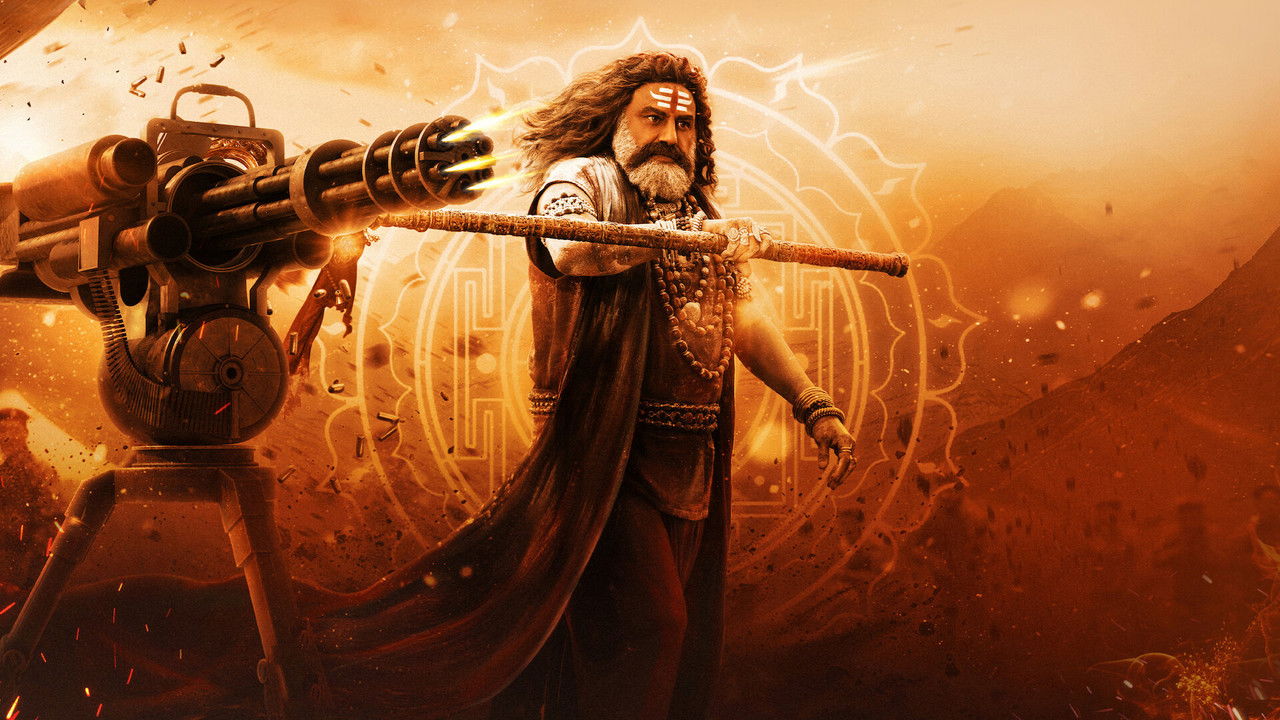
The film picks up the mantle of its 2021 predecessor, expanding the canvas from a personal vendetta to a national crisis. The premise creates a friction that is fascinatingly bizarre: a collision between modern anxiety (biological warfare, viruses) and ancient solutions (Vedic chanting, cosmic intervention). When a rival nation targets the Maha Kumbh Mela with a bio-weapon, the film posits that the only antidote to 21st-century science gone wrong is not better science, but the awakening of a primal, divine force. Balakrishna, reprising his dual role, anchors this chaos. As Murali Krishna, he is the dutiful citizen; as Akhanda, he is a force of nature—a Shiva avatar who doesn't just fight enemies but obliterates them with the certainty of a landslide.

Visually, the film is an assault on the senses, designed to overwhelm rather than invite. The cinematography captures the Kumbh Mela not as a mere location, but as a throbbing organism of saffron and dust, a stark contrast to the sterile, cold laboratories of the antagonists. However, the true "special effect" remains Balakrishna himself. At an age where most actors retreat into character roles, he doubles down on the "mass" aesthetic. His performance as the Aghora is devoid of irony; he believes in his own divinity, and because he believes it, the audience is compelled to suspend their disbelief. The violence is stylized to the point of abstraction—bodies don't just fall; they are launched into the stratosphere, a visual metaphor for the character's rejection of earthly constraints.

Yet, *Akhanda 2* struggles under the weight of its own sermonizing. The screenplay often halts the kinetic action to deliver lengthy monologues on *Dharma* and social responsibility, turning the dialogue into a bludgeon as heavy as Akhanda's weapon. The narrative thread involving the young scientist Janani (a grown-up Harshaali Malhotra) offers a sliver of emotional stakes, grounding the celestial conflict in human vulnerability. But too often, the film sacrifices pacing for pageantry. The musical score by Thaman S. is relentless, a wall of sound that dictates how the audience should feel at every second, leaving no room for silence or interpretation.
Ultimately, *Akhanda 2: Thaandavam* is a polarizing cultural artifact. It is a loud, unapologetic declaration of faith wrapped in the guise of an action thriller. For the uninitiated, it may seem like incoherent noise. But for its target demographic, it is a cathartic experience—a reminder that in a world of complex, invisible threats, there is a deep-seated desire for a savior who can simply roar the darkness away. It is not subtle art, but it is undeniably, fiercely alive.