The Chemistry of DecayIf the history of television drama were plotted on a graph, the trajectory would shift violently upward with the arrival of *Breaking Bad*. Before Vince Gilligan’s magnum opus, television was often a medium of stasis—sitcom characters reset every week, and even police procedurals returned to the status quo by the hour’s end. *Breaking Bad* dared to do the opposite: it promised change. Specifically, it promised decay.
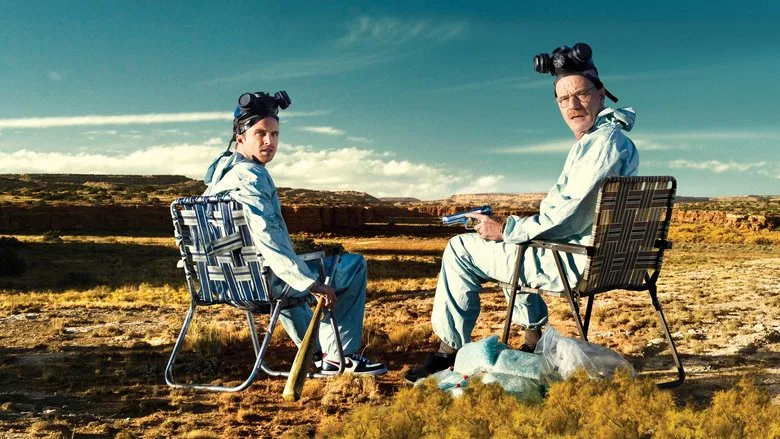
This is not merely a crime thriller about a high school chemistry teacher who cooks methamphetamine; it is a Shakespearean tragedy of ego, disguised as a western. The premise is deceivingly simple: Walter White (Bryan Cranston), diagnosed with terminal lung cancer, turns to crime to secure his family’s financial future. However, the show’s brilliance lies in how quickly it abandons this altruistic facade. We are not watching a good man forced to do bad things; we are watching a dormant monster finally given permission to wake up.
Visually, the series is a masterclass in atmospheric storytelling. The cinematography utilizes the vast, sun-bleached landscapes of Albuquerque not just as a setting, but as a purgatorial moral wasteland. The show is famous for its inventive point-of-view shots—looking up from the bottom of a chemical vat, a shovel-dug grave, or a glass table—which force the audience into uncomfortable intimacy with the consequences of Walt’s actions. The use of color is equally deliberate; notice how the vibrant greens and yellows of the early seasons slowly drain away, leaving a palette of dust and dried blood by the finale.

At the center of this hurricane is Bryan Cranston. His performance is a physical act of transformation. In the pilot, he is soft, doughy, and humiliated by the world; by the final season, he is a jagged, scar-tissue creature of pure malice. Yet, the show’s emotional anchor is often found in Aaron Paul’s Jesse Pinkman. If Walt is the corruption, Jesse is the conscience—a lost soul constantly brutalized by Walt’s manipulation. Their relationship is the toxic nucleus of the show, oscillating between father-son dynamic and captor-captive nightmare.
The series reaches its zenith in the episode "Ozymandias," a harrowing hour of television that feels less like an episode and more like a Greek myth collapsing. It is here that the "Mr. Chips to Scarface" pitch is fully realized. The collapse of Walt’s empire is not glorious; it is pathetic and terrifying. The writers refuse to give Walt the cool, action-movie exit he thinks he deserves. Instead, they strip him of his dignity, leaving him isolated in the cold, forcing him to admit the terrifying truth: "I did it for me. I was good at it."

*Breaking Bad* remains a towering achievement because it respects the intelligence of its audience. It refuses to hand-hold viewers through the morality of its protagonist. It demands that we ask ourselves at what point we stopped rooting for Walter White, and why it took us so long to stop. In the end, it is a definitive portrait of the corrosive nature of power—a volatile chemical reaction that burns everything it touches.