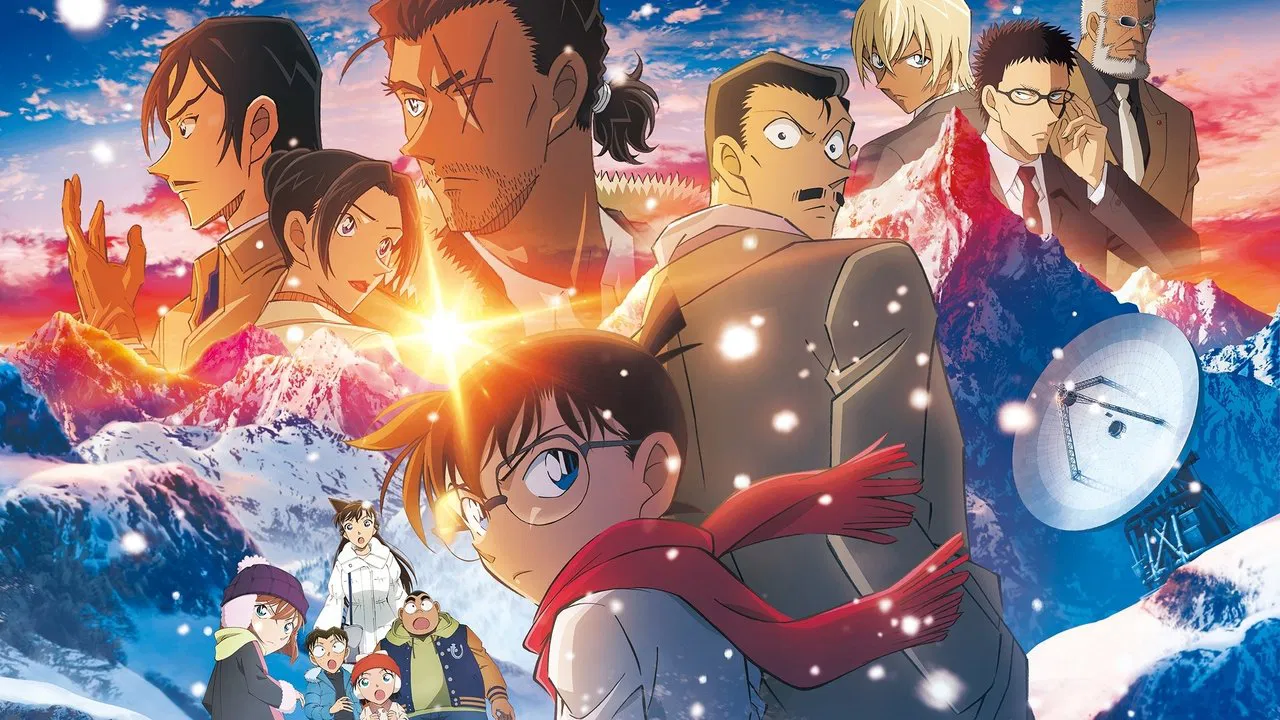
The Weight of MemoryTo follow a franchise for three decades is to accept a certain rhythm of stagnation. Characters rarely age, relationships spin in perpetual orbit, and the bodies pile up with the regularity of the tides. Yet, *Detective Conan: One-Eyed Flashback* (2025) dares to suggest that even in a world suspended in time, the past has weight. Directed by Katsuya Shigehara in his feature debut, the film steps away from the blockbuster bombast of recent entries like *The Million-dollar Pentagram* to deliver something more intimate: a cold, hard look at the scars we carry, both physical and emotional. It is a procedural wrapped in a blizzard, where the silence of the Nagano mountains screams louder than any explosion.
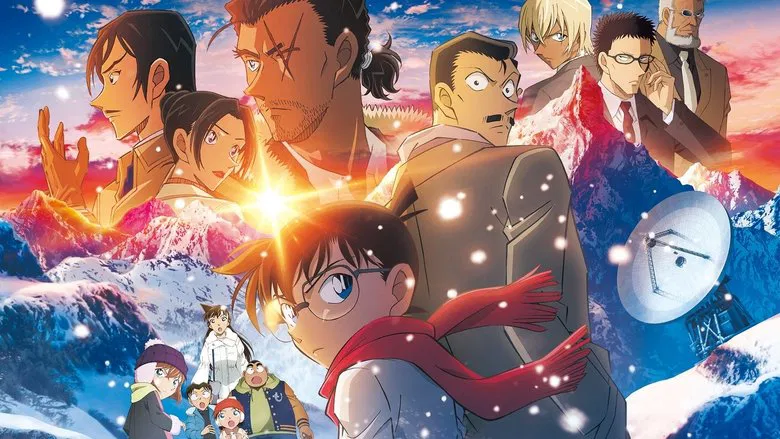
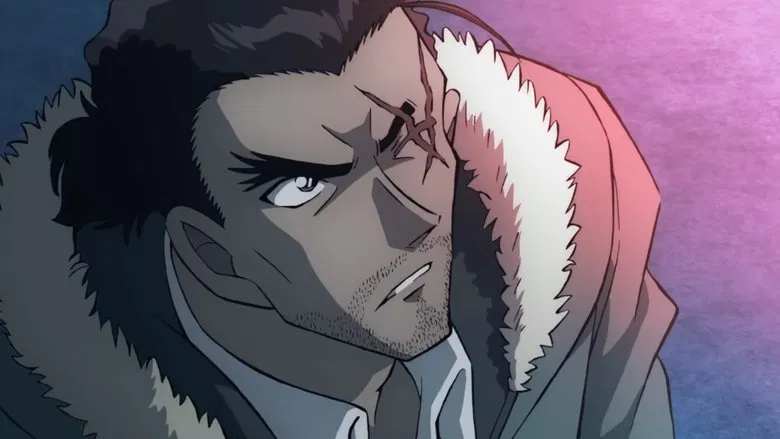
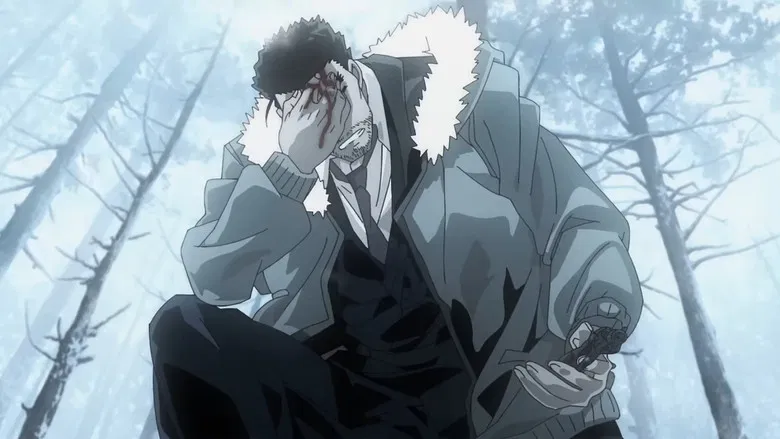
Shigehara’s visual language is immediately striking. He trades the frantic, glossy metropolitan sheen of Tokyo for the stark, oppressive whites of the Nagano winter. The animation team treats the snow not just as a weather effect, but as a shroud—concealing bodies, evidence, and memories alike. The opening sequence, detailing Inspector Kansuke Yamato’s blinding injury and subsequent burial by avalanche, is animated with a terrifying claustrophobia. We are trapped in that white void with him, feeling the suffocating weight of failure. It’s a bold aesthetic choice that mirrors the film's narrative thesis: the truth is often buried deep, and digging it up is a dangerous act.
The film’s greatest triumph, however, is its rehabilitation of Kogoro Mouri. Often relegated to the role of a drunken buffoon or a convenient mouthpiece for Conan’s deductions, here Kogoro is allowed to be the seasoned, grieving detective he truly is. When his former colleague is murdered before his eyes, the mask of the "Sleeping Kogoro" slips. We see the flash of competence and the burning coal of anger that drives him. The script treats him with a dignity that is long overdue, allowing his friction with the "Nagano Trio"—Yamato, Uehara, and Morofushi—to spark with professional tension rather than cheap slapstick. Watching Kogoro investigate not for glory, but for a fallen friend, grounds the high-concept mystery in a very human reality.
Of course, the film cannot entirely escape the gravitational pull of its genre. The climax, featuring Conan defying physics on a snowboard amidst a collapsing ice structure, is the requisite adrenaline shot for the younger audience. Yet, even this spectacle feels tethered to the film’s melancholic core. The "One-Eyed Flashback" of the title isn't just a plot device regarding Yamato’s injury; it’s a metaphor for how trauma narrows our vision. The characters are all looking at the world with one eye closed, blinded by their specific griefs—whether it’s Yamato’s vengeance, Kogoro’s guilt, or the killer’s twisted justification.
In the pantheon of *Detective Conan* films, *One-Eyed Flashback* stands out not for its scale, but for its soul. It proves that even after twenty-eight installments, this saga can still find new ways to break our hearts, reminding us that while the detective may stay a child forever, the world around him is grown-up, dangerous, and painfully real.