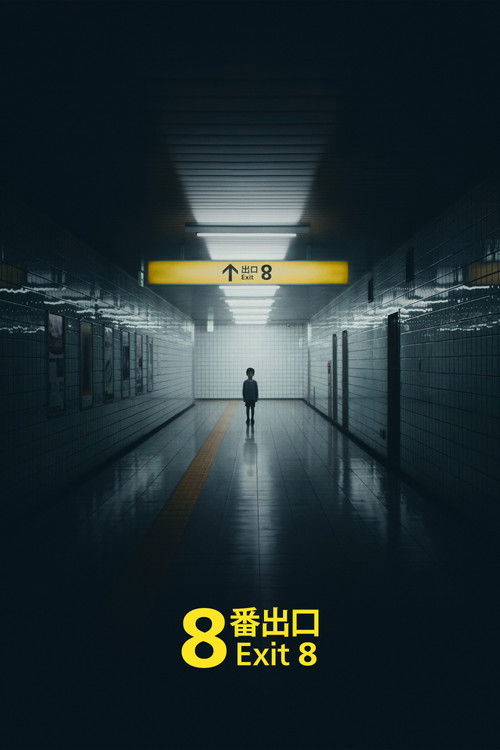
The Purgatory of the MundaneThere is a specific, suffocating texture to the modern commute—the rhythmic clack of the rails, the fluorescent hum that bleaches the skin, the collective agreement to look at nothing and no one. In *Exit 8* (2025), director Genki Kawamura takes this mundane paralysis and weaponizes it. What initially appears to be a modest adaptation of a viral "walking simulator" video game reveals itself to be a terrifyingly astute chamber drama about the horror of stasis. Kawamura, a producer known for shepherding emotional powerhouses like *Your Name* and *Monster*, proves here that he understands a fundamental truth: the scariest labyrinths are not the ones with monsters, but the ones that look exactly like our daily lives.
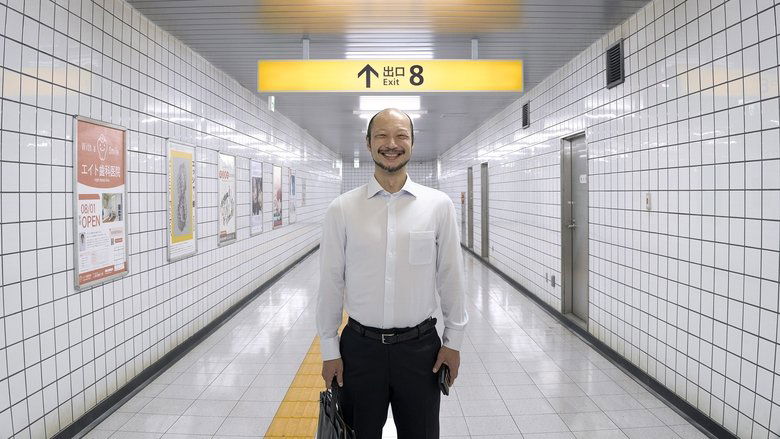
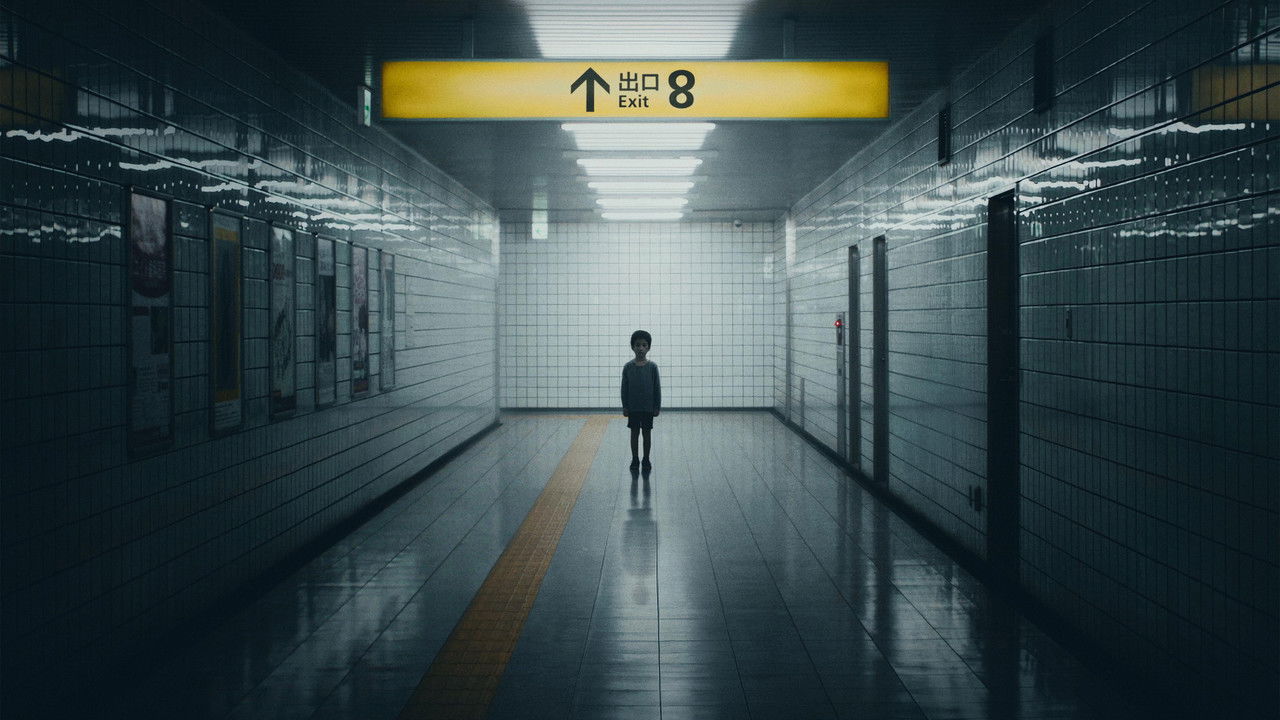
The film’s visual language is deceptively clinical. Kawamura and cinematographer Ryuto Kondo construct a world of oppressive symmetry. The underground passage, with its infinite yellow tactile paving and pristine white tiles, becomes a character in itself—a liminal space that refuses to let you leave. The film begins with a clever nod to its source material, employing a jittery first-person perspective that mimics the "gameplay" experience. However, Kawamura wisely abandons this gimmick early on, pulling back to a third-person view that isolates "The Lost Man" (Kazunari Ninomiya) in the frame. The camera lingers on the negative space around him, emphasizing that he is being watched not by a predator, but by the architecture itself.
The narrative engine is ruthlessly simple: find an anomaly in the corridor and turn back; find nothing, and move forward. Yet, Kawamura uses this mechanic to dismantle the psyche of his protagonist. Ninomiya delivers a masterclass in silent disintegration. His performance is devoid of the histrionics typical of the horror genre. Instead, he offers a portrait of a man eroding. We learn early on that his entrapment is not random; it follows a moment of moral cowardice on a train—a choice to ignore a mother being berated by a stranger. The subway loop, therefore, ceases to be a supernatural puzzle and becomes a purgatory of his own making, a manifestation of his inability to take action in his own life.
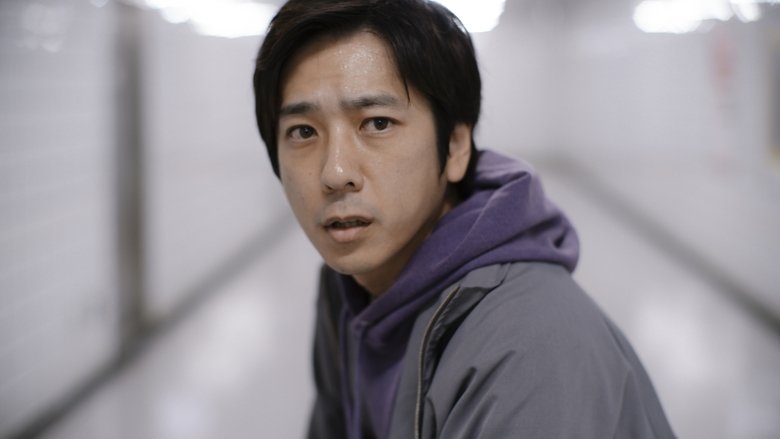
The "anomalies" he encounters are treated with a surreal, almost Lynchian gravity. They are not merely jump scares, but distortions of reality that challenge the Lost Man's sanity. The most haunting of these is the "Walking Man" (Yamato Kochi), a salaryman NPC (non-player character) who tramps mindlessly through the loop. He is a terrifying mirror for the protagonist—a vision of what happens when you follow the rules so perfectly that you cease to be human. In one of the film’s most striking sequences, the sterile reality breaks completely as a flood of muddy water sweeps through the corridor. Unlike the game’s crimson blood, this water is brown and heavy, a violent intrusion of the natural world into this artificial coffin, forcing the protagonist to physically fight for a survival he had previously been passive about.
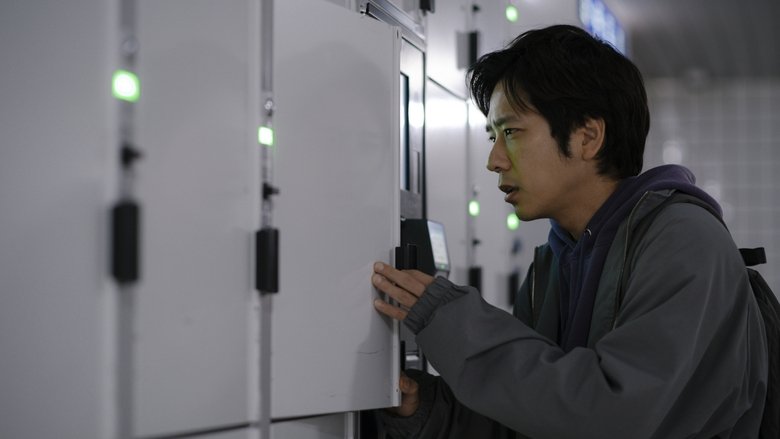
Ultimately, *Exit 8* transcends the limitations of its "video game movie" label. It is not interested in high scores or lore; it is interested in the weight of silence. By forcing us to stare at the same hallway for 95 minutes, Kawamura demands that we pay attention to the details we usually ignore—the flicker of a light, the pattern on a poster, the suffering of a stranger. The film suggests that our reality is only stable as long as we agree not to look too closely at the cracks. It is a chilling, impeccably crafted work that asks whether we are actually moving forward in our lives, or just walking in circles, waiting for permission to exit.