The Anatomy of EnduranceIt is a rare thing for a television series to outlive the technology it was originally filmed on. When *Grey’s Anatomy* premiered in 2005, it was viewed on boxy cathode-ray sets; today, it is streamed on 4K tablets by a generation that wasn’t born when Meredith Grey first overslept for her intern shift. To dismiss Shonda Rhimes’ magnum opus as merely a prime-time soap opera is to ignore its status as a shifting cultural monolith. This is not just a show about doctors; it is a twenty-year longitudinal study of American anxiety, grief, and the desperate, messy necessity of human connection.

From a visual standpoint, the series established a lexicon that has become the default for network drama, yet remains distinctly its own. The pilot, and indeed the first golden era of the show, utilized a frenetic, caffeine-fueled energy. The camera rushes down corridors in "walk-and-talk" sequences that owe a debt to *The West Wing*, but with a crucial difference: where Sorkin’s characters marched for politics, Rhimes’ surgeons march for survival. The hospital itself—Seattle Grace, later Grey Sloan Memorial—is shot in cool, clinical blues and sterilized whites, creating a visual temperature that makes the blood (and there is always blood) startlingly vibrant. This aesthetic choice turns the operating room into a high-contrast theater of the gods, where the lighting is unforgiving and the shadows conceal the doctors' personal wreckage.
At its heart, however, *Grey’s Anatomy* is a tragedy of proximity. The central thesis—delivered via Meredith Grey’s voiceovers, which range from profound to solipsistic—is that physical closeness in surgery breeds emotional entanglement. The show’s brilliance lies in how it weaponizes intimacy. It suggests that to cut someone open is an act of violence and love simultaneously. Ellen Pompeo’s performance as Meredith anchors this chaos. Over two decades, she has evolved from a "dark and twisty" intern, drowning in the shadow of her mother, into a stoic matriarch. It is a performance of accumulation; you can see the ghosts of every character death—and there have been dozens—layered behind her eyes. She is the survivor of a war of attrition.

The series is often criticized for its melodramatic excesses—the plane crashes, the hospital shooters, the bombs in body cavities. Yet, these operatic disasters serve a specific narrative function: they are metaphors for the randomness of trauma. The famous "Code Black" episode, where Meredith holds a live explosive inside a patient’s chest, is not just a suspense thriller; it is the ultimate crystallization of the show’s philosophy: one wrong move, one moment of trembling, and everything you love evaporates. The show argues that life is fragile, and the only defense against the absurdity of death is the loyalty of your "person"—a term the show injected into the modern vernacular to describe a bond deeper than romance.
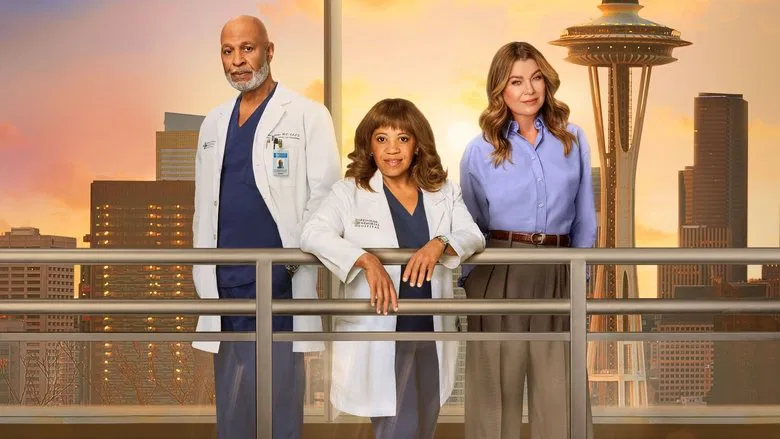
Ultimately, *Grey’s Anatomy* endures not because of the medicine, which is often dubious, but because it treats adult friendship with the gravity usually reserved for epic romance. It posits that the family you build in the trenches of your career is as vital as the one you are born into. While the narrative weight has arguably buckled under its own longevity in later seasons, the show remains a vital artifact. It is a testament to the idea that no matter how much we evolve, or how much technology changes, we remain terrified, hopeful bodies waiting for someone to hold our hand in the dark.