The Architecture of an EchoIn the vocabulary of cinema, we are accustomed to the gaze—the camera’s ability to witness, to verify, to show us the body in pain or the hero in triumph. But there is a terror far more primitive than sight: the terror of the acousmatic, where sound is divorced from its source, floating in a void of helpless imagination. In *The Voice of Hind Rajab*, director Kaouther Ben Hania, previously celebrated for her hybrid documentary *Four Daughters*, strips away the comfort of the visible to confront us with the anatomy of a silence. This is not merely a film about a tragedy in Gaza; it is a forensic reconstruction of a moral collapse, played out over a single, fraying telephone line.
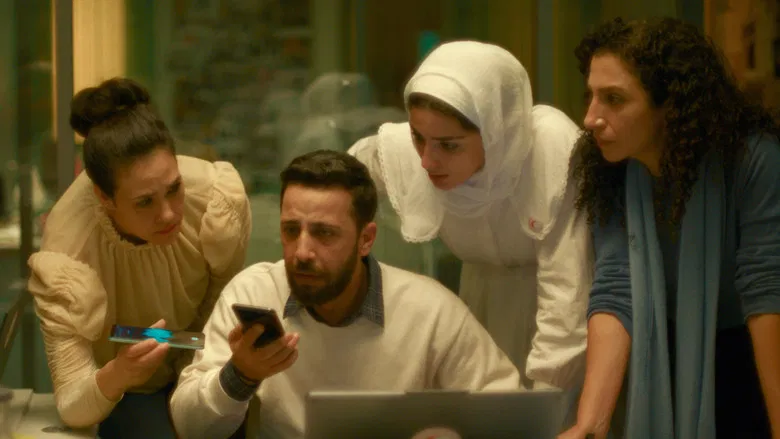
Ben Hania’s approach is rigorous, bordering on the ascetic. By focusing the narrative lens almost exclusively on the Red Crescent dispatch center in Ramallah, she creates a chamber drama of suffocating intensity. We do not see the tank, the shrapnel, or the six-year-old girl, Hind, trapped in the car with her deceased family members. Instead, we see the faces of the dispatchers—Omar (Motaz Malhees) and Rana (Saja Kilani)—as they become the unwilling conduits of a nightmare.

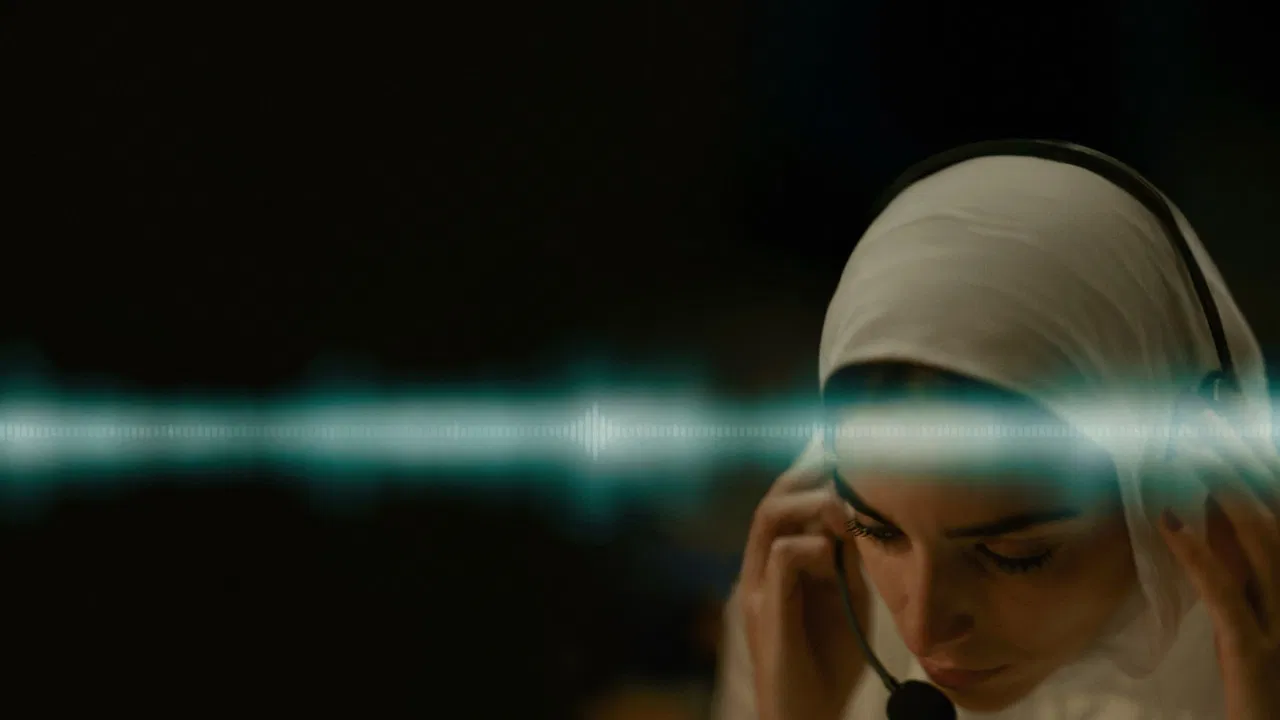
The visual language of the film is deliberately constrained, trapping the audience in the same neon-lit purgatory as the operators. The cinematography favors tight close-ups, capturing the beads of sweat and the micro-expressions of panic that ripple across Malhees’s face. Every time the connection crackles, the film’s sound design takes center stage—a jagged, glitching tapestry of static and the small, terrified voice of a child pleading for a rescue that the audience, burdened with the curse of history, knows will not arrive in time.
It is a daring choice to utilize the real audio recordings of Hind Rajab’s calls within a dramatized setting. In lesser hands, this could have veered into exploitation. However, Ben Hania treats these recordings not as "assets" for dramatic tension, but as sacred artifacts. The actors often stop acting, their performances yielding to the crushing weight of the reality they are simulating. There are moments where the screen fades to black, leaving only the audio waveform—a visual representation of a life reduced to data, screaming into the digital abyss.

The emotional core of the film lies in the "impotence of goodness." The dispatchers are not traditional heroes; they are paralyzed observers, armed with maps and protocols but stripped of power by a bureaucratic and military machinery that renders mercy impossible. Motaz Malhees delivers a performance of shattering vulnerability, embodying the collective trauma of a witness who cannot intervene. His frustration mirrors our own—the paralysis of watching a genocide unfold on live feeds, separated by screens and safety, unable to reach through the glass.
By refusing to recreate the violence visually, Ben Hania denies us the catharsis of the spectacle. We are forced to construct the horror in our own minds, which makes it infinitely more permanent. The film asks us to listen, truly listen, to the sound of a system failing a child. It is an indictment of the world that allowed the line to go dead.
*The Voice of Hind Rajab* is not an easy watch, nor is it intended to be. It is a grueling, necessary document that uses the medium of cinema to preserve a memory against the erosion of indifference. In the end, the film does not offer resolution. It offers only the echo, demanding that we carry it with us long after the credits have rolled.