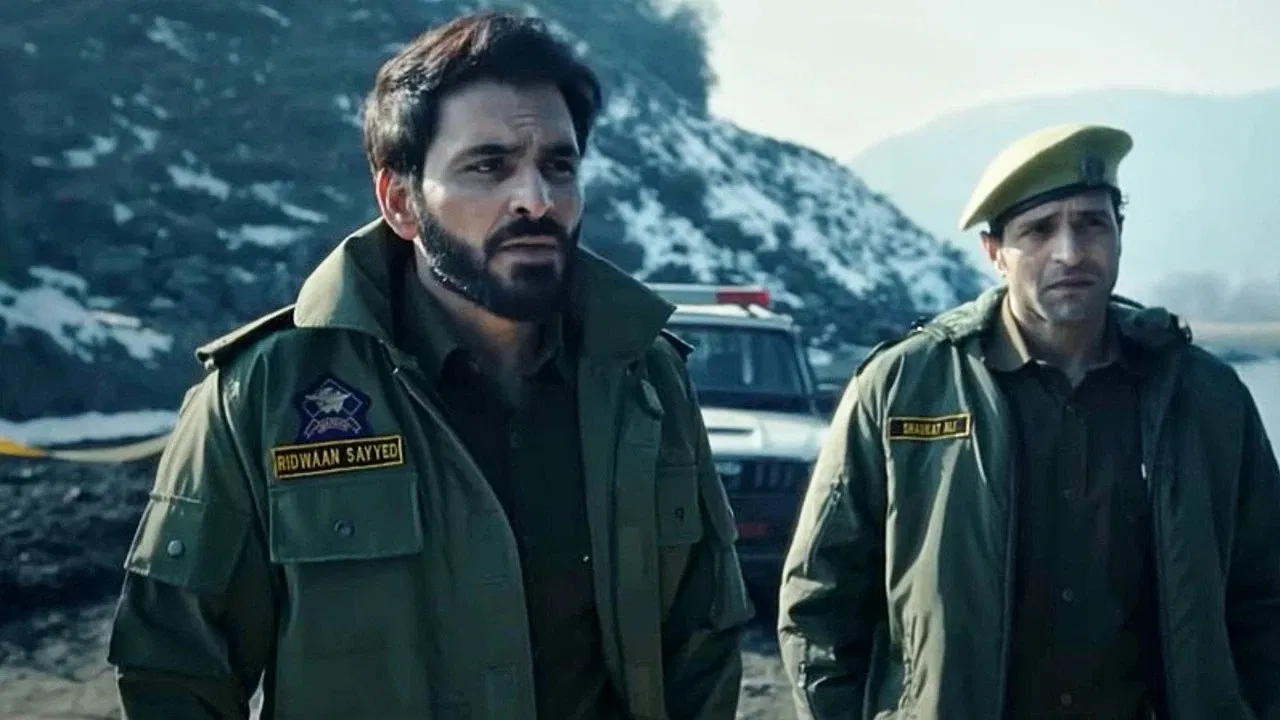
The Silent Scream of the ValleyIn the vast, snow-blind landscapes of Kashmir, silence is rarely empty; it is usually holding its breath. Aditya Suhas Jambhale’s *Baramulla* (2025) understands this distinction with terrifying clarity. Coming off the heels of the politically charged *Article 370*, Jambhale returns to the valley, but this time he trades the tactical maps of a procedural for the shadows of a haunted house. It is a bold, if uneven, pivot—a film that attempts to marry the rigid logic of a police investigation with the fluid, uncontainable grief of supernatural horror. While it occasionally stumbles under the weight of its own metaphors, *Baramulla* succeeds in suggesting that in a land scarred by exodus and insurgency, the past doesn't just haunt the present; it actively intervenes in it.
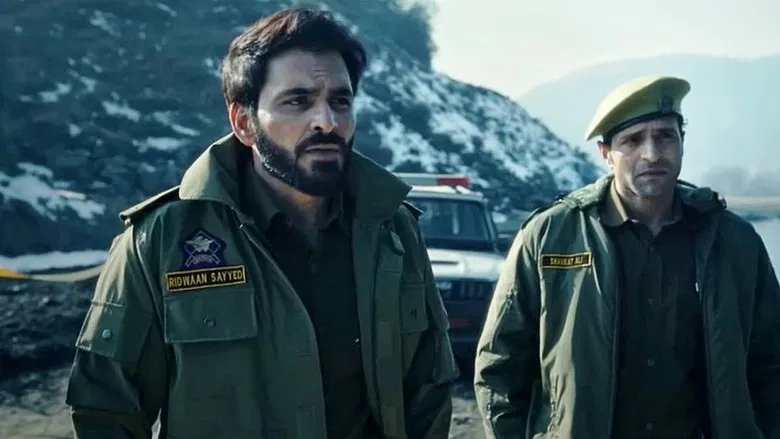
From a visual standpoint, Jambhale and cinematographer Saurabh Goswami have created a world that feels suffocatingly cold. The film avoids the postcard vibrancy often associated with Kashmir, opting instead for a palette of bruised blues, greys, and an oppressive, blinding white. The horror here is not found in jump scares or gore, but in the architecture of the frame—the way a doorway looms like a mouth, or how the snow seems to swallow sound. The supernatural elements are treated with a restraint that borders on the clinical. When the paranormal intrudes upon the life of DSP Ridwaan Sayyed (a stoic Manav Kaul), it doesn’t arrive with a bang, but with a whisper—creaking floorboards and spectral flowers that feel less like threats and more like memories refusing to fade.
The narrative spine involves Sayyed’s investigation into a string of child disappearances, a procedural beat that grounds the film in a grim reality. However, the film’s true pulse beats inside the Sayyed home. Here, Manav Kaul delivers a performance of quiet devastation. He plays Ridwaan not as a hero, but as a man whose reliance on logic is slowly being eroded by a grief he cannot categorize. Beside him, Bhasha Sumbli (as his wife, Gulnaar) provides the film’s emotional ballast, embodying a vulnerability that eventually transforms into a conduit for the film’s central revelation. The domestic horror mirrors the external political tension, blurring the line between the safety of home and the danger of the "outside."
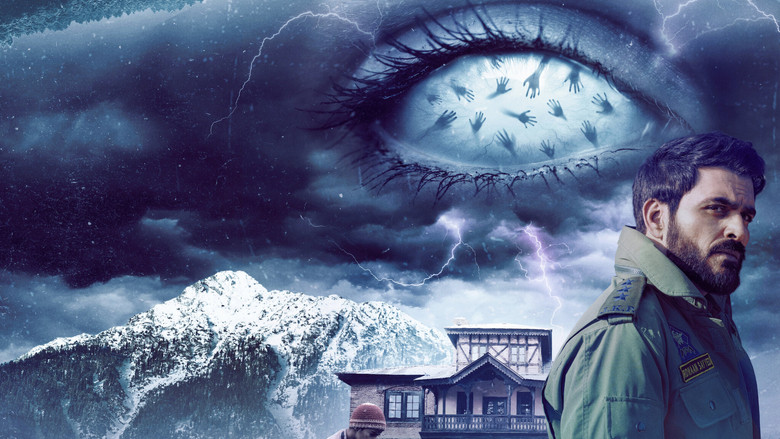
Where *Baramulla* truly distinguishes itself—and invites the most discourse—is in its subversion of the ghost story. In most horror cinema, the spirit is a malevolent force to be exorcised. Jambhale flips the script: here, the haunting is historical. The spirits are not monsters; they are the displaced, the forgotten Kashmiri Pandits whose trauma has become part of the house's foundation. The real horror is revealed to be entirely human—the extremism that preys on the living children of the valley. This metaphorical pivot is powerful, turning the supernatural into a guardian force, though it risks becoming didactic in the final act. The climax, which literalizes this "us vs. them" dynamic, loses some of the film’s earlier atmospheric subtlety in favor of a more chaotic resolution.

Ultimately, *Baramulla* is a film about the impossibility of moving on without looking back. It suggests that a house—or a nation—cannot be renovated if its foundations are built on unresolved pain. While it may not satisfy those looking for a traditional creature feature, it offers something far more lingering: a portrait of a place where the dead are restless because the living have yet to learn from them. It is a flawed but deeply felt entry into the growing canon of "social horror," proving that the scariest stories are often the ones we already know, but refuse to tell.