The Sword in the Server RoomIf cinema is a church, Quentin Tarantino has always been its most devout, if eccentric, preacher. He worships at the altar of the physical—the grain of 35mm film, the tactile spray of squibs, the sanctity of the grindhouse theater. This is why *The Lost Chapter: Yuki’s Revenge* (2025) feels initially like a heresy. A "lost" sequence from his *Kill Bill* saga, resurrected not on celluloid but within the digital architecture of *Fortnite*, seems to contradict everything the director stands for. Yet, once the initial shock of the medium fades, what remains is a fascinating, if dissonant, collision of high-octane auteurism and the virtual ether. It is a ghost story told in code, proving that a creator’s fingerprint can smudge even the cleanest digital glass.

The premise is pure Tarantino folklore: a sequence stripped from the original *Kill Bill* script for pacing, now restored. Yuki Yubari (voiced with manic energy by Miyu Ishidate Roberts), the twin sister of the mace-wielding Gogo, hunts The Bride to a sun-drenched Los Angeles motel. The visual language is disorienting. We are watching the familiar, hyper-saturated aesthetic of a battle royale game, but the camera refuses to behave like one. Gone are the floating third-person tracking shots of a gamer’s HUD. Instead, we get low-angle trunk shots, snapping whip-pans, and the distinctive, claustrophobic framing of a spaghetti western.
The director forces the Unreal Engine to sweat. In the standout confrontation sequence, The Bride (a returning, motion-captured Uma Thurman) pleads with Yuki to walk away. The digital avatars, usually blank slates for player projection, are imbued with a startling micro-expressivity. When The Bride sighs, the weight of her digital shoulders drops with a weariness that feels analog. It is a testament to the performance capture that we look past the stylized, cartoonish texturing and see the exhaustion of a woman who is tired of killing, even as she prepares to do it again. The cognitive dissonance—hearing Thurman’s weary, gravelly delivery coming from a *Fortnite* model—creates a strange pathos, highlighting the artificiality of violence itself.

However, the experiment is not without its failures. The "lost chapter" struggles to reconcile the weight of death with a medium designed for infinite respawns. In *Kill Bill*, violence is operatic and consequential; limbs are severed, and blood sprays in geysers of crimson arterial pressure. Here, the violence is sanitized by the engine’s T-rated constraints. When steel meets digital flesh, the impact feels muted, lacking the visceral, wet crunch that characterizes the director’s live-action work. The tension of the duel is palpable, but the release is bloodless. It transforms the sequence into a kind of shadow puppetry—we are watching the *idea* of a Tarantino fight rather than the fight itself.
Despite these sanitary limitations, the "Heart" of the piece beats surprisingly loud. This is not just an action scene; it is a meditation on the cycle of revenge that fuels the entire saga. Yuki is not a villain, but a mirror—another sister grieving, another woman consumed by a debt of blood she feels compelled to pay. The tragedy is that we know The Bride’s journey isn’t over, and Yuki is just another name on a list that was already too long.
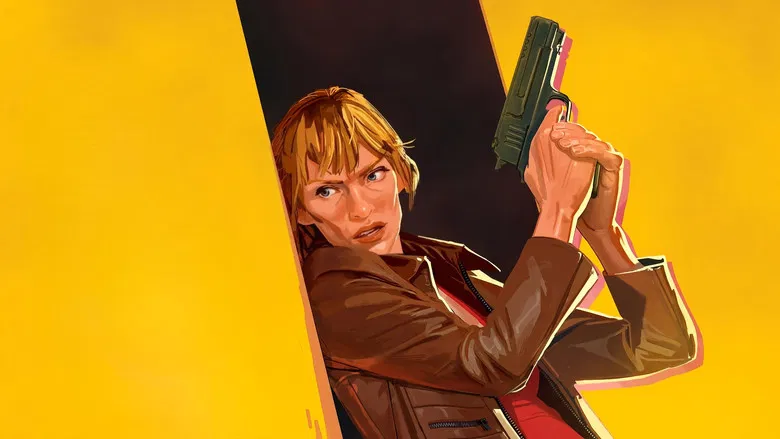
Ultimately, *The Lost Chapter: Yuki’s Revenge* is a mesmerizing curio. It will likely alienate purists who demand film grain and confuse gamers looking for a quick loot drop. But as a piece of cultural criticism, it is invaluable. It bridges the gap between the cinema of the past and the interactive storytelling of the future, suggesting that the "director's vision" is a ghost that can haunt any machine. It is flawed, weird, and undeniably distinct—a digital dream of a movie that never was.