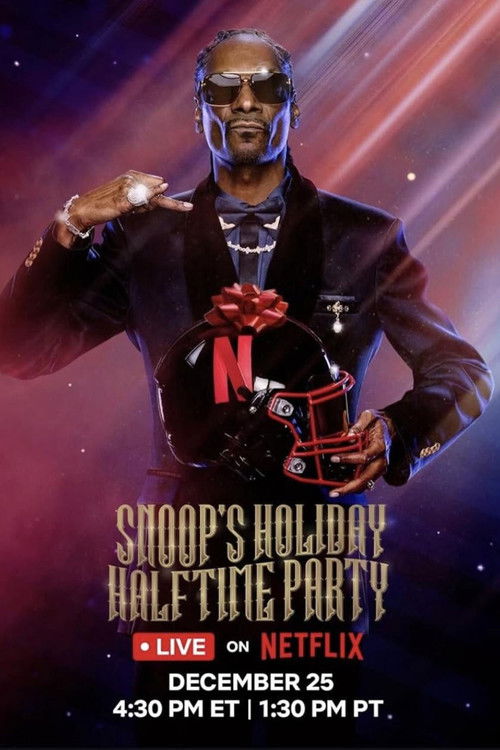
The Algorithm’s Christmas CarolIn the modern streaming landscape, the line between "cinema" and "brand activation" has become increasingly porous, yet rarely has it been obliterated with such festive aggression as in *Snoop’s Holiday Halftime Party*. If cinema is a mirror reflecting our reality, this Netflix production—broadcast live from the frozen tundra of a Minnesota "Winter Whiteout"—reflects a culture that wants everything, all at once, regardless of coherence. It is less a concert film and more a surrealist variety hour, presided over by Snoop Dogg, a man who has successfully transitioned from West Coast iconoclast to America’s cozy, ubiquitous uncle.

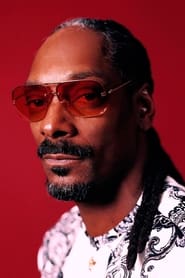
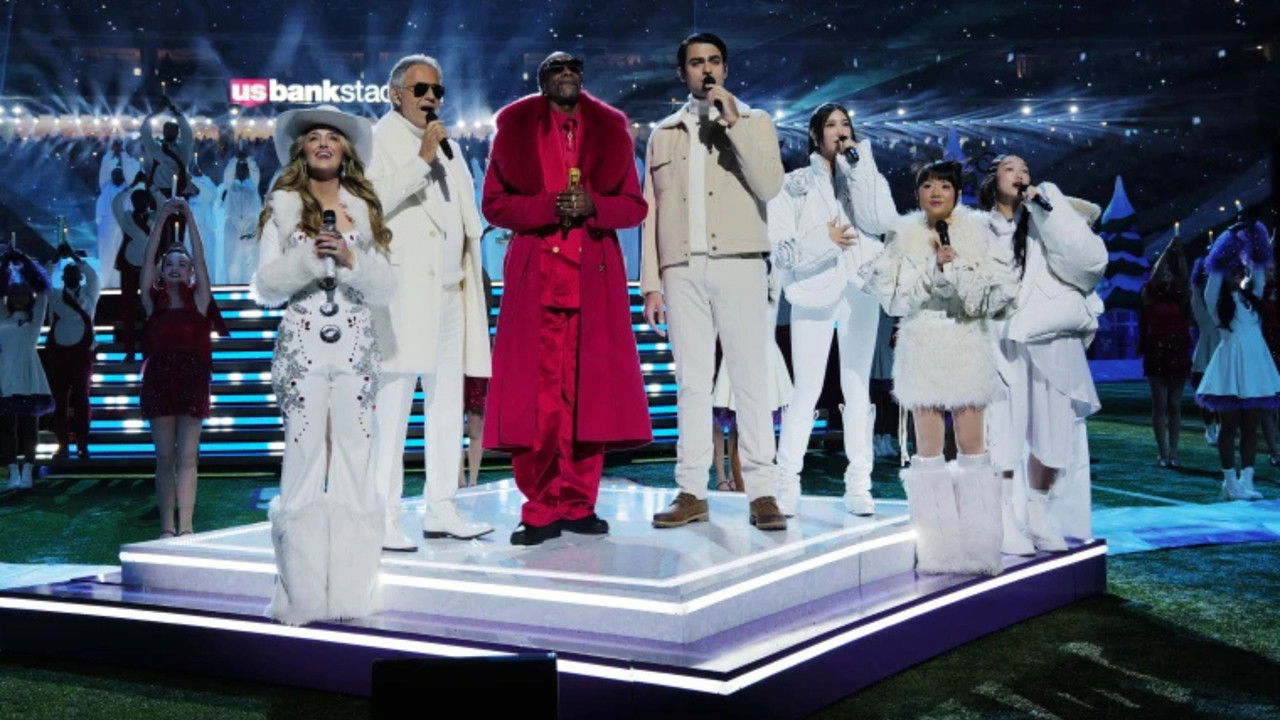
Visually, the production creates a suffocating sense of hyper-reality. The choice to stage this amidst the NFL’s Detroit Lions vs. Minnesota Vikings game provides a backdrop that feels gladiatorial yet strangely sanitized. The directors lean into the "Winter Whiteout" theme with a literalism that borders on camp. Snoop, draped in a Santa-esque red fur that creates a striking contrast against the monochromatic stadium, functions as the visual anchor in a sea of chaotic aesthetics. The camera work is frantic, trying to capture the intimacy of a holiday special within the cavernous void of U.S. Bank Stadium, resulting in a visual language that feels simultaneously expensive and hollow.

The special’s true friction, however, lies in its aggressive genre-bending, which serves as a fascinating, if disorienting, study of modern attention spans. We witness a narrative collapse of musical identity: the G-Funk swagger of "Drop It Like It's Hot" serves as a mere prelude to the evening's most postmodern curiosity—the appearance of HUNTR/X. Here, the production blurs the lines of reality; this is a fictional K-pop group from a Netflix animated film (*K-Pop Demon Hunters*), brought to life by performers Rei Ami, Audrey Nuna, and Ejae. Watching a "fake" band perform a bass-heavy, frenetic remix of "The 12 Days of Christmas" while ballerinas pirouette in the background is perhaps the definitive image of 2025 pop culture: a corporate synergy loop presented as high art. It is disjointed, bizarre, and utterly transfixing in its artificiality.
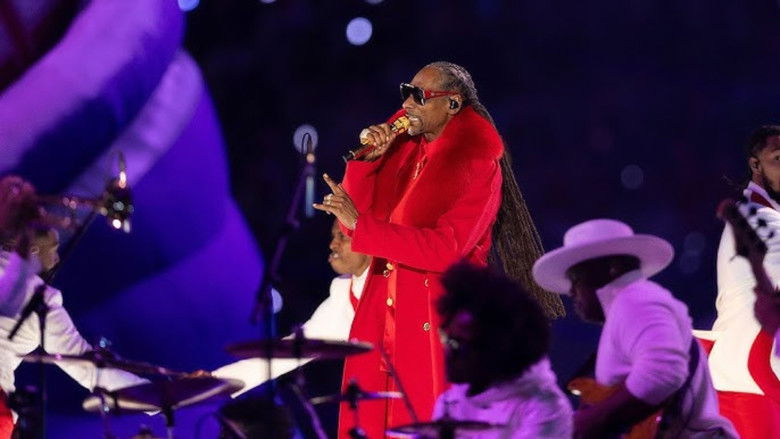
Yet, just as the audience settles into this fever dream of cross-promotion, the piece pivots to unearned sentimentality. The arrival of Andrea and Matteo Bocelli for a rendition of "White Christmas," complete with artificial snow drifting onto the turf, attempts to inject a classical "heart" into the spectacle. It creates a tonal whiplash that is difficult to recover from. We are asked to pivot from Snoop’s crip-walking to high opera in a matter of seconds. While the vocal performance is undeniably powerful, it highlights the cynical construction of the event: throw every demographic an emotional bone, and hope something sticks.
Ultimately, *Snoop’s Holiday Halftime Party* is a fascinating artifact of a time when entertainment has ceased to be about a singular vision and has become a data-driven collage. It is a spectacle that demands you look at it, not because it has something to say, but because it is loud, shiny, and omnipresent. It is the holiday spirit algorithmically optimized—perfectly consumable, instantly forgettable.