✦ AI-generated review
The Dream With Open Eyes
For years, a curious paradox has haunted James Cameron’s *Avatar* (2009). Despite being the financial apex of the medium, a common critical refrain suggests it left no "cultural footprint"—that it vanished without leaving behind a memorable quote or an iconic costume. This argument, however, fundamentally misunderstands the nature of Cameron’s ambition. *Avatar* was never designed to be quoted; it was designed to be inhabited. In an era where cinema often functions as a delivery system for irony and self-referential wit, Cameron committed an act of radical, uncool sincerity: he asked us not just to watch a movie, but to submit to a dream.
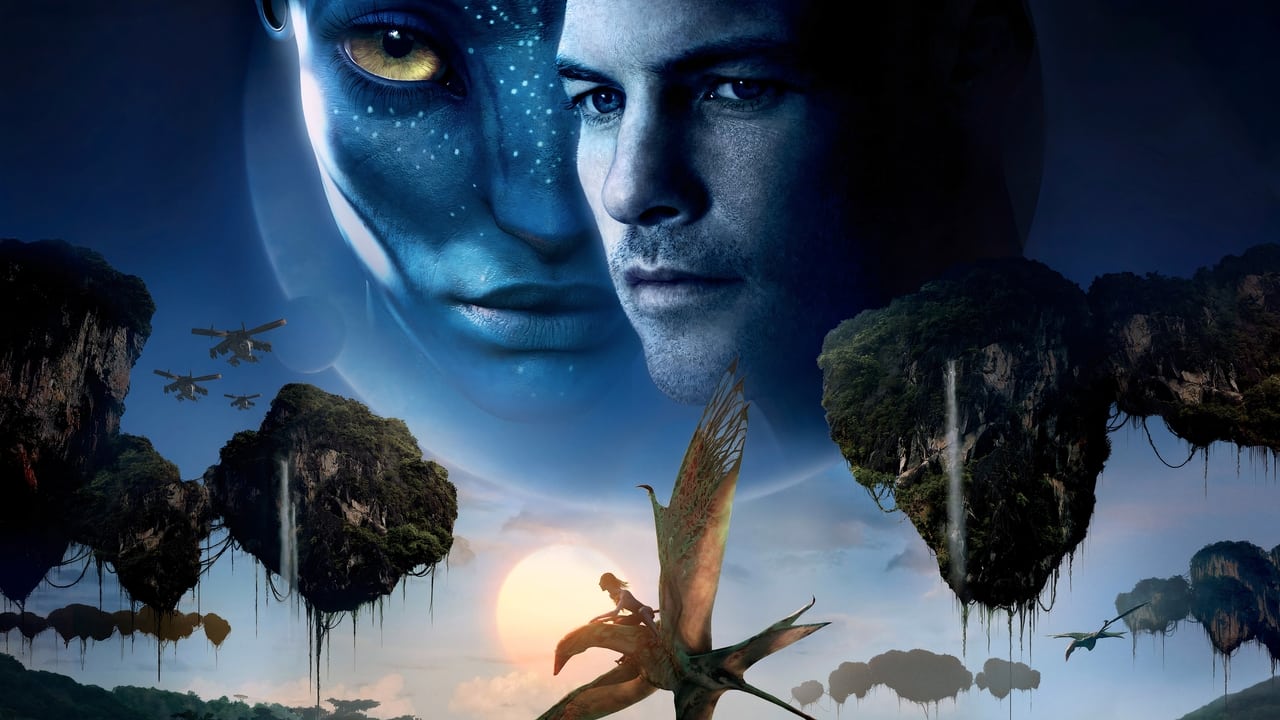
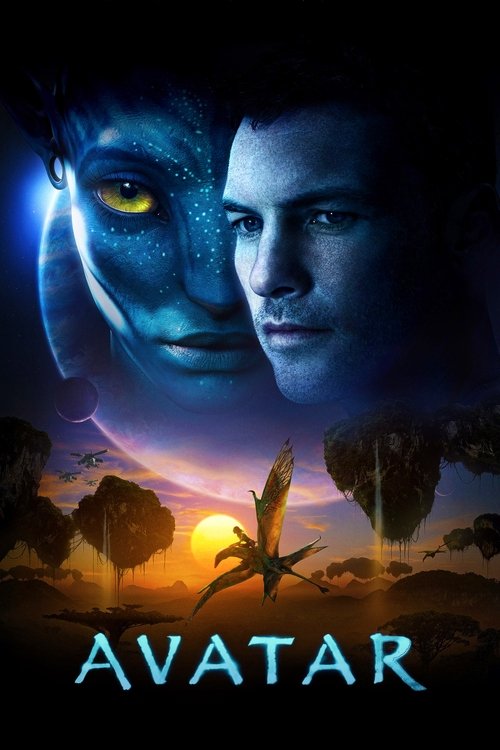
To view *Avatar* merely as a technical exercise is to ignore the profound melancholy that anchors its spectacle. The film’s visual language is built on a stark duality. The human world is rendered in cold, desaturated blues and greys—the industrial claustrophobia of the Hell’s Gate base, where machinery clanks and fluorescent lights hum with headache-inducing sterility. In contrast, the bioluminescent forests of Pandora are not just "colorful"; they are a breathing, tactile ecosystem. Cameron’s use of stereoscopic 3D was not a gimmick to poke the audience in the eye, but a method to eliminate the screen itself, dissolving the barrier between the viewer and the sublime. When the screen fills with floating "woodsprites," the impulse is not to analyze the CGI, but to reach out.
The narrative, frequently dismissed as a derivative retelling of *Dances with Wolves* or *Pocahontas*, admittedly relies on broad, mythic strokes. Yet, this simplicity serves a specific purpose: it acts as a fable-like vessel for a complex transhumanist sorrow. The protagonist, Jake Sully (Sam Worthington), is not merely a soldier but a paraplegic man living in a broken economy. The film’s most euphoric scene is not a battle, but the moment Jake first wakes in his avatar body. He wiggles his blue toes in the soil and takes off running, crashing through the laboratory doors to feel the sun. The camera captures his movement with a frantic, joyous energy that communicates a universal desire: the longing to escape the limitations of the flesh and the crushing gravity of a dying world.
Critics have rightfully interrogated the "white savior" tropes embedded in the script, where the outsider masters the indigenous culture faster than the natives themselves. However, the film complicates this by presenting humanity not as a civilization to be saved, but as a cancer to be excised. The destruction of Home Tree remains one of the most harrowing sequences in modern blockbusters, invoking the imagery of September 11th with a terrifying twist: this time, we are the terrorists. The audience is forced to watch the collapse of the sacred ancient cedar through the eyes of the Na’vi, feeling the ash and the devastation. In that moment, Cameron weaponizes our own history against us, demanding we mourn the loss of a connection to nature we have long since severed.
Ultimately, *Avatar* is less a science fiction action movie and more a cinematic prayer for a lost Eden. Its staying power lies not in clever dialogue, but in the "Avatar Blues"—the reported depression audiences felt upon leaving the theater and returning to a grey, paved reality. Cameron’s triumph was not in selling us a product, but in inducing a collective hallucination so potent that waking up felt like a loss. It stands as a testament to the power of big-screen mythmaking, reminding us that cinema’s highest calling is to show us a world we can believe in, even if we can never truly touch it.