The Commodification of TraumaIf *The Boys* is a sledgehammer smashing through the facade of American exceptionalism, its spinoff *Gen V* is a scalpel, slicing into the tender, unformed psyche of the generation inheriting the rubble. Set within the marble halls of Godolkin University—a prestigious institution for "supes" that feels uncomfortably like an Ivy League pressure cooker mixed with a black-site laboratory—the series initially presents itself as a raucous satire of young adult tropes. Yet, beneath the exploding body parts and hormonal rampages, it reveals a profound melancholy about what it means to grow up in a world where your pain is not just a burden, but a brand asset.
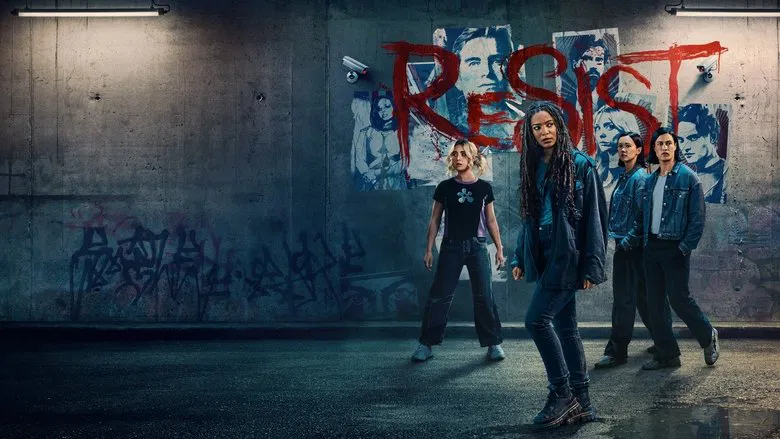
Visually, *Gen V* distinguishes itself from its parent series by trading the sterile corporate blues of Vought International for the warm, deceptive golds of academia. The cinematography utilizes a slightly hazier, more intimate depth of field, trapping the characters in their own anxieties even when surrounded by peers. The special effects, while retaining the franchise's signature visceral gore, serve a different semiotic purpose here. When Marie Moreau (Jaz Sinclair) weaponizes her blood, it is not merely a "cool power"; it is a manifestation of self-harm and survival. The directors frequently frame her powers in tight, uncomfortable close-ups, forcing the audience to witness the physical cost of her strength. The visual language constantly reinforces the idea that for these students, power is inextricably linked to their bodies' violation.
At the narrative's heart lies a scathing critique of how modern institutions weaponize identity. The students of Godolkin are not just learning to save lives; they are learning to curate their demographics. The struggle of Jordan Li (played with seamless duality by London Thor and Derek Luh), a gender-shifting supe, is one of the most compelling arcs in modern superhero fiction. The university administration views Jordan’s identity not as a human reality, but as a polling problem—too masculine for one demographic, too fluid for another. The show brilliantly dramatizes the "diversity and inclusion" industrial complex, where acceptance is granted only as far as it is profitable.
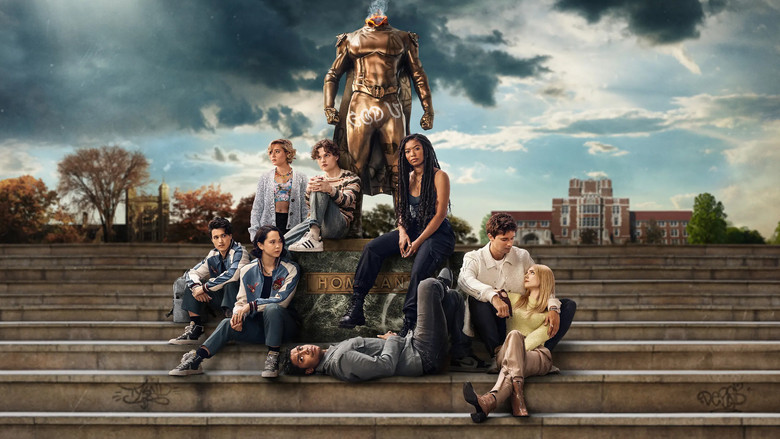
The central performance by Jaz Sinclair as Marie anchors the show in a grim emotional reality. Unlike the cynical vigilantes of *The Boys*, Marie still possesses a flicker of earnestness, a desperate need to believe that the system can work if she just tries hard enough. Her journey is a tragic deconstruction of the "gifted kid" syndrome. She is told her trauma—the accidental killing of her parents—is her origin story, a narrative hook to be polished for a press release. The horror of *Gen V* isn't the underground experiments or the super-powered murders; it is the realization that these young people are being groomed to view their own souls as content to be optimized.

Ultimately, *Gen V* succeeds because it refuses to treat its teenage protagonists with the condescension often found in the genre. It understands that for Gen Z, the apocalypse isn't a future threat—it is the background radiation of their daily lives. By blending the gross-out humor of a college sex comedy with the existential dread of a dystopian thriller, the series creates a unique frequency of despair. It argues that in a capitalist hellscape, the most dangerous supervillain isn't a flying fascist, but the board of directors who decides which heroes are marketable enough to survive.