The Architecture of DesireIt is a curious thing when a film about unbridled passion arrives feeling so meticulously hermetically sealed. Sam Taylor-Johnson’s *Fifty Shades of Grey* (2015), adapted from the literary phenomenon that redefined the boundaries of supermarket smut, is not the disaster of incompetence many critics gleefully anticipated. Instead, it is something more fascinating and perhaps more frustrating: a visually luxurious, emotionally sterile artifact of Hollywood’s attempt to sanitize the profane. Taylor-Johnson, a visual artist of considerable pedigree (and director of the soulful *Nowhere Boy*), approaches this material not with the sweaty palms of an exploiter, but with the cool, detached eye of a curator.

From the opening frames, the film declares its aesthetic allegiance. This is not the grimy, handheld world of realism, but a sleek, steel-gray fantasy of modern wealth. Seamus McGarvey’s cinematography captures Seattle as a place of perpetual twilight and glass surfaces, reflecting the impenetrable nature of its anti-hero, Christian Grey (Jamie Dornan). The film looks expensive—oppressively so. The director uses this visual language to create a sense of entrapment that is arguably more effective than the narrative itself. The world Christian inhabits is so curated, so devoid of dust or clutter, that Anastasia Steele’s (Dakota Johnson) entrance feels like a disruption of a museum exhibit rather than a romantic meet-cute.
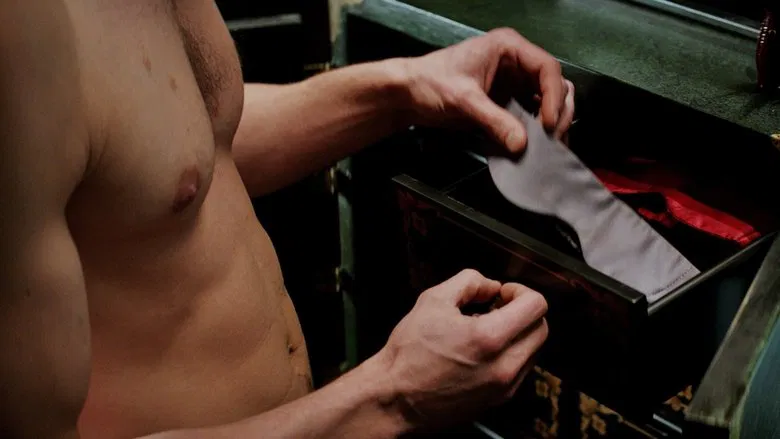
However, the film’s central conflict—the negotiation of a BDSM contract between a billionaire and a virginal literature student—suffers from a fatal lack of danger. The script, handcuffed by the source material’s notorious dialogue, struggles to find a pulse. Jamie Dornan, physically perfect but emotionally vacant, plays Grey less like a tortured soul and more like a sentient mannequin. There is a void where his charisma should be, making his predatory stalking feel more administrative than obsessive.
The saving grace, and the film’s only source of genuine warmth, is Dakota Johnson. As Anastasia, she performs a miracle of acting alchemy, spinning straw into gold. Johnson brings a winking, self-aware humor to a character written as a passive vessel. In the famous "contract negotiation" scene, where lesser actors might have succumbed to the absurdity of the legalese, Johnson finds agency. She scoffs, she questions, and she infuses the moment with a human incredulity that the audience desperately craves. She is the only person in the film who seems to realize she is in a movie, and her refusal to take the melodrama entirely seriously gives the film a heartbeat.
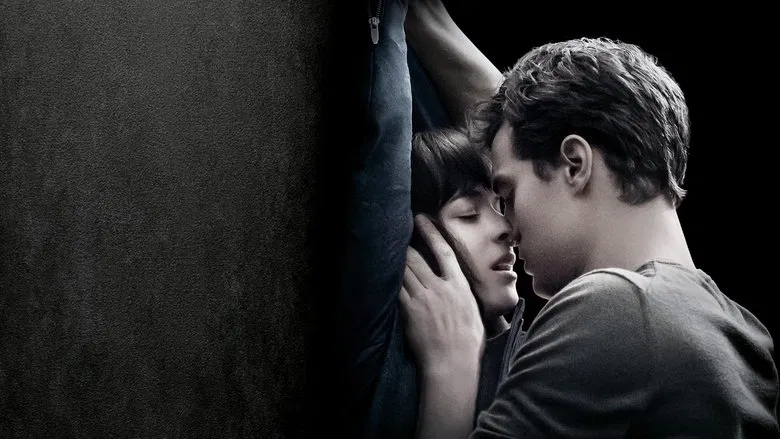
Ultimately, *Fifty Shades of Grey* is a film at war with itself. Taylor-Johnson strives for an erotic thriller in the vein of *9½ Weeks* or *Last Tango in Paris*, prioritizing mood and silence over explicit shock. Yet, the source material demands a soap opera. The result is a picture that is too tasteful to be trashy fun, but too shallow to be a profound exploration of psychosexual power dynamics. It leaves the viewer not scandalized, but strangely sedated—a beautifully shot, well-scored void where love is just another asset to be managed.