Love in the Year of the Lost SummerThere is a specific, haunting silence that defines the collective memory of 2020. It is the silence of empty school gymnasiums, of cancelled flights, and of calendars marked with events that never happened. Cinema is only just beginning to process this global pause, often through the lens of horror or thriller. However, *Anyway, I'm Falling in Love with You* (2025), directed by Junichi Yamamoto, dares to filter this trauma through the soft-focus lens of *shojo* romance. What appears at first glance to be a standard "reverse harem" dynamic—one girl surrounded by four handsome childhood friends—reveals itself to be a surprisingly tender elegy for a "lost generation" of adolescents who saw their golden years evaporate behind masks and closed doors.
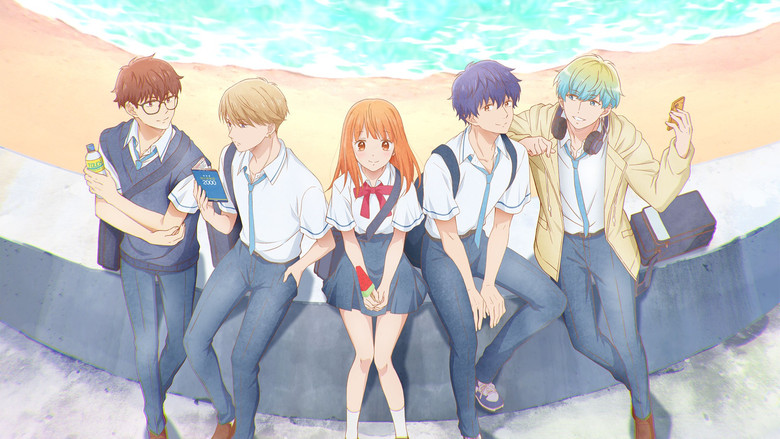
The series does not shy away from the cruel banality of its setting. It is July 2020. Mizuho Nishino is turning seventeen, a birthday that serves as the narrative’s inciting disappointment: her parents forget it, her school trips are cancelled due to the "new infectious disease," and the senior she admires rejects her. In a standard genre piece, these would be personal failings; here, they are symptoms of a world that has stopped caring about individual joy. Yamamoto utilizes the visual language of the coastal town—blindingly bright blues and overexposed whites—to create a dissonance between the setting and the mood. The world looks like a paradise, yet it feels suffocatingly small. The animation, produced by Typhoon Graphics, occasionally suffers from a stiffness in character movement, yet this rigidity inadvertently complements the narrative: these are characters stuck in a year where no one could move forward.
The "lens" of the show is frequently water-stained. With Kizuki, the primary love interest and a swimmer, the pool becomes a recurring visual motif. Water here is not just about summer romance; it represents submersion and isolation. When Mizuho and Kizuki interact, the sound design often drops out, leaving a muffled intimacy that mimics being underwater—or perhaps, being the only two people left in a world stripped of its noise. The show’s aesthetic beauty lies in these quiet, suspended moments, where the vibrant colors of youth fight against the sterilization of the pandemic era.
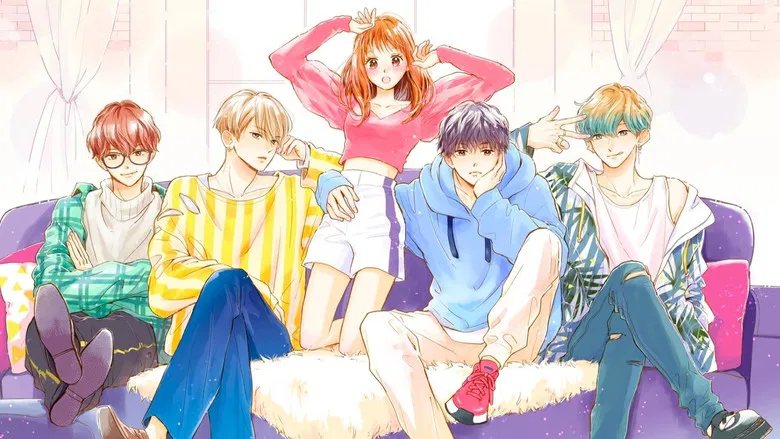
At its heart, the series is less about romance and more about the desperate reclamation of agency. When Kizuki asks Mizuho out, it is not merely a confession of love; it is an act of rebellion against the stagnation of 2020. Mizuho’s internal struggle is poignant not because she is indecisive about boys, but because she is mourning the "dazzling youth" she was promised but denied. The script treats her teenage angst with the gravity it deserves. To an adult, a missed school festival is a minor annoyance; to a seventeen-year-old in lockdown, it is a tragedy. The show honors that pain. The romantic tension serves as a lifeline, a proof of life in a year of social death.
Ultimately, *Anyway, I'm Falling in Love with You* transcends its genre tropes by becoming a time capsule. It captures the specific anxiety of a generation that was told to wait, only to realize that time waits for no one. While it indulges in the comforting clichés of childhood friends and schoolyard crushes, it does so with a melancholic undercurrent that resonates deeply. It suggests that even when the world stops, the heart—stubbornly, inconveniently—keeps beating.