Dead on Appraisal backdrop
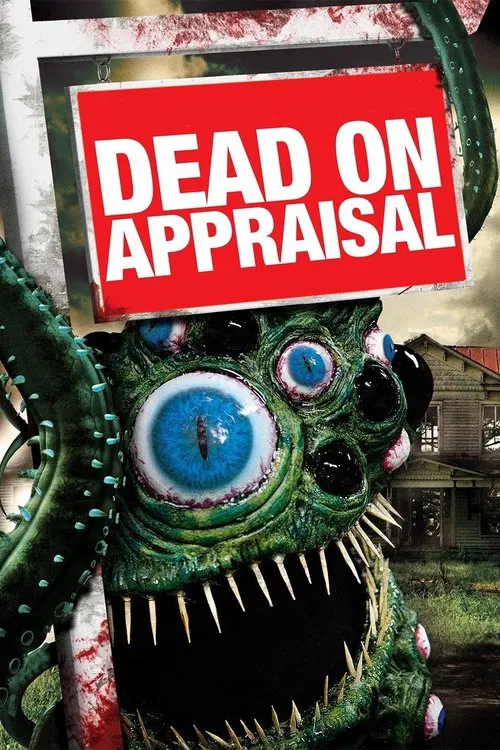
Dead on Appraisal poster

Dead on Appraisal

“A Realtor must sell a house where every new resident dies under strange circumstances.”

4.2
2014
1h 22m
ComedyHorrorScience Fiction
Director: Sean Canfield

Overview

Real estate agent John Dante has a problem. He's stuck with a house he can't sell. Despite his best efforts, he can't seem to overcome the house's past and the macabre tales that precede it in this haunting anthology. In the first story, THE MORNING AFTER, a group of friends wake up from the party of a lifetime to find a nightmare in the form of the worst bug invasion any homeowner has ever seen. Then there's Freddie Cooper and his band, FREDDIE AND THE GOBLINS; a tale of how Freddie's band mates try to kick him out and get caught up in the young singer's growing psychosis. With his hopes of selling the house fading, John is horrified to hear the story of Robbie, a young veteran of the war in Iraq, who returns home to live with his father Brad in FATHER LAND. Something isn't right, though, as Robbie's dark secret slowly bubbles to the surface. As the house's dark past comes to life, John becomes weary and is convinced the house is cursed and unsellable.

Trailer

Dead On Appraisal 2014 Official Trailer 1 YouTube

Cast

Reviews

AI-generated review
The Demon in the Faculty Lounge

In the current landscape of animation, where high-gloss aestheticism often masks a hollowness of spirit, the return of *Hell Teacher: Jigoku Sensei Nube* (2025) feels less like a reboot and more like an unearthing. We are accustomed to the "franchise resurrection"—that cynical necromancy where intellectual property is paraded around in the skin of the new. Yet, under the direction of Yasuyuki Oishi at Studio Kai, this revival of the 1990s classic bypasses the trap of modern cynicism. It does not attempt to "fix" the past with irony; instead, it earnestly reinstates the specific, dusty terror of schoolyard folklore, reminding us that the horrors of childhood are often just misunderstood tragedies waiting for a teacher who cares enough to listen.

The visual language of the series is a fascinating study in deliberate anachronism. Studio Kai, perhaps best known for the kinetic polish of *Uma Musume*, here restrains its hand. The animation does not strive for the hyper-fluidity of *Jujutsu Kaisen* or the cinematic grandeur of *Chainsaw Man*. instead, it embraces a "retro-modern" stiffness—a sturdy, thick-lined character design that feels ripped from a 1996 issue of *Shonen Jump* and pasted onto a 4K canvas.

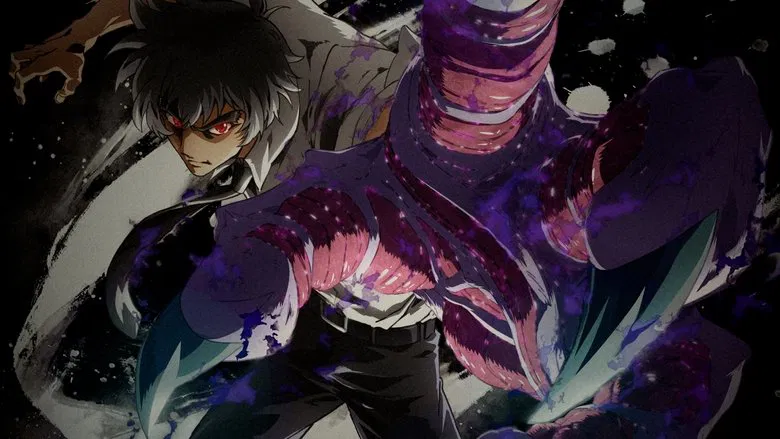
Nube and his students facing the supernatural

This aesthetic choice is not merely nostalgic; it is functional. By maintaining the slightly exaggerated, expressive faces of the 90s against cleaner, modern backgrounds, the show creates a sense of dislocation that suits the genre perfectly. The supernatural elements—the anatomical models that walk, the spirits haunting the bathroom stalls—retain their grotesquerie precisely because they look like they don't belong in the sleek, smartphone-illuminated world of 2025. The dissonance *is* the point. When Nube’s "Demon Hand" is finally unsheathed, the shift in color palette from the mundane fluorescents of the classroom to the deep purples and crimsons of the spirit world signals a psychological break that is as effective now as it was thirty years ago.

At the center of this storm stands Meisuke Nueno, or "Nube." In an era of protagonists defined by their trauma or their tactical genius, Nube remains a refreshing paradox: a clumsy, underpaid public servant who happens to be the most powerful exorcist in Japan. The script understands that his power lies not in the demon sealed within his left hand, but in the radical empathy of his right. He is the ultimate humanist in a world of post-human monsters.

The dark atmosphere of a spiritual encounter

This is most poignant in the handling of the "monster of the week" format. Consider the reimagining of the "Midnight Honor Student" arc (Episode 3). In lesser hands, this would be a simple creature feature. Here, the anatomical model essentially wanting to be a "real boy" becomes a heartbreaking meditation on loneliness and the desperate desire for assimilation. Nube’s confrontation with the spirit is not a battle of lasers, but a negotiation of souls. The horror comes not from the jump scare, but from the realization that the monster’s pain is recognizable. The show argues that the truest function of a teacher is protection—not just from physical harm, but from the spiritual corrosion of neglect.

Ultimately, the 2025 iteration of *Hell Teacher: Jigoku Sensei Nube* succeeds because it refuses to grow up in the ways we expect. It retains a sincerity that modern anime often trades for edge. It posits that while the technology in our pockets has changed, the shadows in our school hallways—and the fears they represent—remain stubbornly, terrifyingly the same. It is a comforting, if occasionally chilling, reminder that some guardians never really leave the classroom.
LN
Latest Netflix

Discover the latest movies and series available on Netflix. Updated daily with trending content.

About

  • AI Policy
  • This is a fan-made discovery platform.
  • Netflix is a registered trademark of Netflix, Inc.

© 2026 Latest Netflix. All rights reserved.