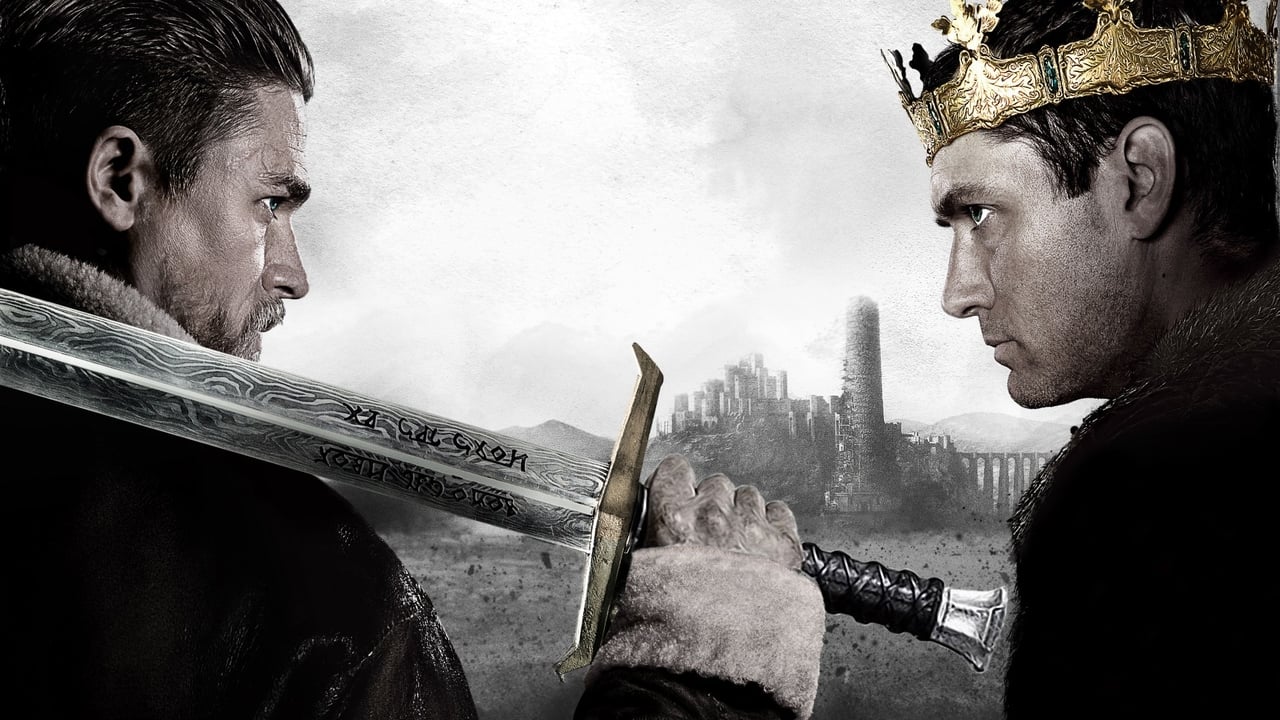
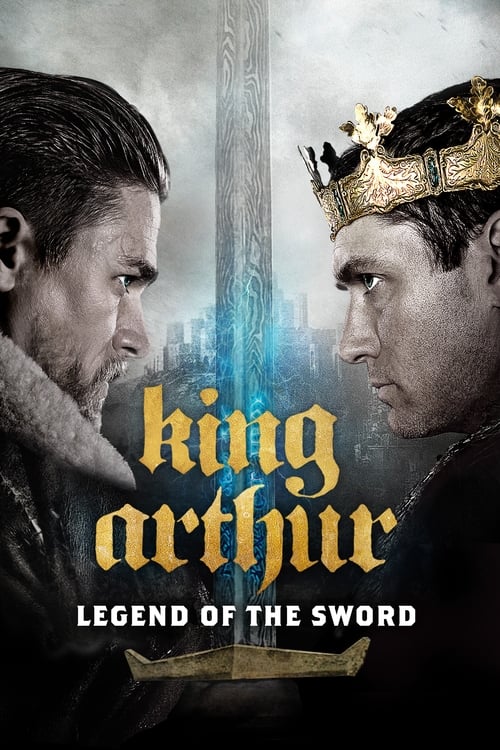
The Cockney Crown: Myth in the GutterCinema has spent a century polishing the armor of King Arthur, treating the Matter of Britain with a reverence that often calcifies into boredom. We are used to solemn men in chainmail speaking in hushed, Shakespearean tones about destiny. Guy Ritchie’s *King Arthur: Legend of the Sword* (2017) takes a sledgehammer to this stained-glass window. It is not a film interested in historical accuracy or courtly romance; it is a bruised, chaotic, and hyper-caffeinated attempt to drag the mythical sword out of the stone and into the mud of the London slums. Ritchie posits a fascinating, if messy, thesis: what if the Once and Future King was just a "lad" trying to protect his local brothel?

To understand this film, one must look past its public failure—the collapsed promise of a six-film universe—and engage with its distinct visual language. Ritchie applies his signature kineticism, honed in *Snatch* and *Lock, Stock and Two Smoking Barrels*, to the Dark Ages. The result is a jarring anachronism that feels strangely alive. The film’s most effective sequence is arguably the "growing up" montage, where decades of Arthur’s life are compressed into a breathless minute of cuts, punches, and stolen coins, set to a pounding, percussive score by Daniel Pemberton. Here, the director argues that nobility is not inherited; it is forged in the trauma of the back alleys. The camera doesn’t glide; it sprints, snaps, and rewinds, turning the oral tradition of legend into the unreliable narration of a street hustler explaining a botched job.

The narrative creates a binary between the organic, messy humanity of Arthur (Charlie Hunnam) and the sterile, suffocating fascism of his uncle, Vortigern (Jude Law). Hunnam plays Arthur not as a hero, but as a reluctance made flesh—a man physically repulsed by the burden of destiny. He is charmingly rough, a brawler who would rather organize a protection racket than a kingdom. Opposite him, Jude Law delivers a performance of serpentine elegance. Vortigern is the film’s tragic anchor; his power is purchased through the ritualistic sacrifice of the women he loves, a horrific transaction that adds a layer of operatic gloom to the proceedings. While Arthur fights with the frantic energy of survival, Vortigern rules with the cold stillness of death.
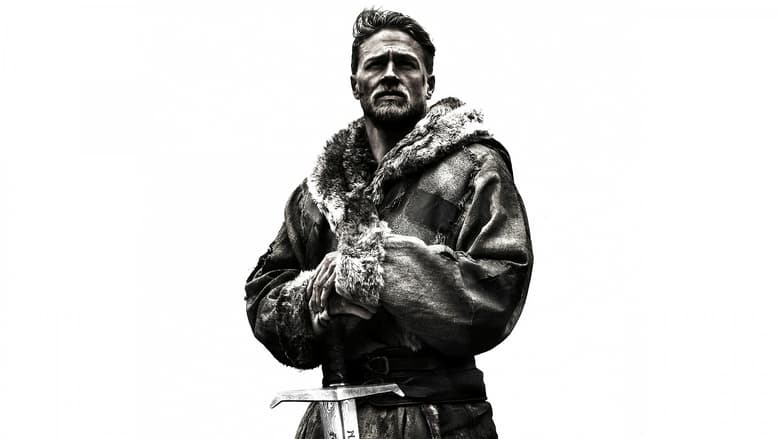
However, the film struggles when it tries to marry this "street-level" grit with high-fantasy spectacle. When Arthur finally embraces Excalibur, the film shifts from a gritty crime drama to a video game cutscene. The action becomes weightless, dissolving into digital noise where time slows down and glowing swords slash through CGI armies. It is in these moments that the movie nearly collapses under its own ambition. Ritchie tries to merge the aesthetic of a heavy metal album cover—giant elephants, skull-faced sirens, and magically generated towers—with the grounded sweat of a bare-knuckle boxing match. The mixture is volatile, often exploding into incoherence, yet it possesses a pulse that many safer, more competent blockbusters lack.
Ultimately, *King Arthur: Legend of the Sword* stands as a fascinating ruin of modern franchise filmmaking. It is a film of jagged edges and manic energy, rejecting the "prestige" of the fantasy genre in favor of something louder, uglier, and undeniably distinct. It may not be the King Arthur we expected, nor the one the box office wanted, but it is a singular vision of a myth seen from the gutter looking up, rather than from the throne looking down.