The Architecture of WarmthContemporary romance often suffers from a crisis of weightlessness. In an era of algorithmic storytelling, where relationships are reduced to "meet-cutes" and "grand gestures," it is rare to find a narrative that understands love not as a destination, but as a slow, tectonic shift in perspective. *Shine on Me* (2025), directed by Chen Zhoufei, attempts to reclaim this weight. While it masquerades as a glossy workplace drama set against the backdrop of the photovoltaic industry, its true subject is the quieter, more terrifying process of letting go of the self-images that no longer serve us.
Director Chen Zhoufei, known for his ability to find the poetic in the mundane (as seen in *The Forbidden Flower*), brings a distinct visual melancholy to this adaptation of Gu Man’s novel. He rejects the sterile, high-key lighting typical of the genre in favor of a palette that feels sun-drenched yet hazy, mirroring the protagonist's internal state.
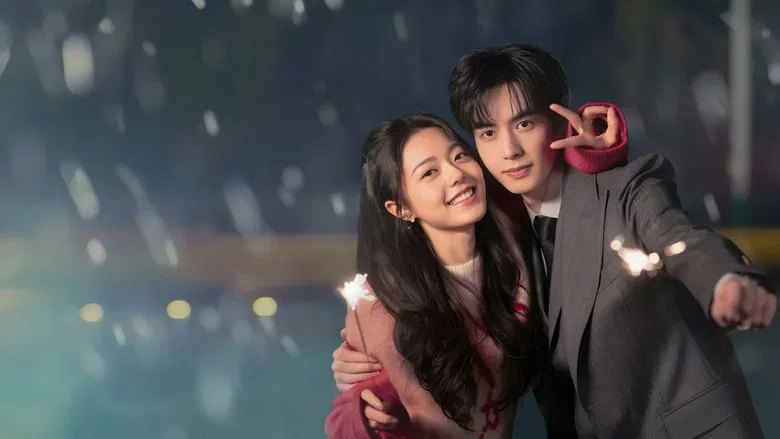
The story follows Nie Xiguang (Zhao Jinmai), a young woman whose heart has calcified around an unrequited college love. This isn't portrayed as a noble suffering, but as a form of stasis—a refusal to engage with the present. Into this orbit crashes Lin Yusen (Song Weilong), a former surgeon whose own life has been derailed by physical trauma, forcing a career pivot into the solar energy sector.
Chen’s camera treats their workspace not as a backdrop for banter, but as a crucible. The solar panels—vast, reflective grids capturing energy—become a potent visual metaphor for the characters themselves: absorbing heat, converting trauma into power, waiting for the clouds to break. The series has faced criticism for its deliberate pacing, particularly the "slow-motion" stylistic choices in key rescue scenes which some found melodramatic. However, one could argue these moments are less about action and more about the suspension of time—the split second where perception shifts from the person we thought we wanted to the person standing right in front of us.
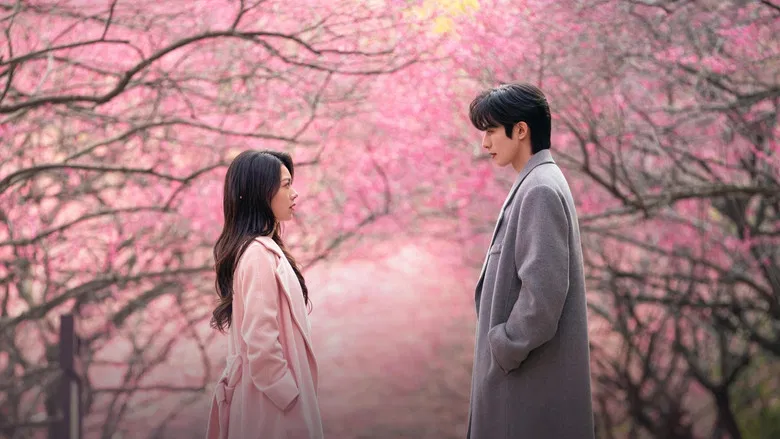
The central performance by Zhao Jinmai anchors the film in a profound emotional reality. She plays Xiguang not with the manic pixie energy often demanded of romantic heroines, but with a guarded optimism that feels heartbreakingly real. Her chemistry with Song Weilong is built on silence rather than sparks. There is a specific scene, widely discussed for its quiet intensity, where Lin Yusen simply observes Xiguang working. There is no dialogue, only the ambient hum of the office and the shift in Song’s micro-expressions—a former surgeon analyzing a new kind of vitality he thought he had lost. It is a masterclass in "showing, not telling," revealing that true intimacy is the act of being seen when you aren't performing.

Ultimately, *Shine on Me* transcends the "healing romance" label. It suggests that "shining" is not about unblemished perfection, but about the courage to remain luminous after being broken. In a media landscape obsessed with the invincibility of its heroes, Chen Zhoufei has given us something far more valuable: a portrait of two people learning that the cracks are where the light gets in. It is a flawed, sometimes uneven work, but one that beats with a sincere, undeniable pulse.