The Hollow Echo of ApplauseIn the modern pantheon of celebrity, the "idol" is a peculiar deity: worshiped for perfection, yet sacrificed the moment they bleed. Director Lee Gwang-young’s *Idol I* enters this arena not as a glittery rom-com, but as a somber procedural that dissects the transactional nature of adoration. Released in the winter of 2025, the series moves beyond the candy-colored aesthetics typical of the genre to ask a more uncomfortable question: Do we love the artist, or do we love the ownership of them?

Lee Gwang-young, whose previous work like *Call It Love* demonstrated a mastery of melancholic intimacy, applies a similar muted filter here. The visual language of *Idol I* is one of isolation. The camera frequently traps Do Ra-ik (Kim Jae-young) in vast, empty luxury apartments or behind the reflective glass of recording booths—spaces that signify success but feel like aquariums. Even the concert scenes are shot with a disorienting haze, emphasizing the noise and heat rather than the glory. The sound design complements this, often cutting from the deafening roar of a stadium to the ringing silence of a holding cell, physically jarring the audience into Ra-ik’s plummet from grace.
At the narrative’s center is Maeng Se-na (Sooyoung Choi), a character built on a fascinating contradiction. As a ruthless defense attorney, she is cynical and precise; as a secret fangirl of fifteen years, she is devout. Sooyoung plays Se-na not as a hysteric, but as a woman whose fandom is her only safe harbor from a grim profession. This duality anchors the film’s central conflict. When Ra-ik is accused of murder, Se-na’s defense is not just legal—it is an existential battle to preserve the image that has sustained her. The script complicates this by stripping away Ra-ik’s "idol" veneer, forcing Se-na (and the viewer) to confront the flawed, broken man beneath the poster.
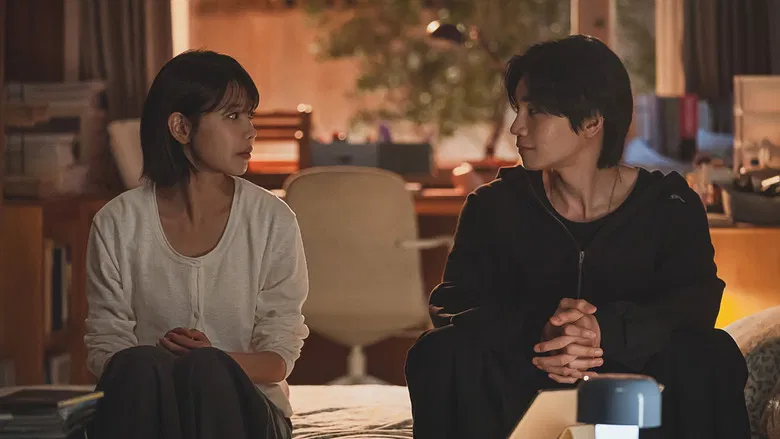
The series is most potent when it interrogates the "parasocial contract." One pivotal scene involves Ra-ik reading comments after his scandal breaks. The camera holds on his face as the same accounts that praised his "purity" days prior now demand his erasure. It is a terrifying depiction of how quickly love curdles into entitlement. The mystery of the murder serves as a structural spine, but the true horror is the industry itself—a machine that demands human sacrifice to keep the lights on. The eventual revelation of the truth feels less like a victory and more like a reprieve for a man who has already lost his sense of self.
Ultimately, *Idol I* is a tragedy dressed in procedural clothing. It refuses to offer the easy comfort of a "fan meets bias" fantasy. Instead, it suggests that true connection can only begin when the pedestal is smashed. In a culture obsessed with curated perfection, Lee Gwang-young has delivered a gritty, necessary reminder that idols are not gods to be worshiped, but people to be understood.