The Shadow of the Cherry TreeThere is a specific sub-genre of Japanese mystery that Yoshihiro Fukagawa has quietly mastered: the tragedy of lost innocence. It is a genre where the crime is not a puzzle to be solved, but a wound that refuses to heal. In *Silent Truth* (*Saikai: Silent Truth*), Fukagawa returns to the thematic territory he explored so devastatingly in *Into the White Night* (2011)—the idea that the bonds formed in childhood, sealed by a shared sin, are stronger and more suffocating than any adult relationship. This series is not merely a procedural; it is a meditation on the corrosion of memory.
The premise is deceptively simple, almost fable-like. Twenty-three years ago, under the soft, indifferent falling petals of a cherry blossom tree, four elementary school children buried a gun. It was a pact of silence, a childhood secret that should have rotted in the earth. But when Junichi Tobina (Ryoma Takeuchi), now a homicide detective, returns to his hometown, he finds that the past has not only survived but metastasized. The gun has resurfaced as the weapon in a fresh murder, and the prime suspect is Makiko Iwamoto (Mao Inoue)—his first love and co-conspirator in that decades-old burial.
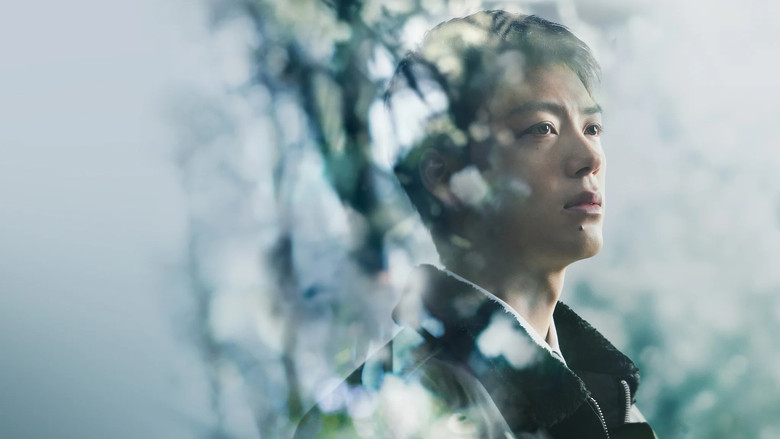
Fukagawa’s direction here is an exercise in atmospheric pressure. He avoids the frantic editing of modern police dramas, opting instead for a visual language that feels heavy, almost damp. The cinematography juxtaposes the golden, hazy nostalgia of the flashbacks—where the cherry tree stands as a sanctuary—with the sterile, fluorescent coldness of the interrogation room. The tree itself becomes a haunting visual motif; what is usually a symbol of fleeting beauty in Japanese culture here becomes a marker of permanent guilt. The camera often lingers on Takeuchi’s face, catching the silent realization that his investigation is essentially an act of self-exhumation.
The heart of the series lies in the excruciating dynamic between Takeuchi and Inoue. Ryoma Takeuchi, often cast in more straightforward heroic roles, delivers a performance of repressed anguish that is startlingly effective. He plays Junichi not as a crusader for justice, but as a man walking through a waking nightmare. His stillness is loud. Opposite him, Mao Inoue is an enigma, playing Makiko with a fragility that masks a terrifying resilience. Their scenes together—ostensibly detective and suspect, but truly boy and girl—are electric with unspoken history. The "interrogation" becomes a twisted form of intimacy, where every question is a plea for the past to be different.
*Silent Truth* challenges the viewer to look beyond the "whodunit." The mechanism of the murder is secondary to the psychological toll of the secret. The script dissects how guilt ages. For the four friends, that buried gun stopped time; they have been aging, but they have not been growing. They are emotionally arrested at the moment the dirt covered the metal.
In a television landscape often crowded with disposable mysteries and shock-value twists, Fukagawa has crafted something far more resonant. *Silent Truth* is a somber, elegant work that suggests we never truly bury our pasts; we just plant them, and wait for the dark fruit to grow. It is a haunting reminder that the truth, no matter how deep you dig it, eventually finds its way to the surface.