The Adrenaline of EmpathyIf television before 1994 was a theater of patience, *ER* was the moment the medium discovered its pulse. Before the doors of Cook County General slammed open, medical dramas operated on the gentle, reassuring frequency of *Marcus Welby, M.D.*—stories where maladies were mysteries to be solved with paternal wisdom, and the doctor was a god in a white coat. *ER*, created by Michael Crichton from a script that had gathered dust for two decades, shattered that pedestal. It did not present medicine as a series of solutions, but as a chaotic, blood-slicked trench war where the enemy—death—often won, and the soldiers were too exhausted to grieve.

To watch the pilot, "24 Hours," even today, is to witness a radical restructuring of visual language. The camera does not observe; it participates. Utilizing the Steadicam with a restlessness that borders on anxiety, the lens prowls the circular corridors of the emergency room, creating a sense of geography that feels less like a set and more like a entrapment. We are not cutting between static conversations; we are sprinting. The dialogue is a overlapping cacophony of jargon—"CBC, Chem-7, cross-match"—that the show refuses to translate. This was the show’s great gamble: the assumption that the audience didn’t need to understand the chemistry to feel the urgency. The result is a suffocating immersion, a feeling that we are drowning alongside the residents.
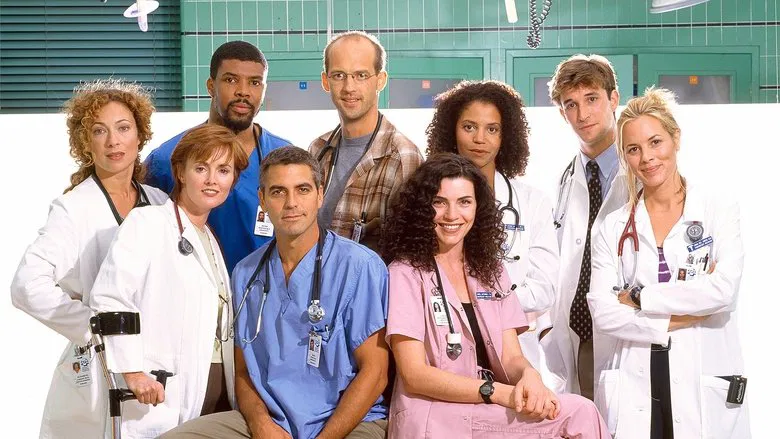
At the heart of this kinetic storm is a profound exploration of professional erosion. While George Clooney’s Dr. Ross provided the show’s charisma and Julianna Margulies’ Nurse Hathaway its soul, it was Anthony Edwards’ Dr. Mark Greene who anchored its moral inquiry. Greene is the competent man slowly being hollowed out by the system. The seminal Season 1 episode, "Love's Labor Lost," remains a masterclass in tragic inevitability. It details a single botched delivery, stripping away the hero archetype layer by layer until all that remains is a man weeping in a subway car. *ER* understood that the true trauma of medicine isn't the gore, but the silence that follows a mistake—the devastating realization that benevolence is not a shield against incompetence or bad luck.

In the current landscape of television, where medical dramas have largely retreated into soap opera gloss or high-concept gimmicks, *ER* stands as a monument to the dignity of work. It didn't need a mystery box or a supernatural twist; the human body’s fragility was plot enough. It argued that heroism is not a grand gesture, but the act of showing up, hour after hour, to hold the hand of a stranger while the world falls apart. It was, and remains, a breathless, bruising, and vital portrait of life on the precipice.