✦ AI-generated review
The Uncanny Valley of Faith
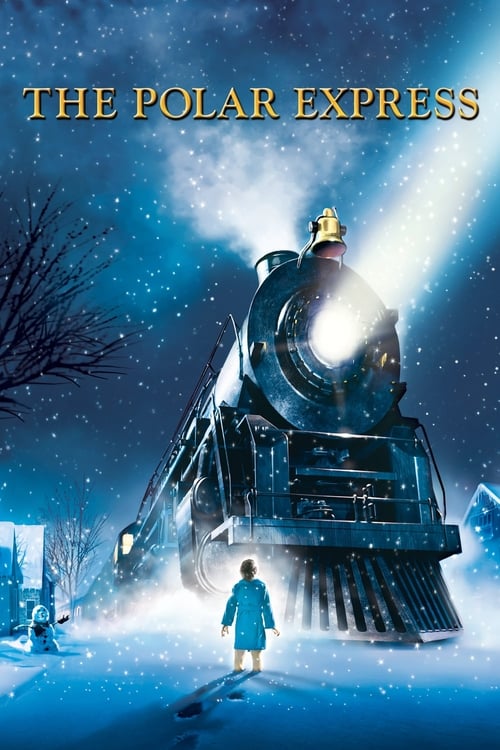
Robert Zemeckis is a director who has spent the latter half of his career attempting to conquer the impossible space between the human soul and the digital pixel. In 2004, *The Polar Express* arrived not just as a holiday film, but as a technological manifesto. It was the first feature film entirely animated using performance capture, a daring experiment that sought to preserve the nuance of human acting within a painted digital reality. While history often remembers it for the unsettling "dead eyes" of its avatars—plunging audiences into the depths of the uncanny valley—to dismiss the film solely on technical grounds is to miss the profound, almost melancholic meditation on belief that pulses beneath its waxen surfaces.
Visually, the film is a paradox. Zemeckis uses the freedom of the digital camera to achieve impossible cinematography: the camera swoops down cliffs, dances with a golden ticket in the wind (a self-referential nod to the feather in *Forrest Gump*), and careens along icy tracks like a roller coaster. The aesthetic is chiaroscuro-heavy, bathed in deep blues and warm golds, effectively capturing the specific, drowsy surrealism of a child fighting sleep on Christmas Eve. Yet, this beauty is haunted by the limitations of 2004 technology. The characters, despite being played by Tom Hanks and a talented cast, often move with a stiffness that betrays their human origins. The "Hot Chocolate" musical number, with its army of waiters defying physics, feels less like a cozy holiday treat and more like a fever dream of efficiency—a moment where the film’s mechanical precision nearly overwhelms its whimsy.
However, if one looks past the glassy stares, the narrative core of *The Polar Express* is deeply humanistic. It is a story about the inevitable tragedy of growing up. The protagonist, known only as Hero Boy, stands on the precipice of adolescence, armed with encyclopedias and skepticism, ready to dismiss the magic of the world as a myth. The film treats his doubt not as a character flaw, but as a symptom of aging—a "loss of hearing" for the metaphorical bells of wonder.
Tom Hanks, performing six different roles including the Boy (motion capture), the Conductor, and Santa Claus, serves as a omnipresent guide through this transition. By inhabiting the entire adult world of the film, Hanks becomes a singular force guiding the boy back to himself. The Conductor is stern, obsessed with time and schedules, representing the rigid structures of adulthood, yet he is the one who punches the tickets that reveal the children's hidden virtues.
The film’s climax does not rely on a grand battle or a slapstick villain, but on a quiet, internal realization. The scene where the boy finally hears the silver bell ring is one of the most poignant moments in modern holiday cinema. It suggests that faith—whether religious, magical, or simply optimistic—is a choice one must actively make against the encroaching cynicism of the "real world."
*The Polar Express* remains a fascinating artifact of cinema history. It is a flawed vessel, certainly; its technology has aged, and its characters can be eerie. But like the rattled, clanking train itself, the film manages to reach its destination. It captures the terrifying, beautiful ambiguity of a dream, reminding us that the most important things in life are often those we cannot see, even if our digital avatars can't quite focus their eyes on them.