✦ AI-generated review
The Saint of Swagger
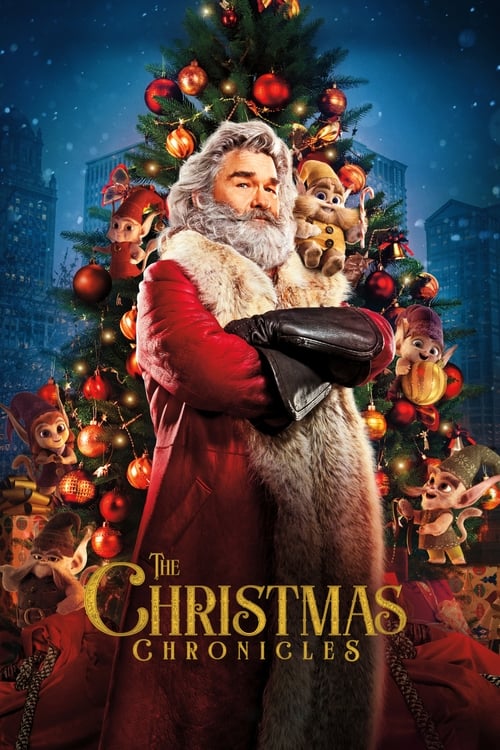
In the vast, often saccharine landscape of modern holiday cinema, films usually fall into two camps: the aggressively traditional, drowning in treacle and tinsel, or the cynical deconstruction. *The Christmas Chronicles* (2018), directed by Clay Kaytis, attempts a high-wire act between the two, but it survives not on the strength of its script or its visual splendor, but almost entirely on the shoulders of its leading man. This is not a film about the magic of Christmas; it is a film about the magnetic field of Kurt Russell.
Produced by Chris Columbus, the architect of *Home Alone* and *Harry Potter*, the film carries the DNA of 1990s family adventure—a world where latchkey kids face peril without adult supervision, and magic is a tactile, dangerous force. The narrative follows siblings Kate and Teddy Pierce, who are navigating the first holiday season following the death of their firefighter father. This grief is the film’s emotional anchor, a familiar trope that Kaytis uses to ground the impending absurdity. However, the film truly begins only when the children inadvertently crash Santa’s sleigh, stripping the holiday icon of his magic hat and his reindeer.
Visually, Kaytis—whose background is in animation—paints with a glossy, hyper-saturated palette that feels uniquely "streaming era." The world is polished to a plastic sheen, particularly in the design of the elves. These small, chattering CGI creatures (clearly modeled after the commercially dominant Minions) represent the film’s weakest instinct: a surrender to algorithm-friendly slapstick that feels at odds with the grittier, practical textures of the human world. They are manic and digital, creating a visual dissonance whenever they share the frame with the flesh-and-blood actors.
But then, there is Santa. Kurt Russell’s interpretation of Saint Nick is a fascinating piece of performance art. He rejects the "jolly old elf" caricature, playing Claus instead as a blue-collar celebrity with a bruised ego. He is vain, annoyed by his depiction in soda commercials, and possesses a weary swagger that suggests he’s seen centuries of human folly and is tired of the bad PR. Russell infuses the role with a rugged masculinity reminiscent of his action-hero past, transforming Santa from a mythical figure into a tangible, restless man.
The film’s defining moment—and perhaps its only truly electric scene—occurs in a Chicago jail cell. Santa, locked up with a motley crew of criminals, launches into a bluesy, rock-and-roll rendition of "Santa Claus Is Back in Town." In the hands of a lesser actor, this would be a cringe-inducing disaster. In Russell’s hands, it becomes a bizarre triumph of charisma. He channels Elvis (a nod to his own filmography), turning the jailhouse into a concert hall. It is a scene that defies logic but perfectly encapsulates the film's appeal: it works simply because Russell demands that it does.
Beneath the CGI chaos and the car chases, the story of the Pierce siblings feels somewhat perfunctory. Teddy’s transition from juvenile delinquent to believer is predictable, and the resolution of their grief is neat and tidy. Yet, the film resonates because it treats belief not as a whimsical wish, but as a muscular, active choice.
Ultimately, *The Christmas Chronicles* is a jagged, uneven entry in the holiday canon. It lacks the timeless innocence of *The Polar Express* or the sharp wit of *Elf*. But it offers something rarer: a Santa Claus who feels like he could win a bar fight. It is a showcase of star power saving a narrative that might otherwise have dissolved into digital noise.