The Road to NowhereThere is a particular kind of silence that descends upon a film when it ceases to be an entertainment product and becomes a mirror. In Francis Lawrence’s *The Long Walk*, adapted from Stephen King’s 1979 novel (written under the Richard Bachman pseudonym), that silence is deafening, broken only by the rhythmic crunch of gravel and the sharp, sterile crack of a carbine rifle. Lawrence, a director who has spent much of his career crafting the polished, rebellion-fueled dystopias of *The Hunger Games*, has finally stripped away the Hollywood gloss to reveal the rotting machinery underneath. This is not a film about a hero toppling a regime; it is a film about how a regime eats its young, one step at a time.
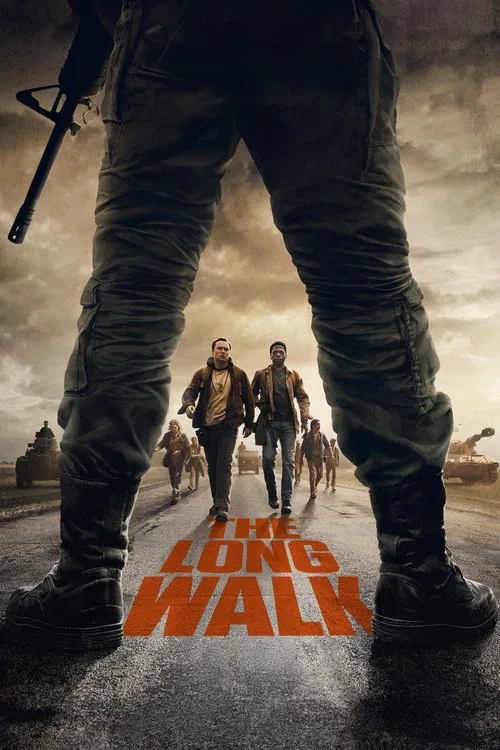
The premise is deceptively simple, almost primitive. In a totalitarian near-future America, fifty teenage boys are selected for the annual "Long Walk." The rules are absolute: maintain a pace of three miles per hour. Fall below it, you get a warning. Three warnings, and you get a "ticket"—a euphemism for a bullet to the brain. There is no finish line, only a last man standing.
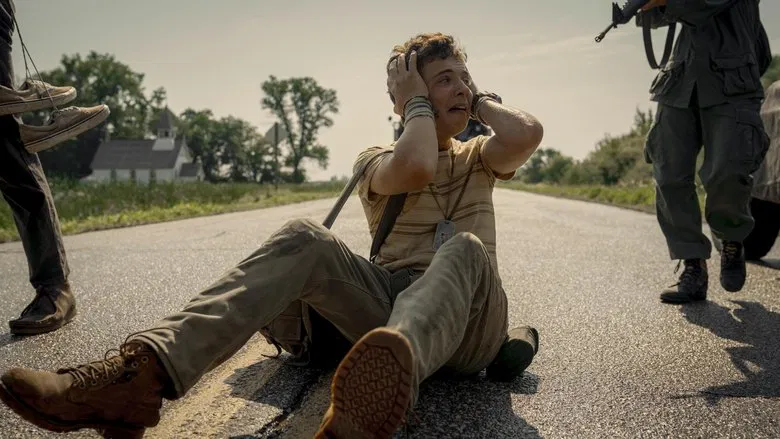
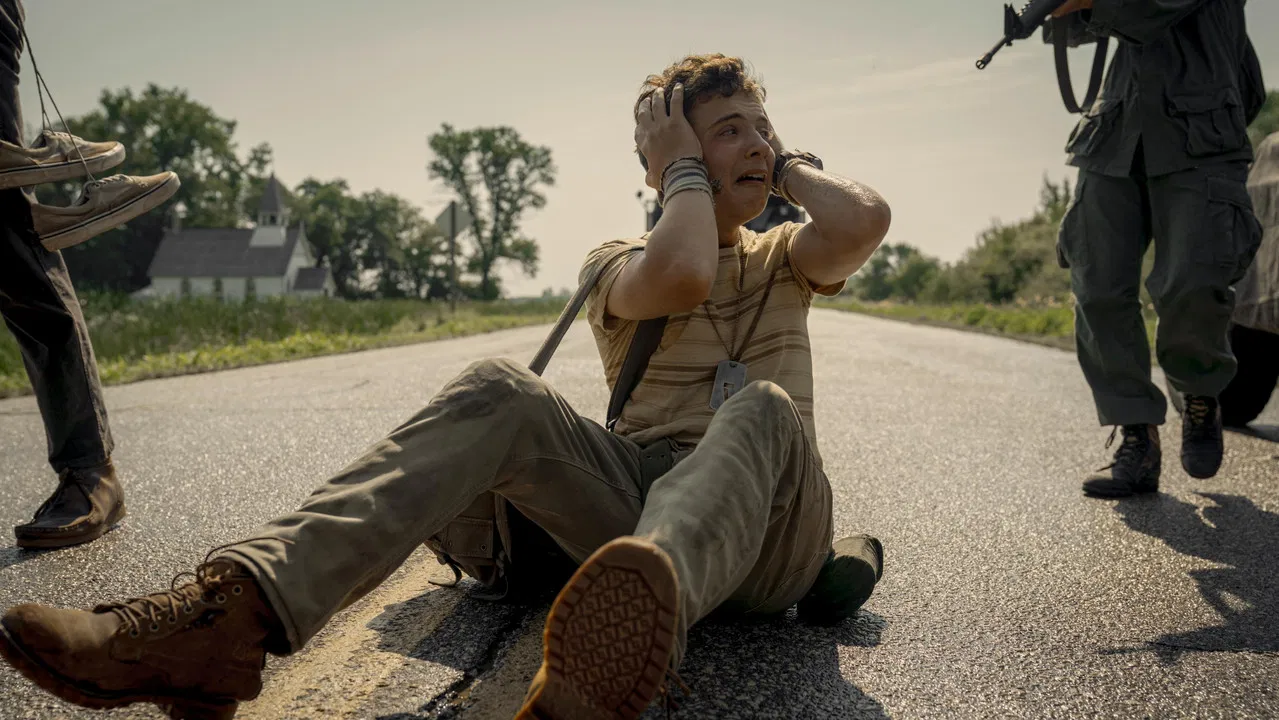
Visually, Lawrence and cinematographer Jo Willems have abandoned the shaky-cam chaos of modern action cinema for something far more terrifying: clarity. The camera is often static or tracking slowly, creating a hypnotic, suffocating atmosphere. The landscape is not the neon-soaked cityscapes of cyberpunk, but the desolate, sun-bleached backroads of an America that looks frighteningly like our own rural present. This aesthetic choice is the film’s strongest weapon. By grounding the horror in cracked pavement and swaying cornfields, the violence becomes mundane, almost administrative. When a boy is executed, the camera rarely lingers on the gore, but rather on the void left in the formation—a gap that the remaining walkers must physically close, literally stepping over their fallen peers to survive.
At the center of this death march are Ray Garraty (Cooper Hoffman) and Peter McVries (David Jonsson), two performances that anchor the film’s wandering soul. Hoffman, with a physicality that echoes his father’s vulnerability, plays Garraty not as a stoic warrior but as a terrified child trying to rationalize the irrational. But it is David Jonsson who is the revelation. His McVries is a coil of cynical energy, a boy who understands the absurdity of their situation yet refuses to die without a grim joke on his lips. Their chemistry transforms the film from a survival thriller into a tragic study of male intimacy. In a world that demands they be competitors, their act of rebellion is simply being friends.

The film’s tension does not come from the question of who will win—a futile query in a game where the prize is PTSD and a lifetime of guilt—but from the psychological erosion of the participants. The script, written by J.T. Mollner, wisely avoids excessive exposition about *why* the Walk exists. The Major (played with chilling, bureaucratic detachment by Mark Hamill) offers no speeches about the greater good. The Walk simply *is*. This lack of context forces the audience to confront the allegory directly: we are watching a system that devours its future for the entertainment of the present, a concept that feels uncomfortably prescient.
However, the film is not without its stumbling blocks. The third act, as the numbers dwindle and the hallucinations set in, struggles to maintain the razor-sharp pacing of the first hour. The narrative drifts into dream sequences that, while visually arresting, distract from the brutal reality of the road. One wishes Lawrence had trusted the inherent horror of the walk itself rather than reaching for surrealist imagery to depict mental collapse.
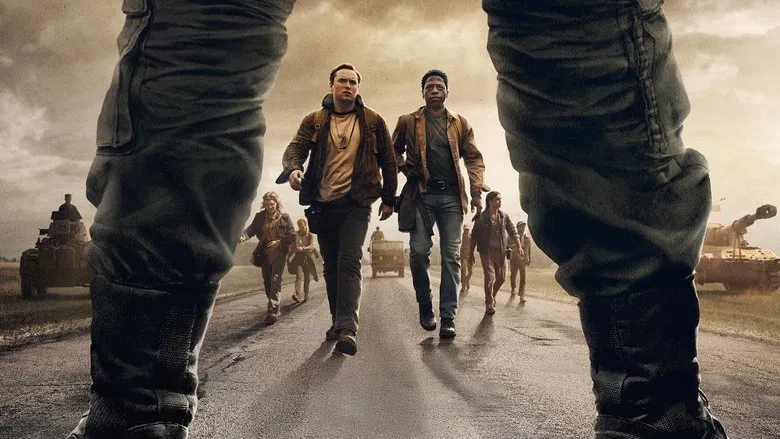
Ultimately, *The Long Walk* is a difficult, exhausting, and essential piece of cinema. It refuses to offer the catharsis of a revolution or the comfort of a happy ending. It leaves you with the heavy realization that in a world built on endless competition, the only real victory is the grace with which we endure the journey. It is a film that demands you keep your eyes open, even when you desperately want to look away.