The Architecture of CompromiseTo discuss *S.W.A.T.* (2017) is to discuss the uneasy marriage between the "copaganda" procedural and the modern sociopolitical conscience. Developed by Shawn Ryan (the architect of the morally rot-infested *The Shield*) and Aaron Rahsaan Thomas, this reboot of the 1975 relic arrives not as a nostalgic victory lap, but as a glossy, high-octane negotiation with the post-Ferguson world. It attempts a balancing act so precarious it often threatens to collapse the narrative entirely: how to maintain the comforting rhythms of a CBS actioner while acknowledging that for many, the "hero" in the tactical gear is the villain of their reality.
The series establishes its thesis immediately, and with surprisingly little subtlety. The pilot, directed with kinetic, blockbuster sheen by Justin Lin, hinges on a catalytic error: a white team leader shoots an unarmed Black teenager. The department’s solution is a cynical PR maneuver—promote Daniel "Hondo" Harrelson (Shemar Moore) to lead the unit. Hondo is a man of two worlds: a product of South Los Angeles who wears the badge of the occupier.
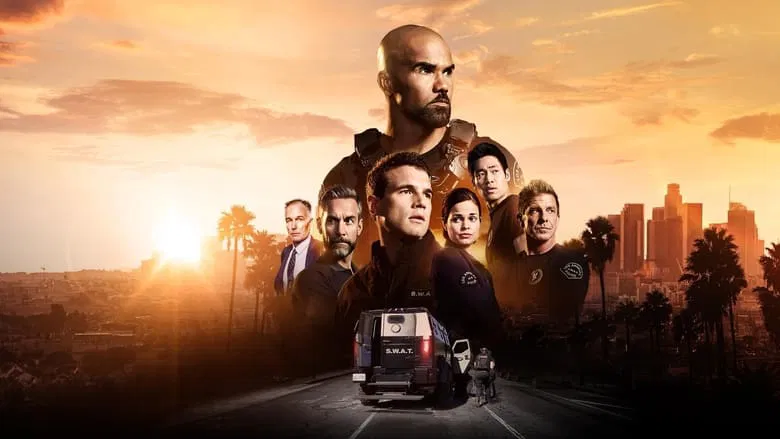
Visually, the show is a spectacle of militarized competence. The camera glides over tactical gear and breaching tools with a fetishistic appreciation for hardware, a hallmark of the genre. Yet, Lin and the subsequent directors bathe Los Angeles in a sweltering, golden light that feels distinct from the blue-grey filters of *NCIS* or *Chicago P.D.* This aesthetic choice renders the city not just as a crime scene, but as a living, breathing organism—one that Hondo is desperately trying to keep from tearing itself apart. The action sequences are fluid and legible, designed to showcase precision rather than chaos, reinforcing the myth of the "good" police officer who shoots only when necessary and never misses.

At the center of this storm is Shemar Moore, an actor whose physical charisma often obscures a capable dramatic range. As Hondo, he is tasked with the impossible: he must be the reassuring protector for the CBS demographic while simultaneously serving as the voice of Black frustration for a more progressive audience. Moore plays Hondo with a burdened stoicism. He is not the anti-hero Vic Mackey; he is a fantasy of ethical policing, a "super-cop" whose superpower is empathy.
The show’s emotional core struggles under this weight. In scenes where Hondo confronts his community—who view him as a traitor—the script often resorts to didactic monologues rather than allowing the subtext to breathe. We see Hondo straddling the "Blue Wall" and the block, but the show rarely allows him to truly fail. The constraints of the network procedural demand that order be restored by minute 42, which fundamentally neuters the complex social critique the show posits. We are shown the wound of police-community relations, but the format demands a weekly band-aid.

Ultimately, *S.W.A.T.* is a fascinating cultural artifact not because it solves the riddle of policing on television, but because it is brave enough to sweat while trying. It creates a suffocating sense of reality where good intentions are constantly besieged by systemic rot, even if it eventually retreats to the safety of the gunfight. It is an action hero’s attempt to hug a porcupine—an admirable, painful, and messy endeavor that manages, against the odds, to find a heartbeat beneath the Kevlar.