The Plastic ForestIf irony had a sound, it would be the auto-tuned chorus of a tree-hugging fable sponsored by an SUV. Chris Renaud’s *The Lorax* (2012) arrived not merely as an adaptation of Dr. Seuss’s seminal 1971 warning against industrial greed, but as a neon-colored paradox. It is a film that screams "Save the Trees" while being generated by the very corporate machinery Seuss warned us about. Yet, to dismiss it entirely as a cynical cash grab is to miss the fascinating, if accidental, tragedy at its center. This is not just a story about a forest lost; it is a case study in how a radical message gets processed, packaged, and sold back to the very people who need to hear it most, minus the sting.
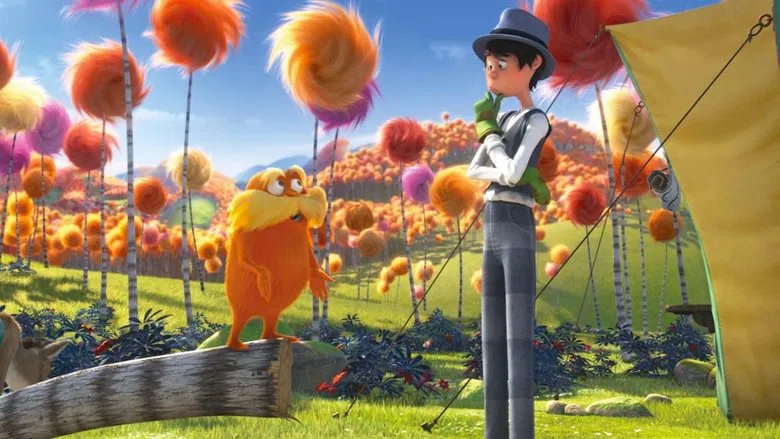
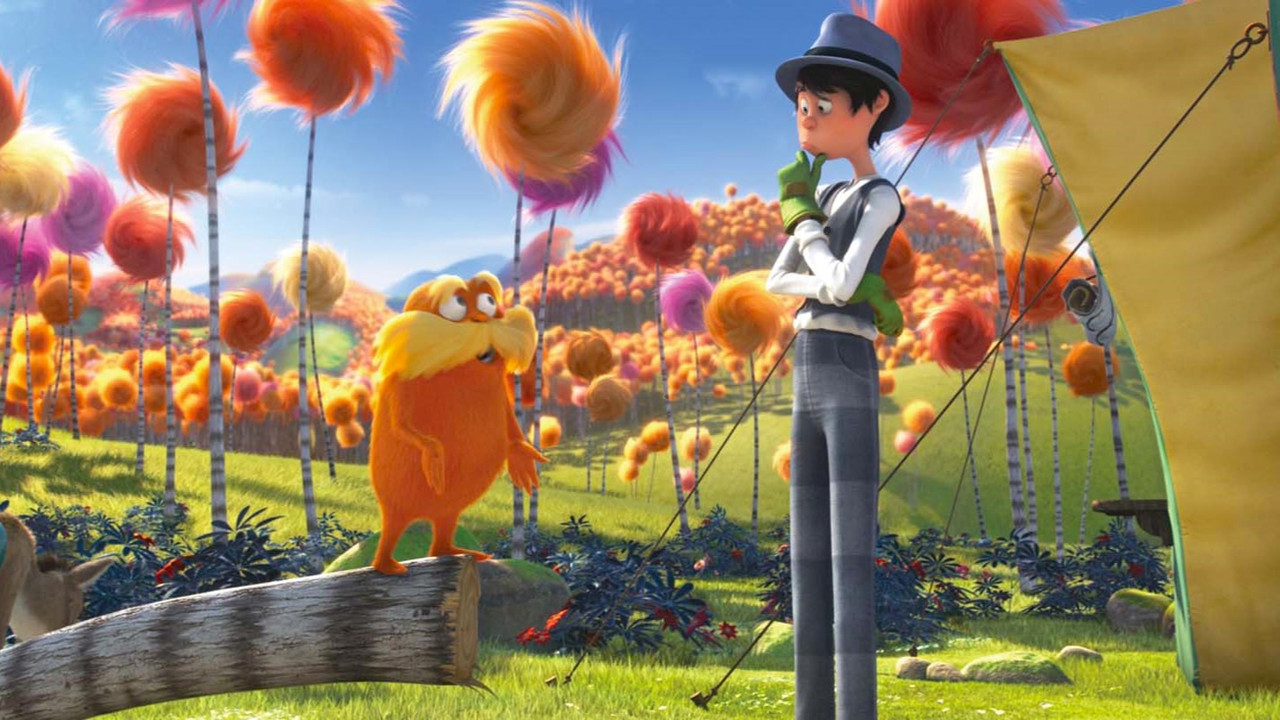
Visually, Renaud and Illumination Entertainment (the house that built the Minions) opt for a sugar-rush aesthetic. Thneedville, the plastic walled city where our protagonist Ted (Zac Efron) lives, is rendered in aggressive, candy-shell gloss. There is no dirt here, only the suffocating sheen of polymetric perfection. The animation is technically proficient—bouncy, kinetic, and desperate to keep your attention—but it feels distinctively synthetic.
This visual choice inadvertently supports the film's most interesting accidental theme: the comfort of artificiality. The citizens of Thneedville aren’t suffering under the thumb of the tiny tycoon Aloysius O'Hare (Rob Riggle); they are sedated by him. By making the dystopia look like a theme park, the film suggests that the death of nature won't look like an apocalypse, but like a shopping mall.

The film's heart—or the void where it should be—lies in the character of the Once-ler (Ed Helms). In Seuss’s book, the Once-ler was a faceless pair of green gloves, a universal stand-in for industrial complicity. Here, he is humanized, given a backstory, a guitar, and a nagging family. This narrative decision is the film's most controversial pivot. By making the Once-ler a "nice guy" who just lost his way, and shifting the role of True Villain to the caricature O'Hare, the script absolves the audience. We no longer have to look in the mirror to see the destroyer of worlds; we just have to boo the short guy selling bottled air.
However, one sequence threatens to break through the safety glass: the musical number "How Bad Can I Be?" For a few minutes, the film accidentally stumbles into brilliance. As the Once-ler justifies his expansion, the song evolves from a defensive plea into a rock-anthem of corporate rationalization. We watch the economy scale up and the environment scale down, driven not by pure malice, but by the banality of "biggering." It is a moment of honest satire in a movie otherwise afraid of its own shadow.

Ultimately, *The Lorax* collapses under the weight of its own commercial ambition. It tries to be a frantic chase movie, a teen romance, and an environmental parable all at once, resulting in a tonal dissonance that feels like eating cotton candy at a funeral. The ending, which replaces the book’s ambiguous, haunting hand-off ("UNLESS") with a triumphant musical celebration, betrays a lack of trust in its young audience.
Seuss ended his story with a question mark; Renaud ends his with an exclamation point. The former asks us to work; the latter tells us we've already won. It is a colorful diversion, but as a piece of environmental cinema, it is as hollow as a Thneed—a Fine-Something-That-All-People-Need, perhaps, but certainly not what they deserve.