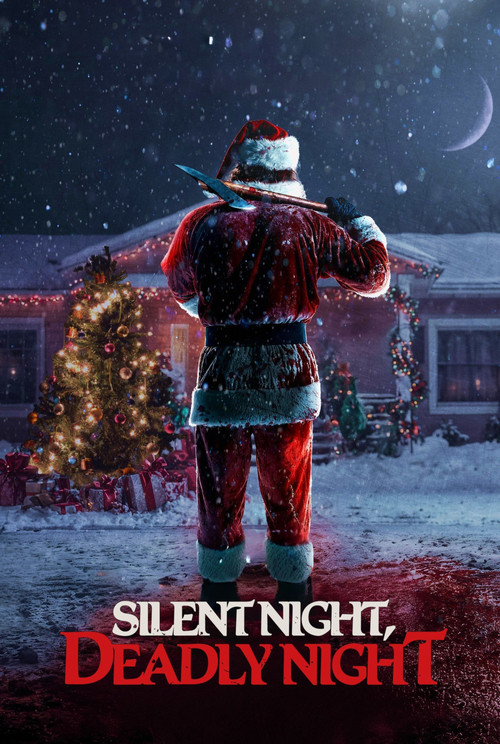
The Weight of TinselThere is a moment early in Mike P. Nelson’s *Silent Night, Deadly Night* (2025) that betrays its true intentions. We are watching the familiar trauma—a child in a snowbound car, the flash of red velvet, the glint of steel—but the camera lingers not on the violence, but on the silence that follows. In a genre often defined by the volume of its screams, Nelson is interested in the quiet erosion of a soul. This isn’t just another "Santasploitation" reboot to throw onto the pile of holiday cynicism; it is a surprisingly moody, if uneven, meditation on the architecture of trauma, dressed in the gaudy robes of a slasher.

Nelson, who previously stripped the backwoods caricature out of *Wrong Turn* (2021) to find something more politically jagged, attempts a similar alchemy here. He takes the notorious 1984 original—a film that once sparked parental protests and pulled ads from television—and reframes it through a lens of tragic inevitability. The film follows Billy Chapman (Rohan Campbell), an orphan forged in blood, who now roams the Midwest like a holly-jolly ronin.
Visually, the film is suffocatingly beautiful. Cinematographer Nick Junkersfeld shoots the town of Hackett, Wisconsin, not as a winter wonderland, but as a place where the cold preserves old sins. The Christmas lights don't twinkle; they glare, casting long, distorted shadows that seem to stretch out from Billy’s fractured psyche. The "Lens" here is one of isolation; the festive clutter of the frame constantly threatens to swallow the characters whole.
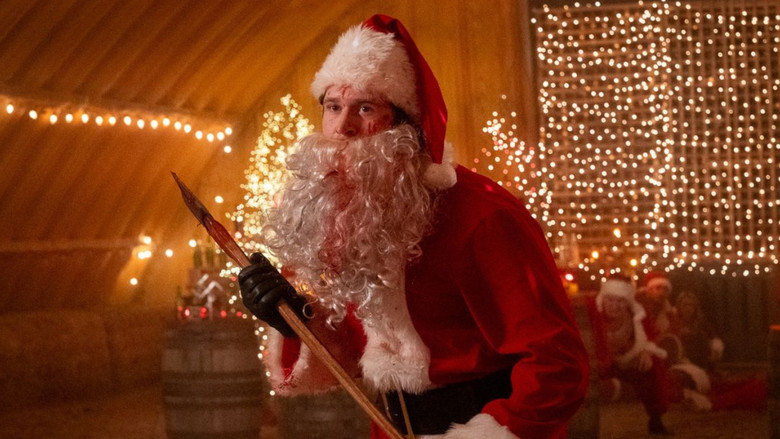
The heart of the film lies in its controversial narrative shift: the "Dexter-ification" of Billy. Unlike the mindless killing machine of the 80s, Campbell’s Billy is guided by a "Dark Passenger"—the voice of the Santa who killed his parents. This internal monologue pushes him to punish only the "naughty." It’s a risky gamble that threatens to turn the film into a vigilante procedural, yet it largely works due to Campbell’s performance. He plays Billy with a wounded, feral stillness, a man terrified of his own hands.
However, the film finds its true friction when Billy meets Pam (Ruby Modine). Their romance is the film's most fragile ornament. Modine brings a grounded weariness that cuts through the genre tropes, challenging Billy not with a weapon, but with the terrifying prospect of connection. The scene where they share a quiet moment in the stockroom of her father's Christmas shop is electric—not because of what is said, but because we know the violence waiting outside the door is less dangerous to Billy than the vulnerability required to stay inside.

Ultimately, *Silent Night, Deadly Night* struggles to reconcile its dual nature. It wants to be a psychological character study *and* a crowd-pleasing gore-fest. When the axe finally swings, the violence is sudden and grotesque, shattering the carefully built atmosphere. The "Santa slaughtering Nazis" sequence, while cathartic, feels like it belongs to a different, pulpier movie.
Yet, despite its tonal whiplash, Nelson has crafted a holiday horror that feels distinct. It suggests that the true horror isn't the man in the suit, but the childhood wounds that never heal, repeating their cycle year after year like a twisted holiday tradition. It may not be a perfect gift, but it is one wrapped with genuine care.