✦ AI-generated review
The Geometry of Desire
Cinema often concerns itself with the kinetic—the chase, the explosion, the collision of bodies. But Wong Kar-Wai’s *In the Mood for Love* (2000) is a masterpiece of the static, a film that derives its shattering power not from what happens, but from what is diligently, painfully prevented from happening. Set in the humid, cramped corridors of 1962 Hong Kong, this is not merely a romance; it is a ghost story about a future that two people refused to inhabit.
The premise is deceptively domestic. Chow Mo-wan (Tony Leung) and Su Li-zhen (Maggie Cheung) are neighbors who move into adjacent apartments on the same day. When they discover their respective spouses are having an affair with one another, they are thrust together by a shared betrayal. Yet, rather than seeking revenge or easy solace, they engage in a masochistic ritual of restraint. They vow, "We won't be like them," a moral high ground that becomes their prison.
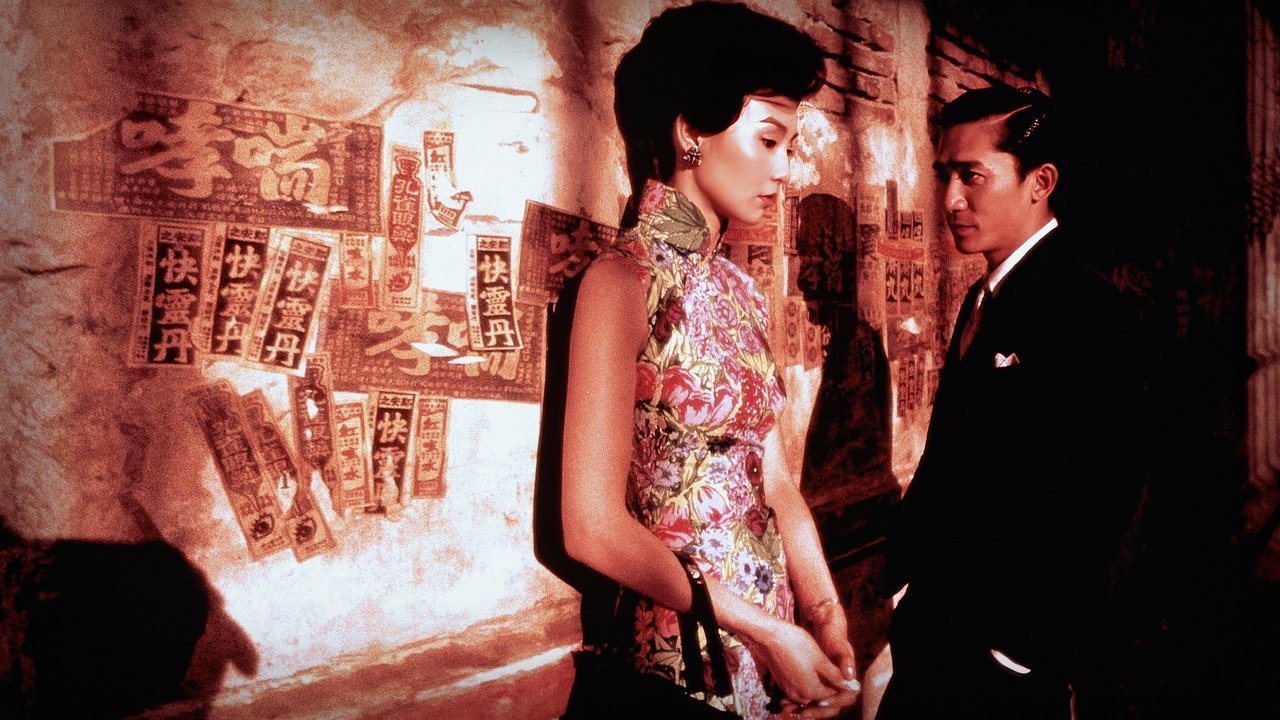
Visually, the film is a lush, claustrophobic dreamscape. Cinematographers Christopher Doyle and Mark Lee Ping-bin shoot the film through a voyeuristic lens, constantly peering around doorframes, through mirrors, and behind partially closed curtains. We are never fully in the room with Chow and Su; we are always observing them from the periphery, emphasizing how they are trapped—by 1960s social mores, by the thin walls of their apartment complex, and by their own paralyzing decorum. The camera lingers on clouds of cigarette smoke and the stiff, high collars of Su’s vibrant *qipaos*, which serve less as fashion than as armor, keeping her upright and composed even as her world crumbles.
The film’s brilliance lies in its unique narrative device: the rehearsal. Chow and Su spend their time play-acting the conversations they imagine their cheating spouses are having, or rehearsing their own eventual breakups. In one of the film’s most devastating sequences, Su breaks down weeping while practicing a goodbye, unable to distinguish the performance from the emotional reality. These scenes blur the line between the artificial and the authentic, suggesting that their entire relationship is a kind of phantom limb—aching and real, yet physically absent. They are so busy reenacting the betrayal of others that they forget to live their own love story.
Everything in the film is rhythm and repetition. The haunting waltz of "Yumeji’s Theme" plays incessantly, accompanying the characters as they pass each other on narrow staircases, noodle tins in hand. These slow-motion missed connections emphasize the tragedy of timing. They are always in the mood for love, but never in the right time or place for it.
The film concludes not with a grand reunion, but with a pilgrimage to the ruins of Angkor Wat. Here, Chow whispers his secret into a hollow in the ancient stone before sealing it with mud—a reference to an old fable about how to hide the truth forever. It is a moment of profound finality. While the stone of the temple will endure for centuries, the love between Chow and Su has evaporated into the humidity of the past, preserved only as a secret that can no longer be spoken. Wong Kar-Wai leaves us with the ache of the "might-have-been," reminding us that the most enduring romances are often the ones that never actually began.