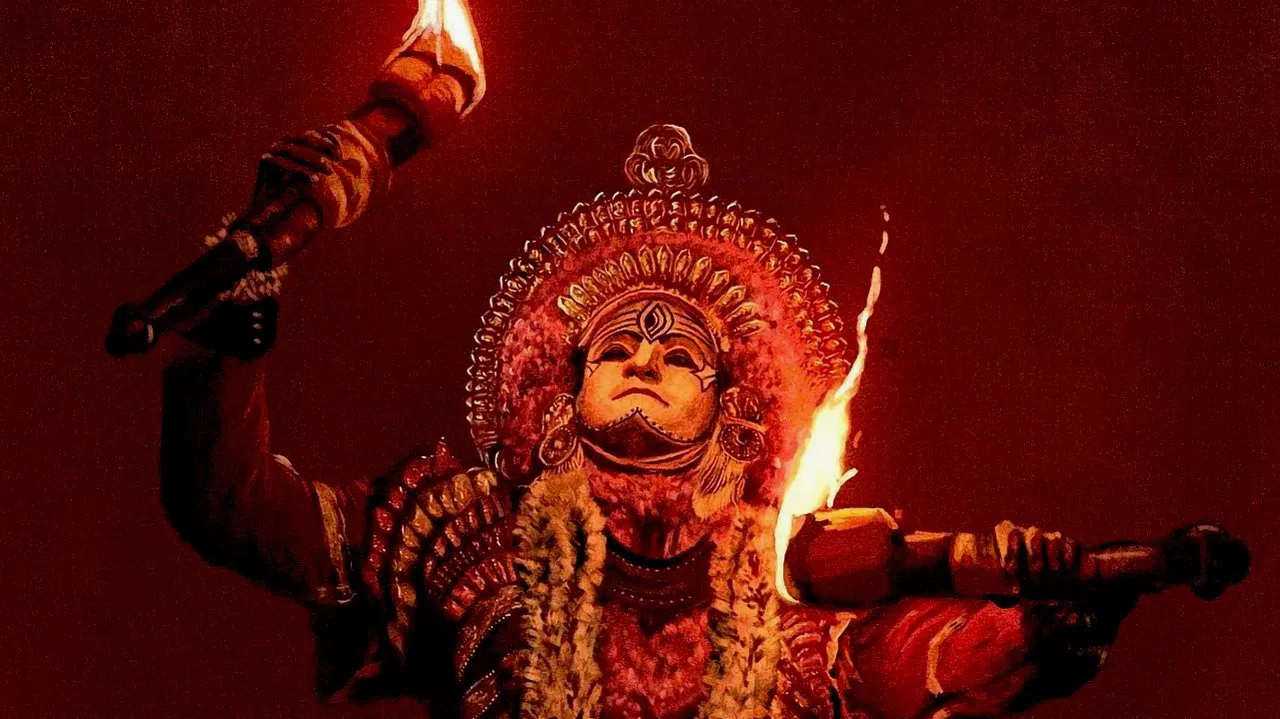
The Scream of the SoilIn the age of the algorithmic blockbuster, where "content" is engineered in boardrooms to maximize four-quadrant appeal, Rishab Shetty’s *Kantara* (2022) arrives like a fever dream from a forgotten world. It is a film that does not ask for your attention; it seizes it by the throat, dragging you into the mud and mist of the Tulu Nadu forests. This is not merely a regional action-thriller; it is a primal scream of folklore, a visually intoxicating collision of the divine and the desperate that reminds us why cinema, at its best, is a ritual in itself.

Shetty, who directs and stars as the protagonist Shiva, crafts a visual language that is earthy and tactile. You can practically smell the damp earth and the smoke of the ritual fires. The cinematography by Arvind S. Kashyap does not just capture the landscape; it anthropomorphizes it. The forest is not a passive backdrop but a living, breathing entity—a "Kantara" (mysterious forest)—that watches, waits, and eventually judges. The sound design is equally oppressive and magnificent, blending the guttural cries of the *Bhoota Kola* performers with the silence of the deep woods, creating an atmosphere where the veil between the human and the spirit world feels terrifyingly thin.
At its heart, *Kantara* is a sophisticated study of conflict—not just the obvious man-versus-nature trope, but the internal war between heritage and hedonism. Shiva is an unlikely hero: a rebellious, hot-headed vagabond who rejects the spiritual burden of his ancestors. He runs from the legacy of the *Daiva* (demi-god), preferring the numbness of alcohol and brawls to the terrifying clarity of possession. His journey is not about "saving the world" in the Marvel sense, but about surrendering his ego to a force larger than himself. The film brilliantly juxtaposes his chaotic masculinity against the stoic, bureaucratic authority of the forest officer, Murali. Their clash is the friction point between modern law and ancient tradition, neither fully right nor fully wrong, until a greater, supernatural truth renders their squabbles insignificant.
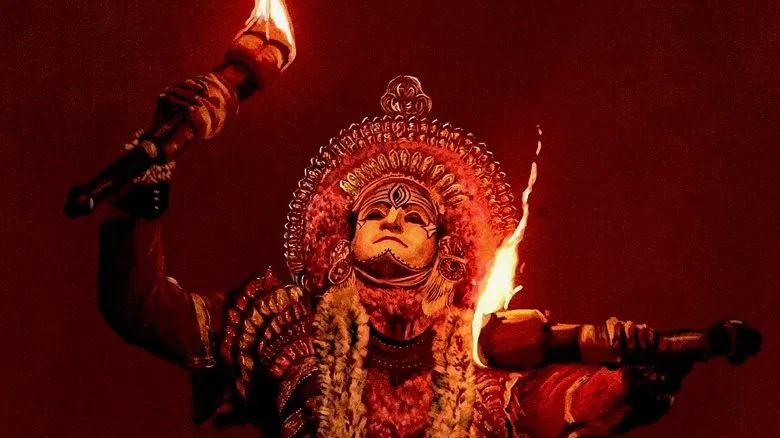
The film’s climax is perhaps one of the most visceral sequences in recent Indian cinema. It is not an action scene; it is a spiritual event. When the *Guliga Daiva* finally manifests, the transformation is total. Shetty’s performance dissolves into something animalistic and divine, bridging the gap between a man’s rage and a god’s judgment. This is where the film transcends its genre trappings. It stops being a story about land rights and becomes a theological thunderbolt about the consequences of breaking a sacred covenant. The "scream" here is not just of anger, but of a culture asserting its existence against the erasing tide of modernity.
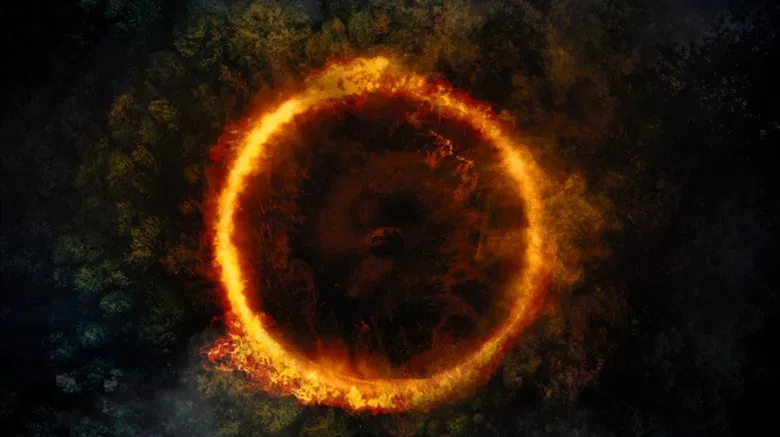
*Kantara* succeeds because it refuses to sanitize its folklore for a global audience. It demands you meet it on its own terms, within its own specific cultural geography. It is a potent reminder that the most universal stories are often the most intensely local. In a cinematic landscape cluttered with plastic superheroes, Rishab Shetty has given us a hero made of mud, blood, and fire—and the result is nothing short of transcendent.