The Gravity of a Grumpy ManIn the landscape of modern cinema, where irony often shields us from sincerity and franchises are built on the bedrock of cynicism, *A Man Called Otto* arrives like a handwritten letter from a bygone era. Directed by Marc Forster and adapted from Fredrik Backman’s beloved novel (and its 2015 Swedish adaptation, *A Man Called Ove*), the film risks being dismissed as merely a vehicle for Tom Hanks—America’s Dad playing against type. Yet, to view it solely as a star vehicle is to miss the quieter, more desperate frequency on which it broadcasts. This is not just a story about a curmudgeon learning to love; it is a meditation on the suffocating weight of grief and the intrusive, messy necessity of community.
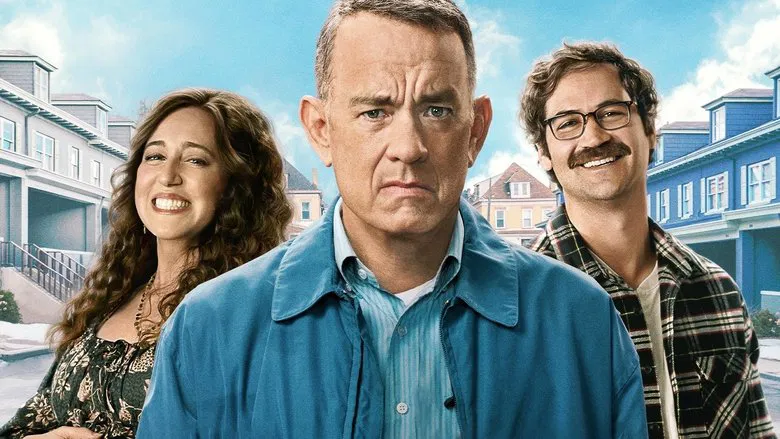
Forster, a director who has oscillated between the intimate (*Monster’s Ball*) and the chaotic (*World War Z*), here chooses a visual language of stark contrasts. The present day is rendered in a palette of slate greys and winter blues, reflecting Otto’s internal frost. The camera often traps Hanks in static, symmetrical frames, emphasizing his rigid adherence to rules and his self-imposed isolation. He is a man who measures his life in inches of rope and properly sorted recyclables. These scenes are sharply juxtaposed with flashbacks bathed in a golden, almost ethereal warmth, where a younger Otto (played with tender awkwardness by Hanks' real-life son, Truman) courts his late wife, Sonya. The visual dichotomy is not subtle, but it is effective: it physically manifests the ghost that haunts Otto. He is not living; he is merely waiting to join the past.
The film’s emotional anchor lies in the friction between Otto’s desire for oblivion and the world’s refusal to let him go. The narrative structure is built around a series of grimly comic interruptions. In one pivotal sequence, Otto prepares a noose in his living room, a scene played with a chilling procedural efficiency that underscores his engineering background. Just as he steps off the ledge, he is interrupted by the chaotic arrival of new neighbors, Marisol (a luminous Mariana Treviño) and her husband, who are hopelessly inept at parking their trailer.

This moment defines the film’s thesis: life is what happens when your plans to die are inconvenienced by other people. Treviño’s Marisol is the unstoppable force to Otto’s immovable object. She refuses to read the subtext of his silence, forcing him into the role of driver, babysitter, and reluctant grandfather. Their chemistry transforms what could have been a maudlin exercise into a genuine study of human connection.
However, the film is not without its hollow notes. The script occasionally sands down the rougher edges of the source material, opting for a Hollywood sheen that makes Otto’s eventual redemption feel inevitable rather than earned. The "villains"—a caricature of a real estate conglomerate—feel like cartoons dropped into a drama, distracting from the far more compelling internal antagonist: Otto’s own broken heart.

Ultimately, *A Man Called Otto* succeeds because it understands that grief is not a problem to be solved, but a condition to be carried. Hanks delivers a performance of remarkable restraint, communicating decades of sorrow in the set of his jaw and the slump of his shoulders. When the ice finally breaks, it doesn’t shatter; it melts, slow and messy. In a cinema culture obsessed with saving the universe, Forster reminds us that saving a single, stubborn life is a heroism all its own.