✦ AI-generated review
Grief at Supersonic Speed
It is a peculiar irony that the most emotionally resonant blockbuster of the year features a neon-blue extraterrestrial and a man with a mustache the size of a bicycle handle. Jeff Fowler’s *Sonic the Hedgehog 3* arrives not merely as a continuation of a successful series, but as a surprisingly somber meditation on loss, wrapped in the kinetic, candy-colored shell of a Saturday morning cartoon. If the first film was about finding a home, and the second about finding a purpose, this third entry is about the suffocating weight of the past—and the distinct ways we choose to carry it.
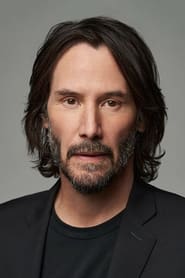
Visually, Fowler continues to refine a specific aesthetic that I call "suburban surrealism," where the banality of Green Hills, Montana, clashes with the hyper-digital velocity of its non-human inhabitants. However, the film introduces a new, darker texture with the arrival of Shadow, voiced with a profound, gravelly melancholy by Keanu Reeves. The animation team deserves credit for the shift in visual language whenever Shadow is on screen; the color palette drops from vibrant azures and cherry reds to bruised purples and cold, industrial grays. The sequences aboard the Space Colony ARK are rendered with a sterility that feels less like a playground and more like a tomb, effectively communicating the isolation that defines the antagonist’s existence.
At the narrative’s center is a mirror image. Sonic (Ben Schwartz) is the hedgehog who found a family; Shadow is the hedgehog who watched his die. The film adapts the tragic backstory of Maria Robotnik—a storyline infamous in gaming circles—with a surprising amount of grace. Instead of shying away from the death of a child (a daring move for a PG rating), Fowler leans into the trauma. Shadow is not merely "evil" for the sake of plot mechanics; he is a creature frozen in a state of mourning. Reeves plays him not as a villain, but as a ghost haunting the living world, his monotone delivery betraying a heart calcified by grief.
Counterbalancing this heaviness is the chaotic brilliance of Jim Carrey, performing what may be his swan song in the realm of physical comedy. Taking on the dual roles of the manic Dr. Robotnik and his grandfather, Gerald, Carrey offers a masterclass in separating ego from intellect. His performance is a high-wire act, teetering between genuine menace and Looney Tunes elasticity. Yet, even in his absurdity, Carrey reinforces the film’s central thesis: that trauma is a hereditary disease. Gerald’s grief curdled into madness, infecting his grandson decades later. The contrast between the Robotnik legacy of revenge and the Wachowski (Sonic’s human family) legacy of care forms the film’s moral spine.
The narrative does occasionally buckle under the weight of its own exposition, particularly when it halts the momentum to explain the "Project Shadow" lore. There are moments where the digital spectacle threatens to numb the senses, a common ailment in modern blockbusters. However, the film always manages to ground itself back in character dynamics. The climax is not resolved solely through a punch, but through an emotional breakthrough—a recognition of shared pain.
*Sonic the Hedgehog 3* transcends the limitations of the "video game adaptation" label. It suggests that even in a world defined by impossible speed, one cannot outrun grief; one must eventually stop, turn around, and face it. In doing so, Fowler has crafted a piece of pop cinema that respects the intelligence of its young audience and the nostalgia of its older one, proving that a heart beats loudly beneath the digital fur.