The Reasonable Man in an Unreasonable WorldThere is a specific melancholy that accompanies the aging of a national jester. For decades, Cem Yılmaz has been the kinetic engine of Turkish humor—a man whose rapid-fire delivery and physical plasticity defined the comedic rhythm of a generation. In *CMXXIV*, the Roman numerals in the title suggest something imperial, a timestamp carved into stone. Yet, what Yılmaz delivers is not a monument to his own grandeur, but a surprisingly intimate, occasionally "grumpy" negotiation with mortality. This is not the young juggler of *Bir Tat Bir Doku*; this is a maestro slowing the tempo to ensure the audience hears every note of his grievance.
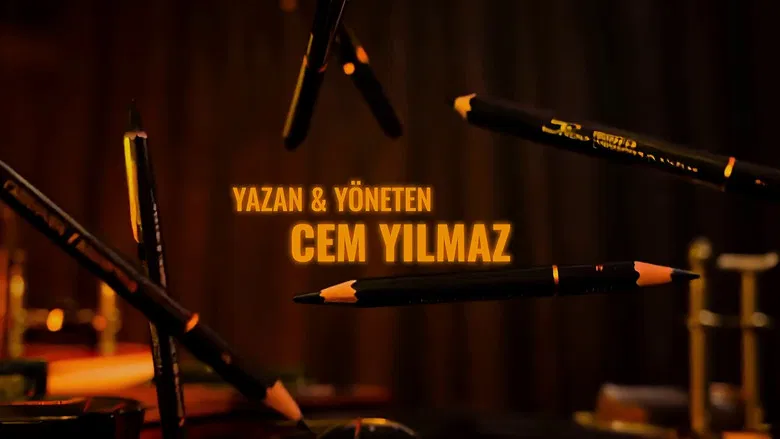
Visually, Yılmaz has stripped away the excess. The stage is darker, the atmosphere more confessional. He no longer needs to sprint across the platform to command attention; he holds the room with the gravitational pull of his legacy. The director-performer relies heavily on the "Makul İnsan" (The Reasonable Person) persona—a rhetorical device where he positions himself as the last sane observer in a society that has quietly unraveled. His visual language is one of exasperation: the widening eyes, the paused silence, the distinct hand gestures that have become as iconic as the punchlines themselves. He treats the stage not as a performance space, but as a living room where he is hosting a conversation that just happens to be a monologue.

The heart of *CMXXIV* beats in its vulnerability. While the special covers his trademark observational ground—the absurdity of regretful tattoos, the performative nature of social media—the material is anchored by the reality of aging. Yılmaz does not shy away from his failing eyesight or the indignities of health check-ups; instead, he weaponizes these physical failings into a critique of the "ageless" digital avatar culture surrounding him. There is a palpable friction here between the "Old Turkey" he represents—analog, face-to-face, slightly abrasive—and the sanitized, hypersensitive new world he finds himself navigating. When he tackles "cancel culture" or the critiques of his "masculine" language, it doesn't play as a reactionary defense, but rather as a plea for context in an era that demands binary purity.

Ultimately, *CMXXIV* is a transitional work that cements Yılmaz’s status as the "founding father" of the modern Turkish stand-up circuit. He is no longer competing for the crown; he is checking to see if it still fits. The laughter he evokes now is less manic and more knowing—a communal acknowledgment of shared history and shared fatigue. It is a mature, deliberate piece of cinema verité that proves while the jester may move slower, his mirror still reflects the society's distortions with uncomfortable, hilarious precision.