✦ AI-generated review
The Architecture of Spectacle
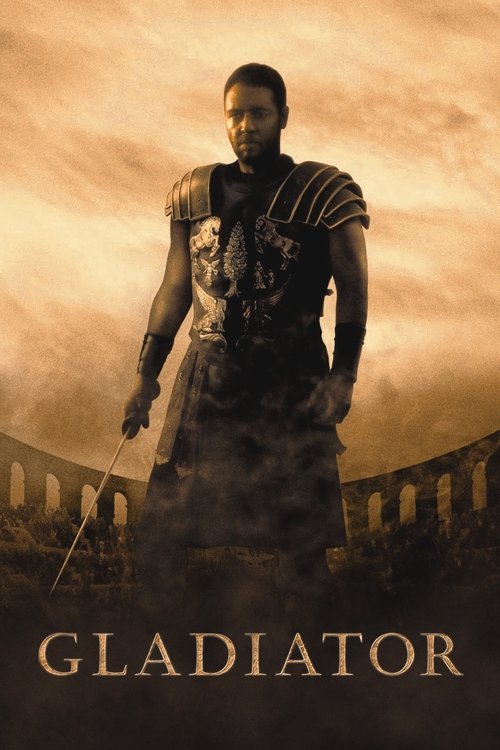
When Ridley Scott released *Gladiator* in the spring of 2000, the "sword-and-sandal" epic was less a genre and more of a cinematic ruin, a relic of Hollywood’s mid-century excess that had gathered dust since *Cleopatra* and *Spartacus*. Scott did not merely sweep away the cobwebs; he reconstructed the Colosseum with a modern, brutalist sensibility. While often remembered for its quotable machismo and Hans Zimmer’s thunderous score, the film’s true endurance lies in its astute examination of the politics of entertainment. It posits the arena not just as a setting for violence, but as the primary stage for political legitimacy—a concept that feels uncomfortably prescient today.
Scott, a director whose background in art direction defines his filmography, approaches Rome less as a historian and more as an atmospheric painter. The film is obsessed with texture. We feel the bite of the blue-tinted winter air in Germania and the suffocating heat of the Zucchabar slave pits. Scott utilizes a "shutter angle" technique during combat—cutting frames to create a jerky, strobe-like disorienting effect—that strips war of its romanticism and renders it as chaotic, visceral panic. This is not the clean, technicolor Rome of the 1950s; it is a world of soot, sweat, and flying dirt. The visual motif of the film is floating particulate matter: snow in the forest, ash in the air, and, famously, the gentle caress of wheat in the afterlife. These elements ground the operatic story in a tactile reality, reminding us that for all the imperial grandeur, the empire is built on blood and soil.
At the narrative’s heart is a binary star system of performance: Russell Crowe’s Maximus and Joaquin Phoenix’s Commodus. Crowe delivers a masterclass in physical acting, communicating the weight of his exhaustion through a stoic, brooding stillness. He is the reluctant performer, a soldier who despises the "mob" yet possesses an innate charisma that commands it. His famous roar, "Are you not entertained?", is a meta-textual indictment of the audience—both the Romans in the stands and us in the movie theater—implicating us in the bloodlust.
Contrasting him is Phoenix’s Commodus, a villain of Shakespearean complexity. While Maximus is a man of action, Commodus is a creature of perception. He is a pathetic, needy narcissist who understands that in a crumbling empire, power resides not in the Senate, but in the applause of the crowd. Phoenix plays him not with mustache-twirling glee, but with a terrifying, petulant fragility. He is the original toxic fan, desperate to be loved, destroying the very institutions he leads because they fail to validate him. The tragedy of the film is that Commodus turns the sacred governance of Rome into a reality TV show where death is the currency of approval.
Ultimately, *Gladiator* succeeds because it anchors its grandiosity in an intimate, simple desire. It is an epic about a man who topples an empire not because he wants to rule it, but because he wants to go home. The final act does not end with a political speech, but with a drift into the surreal peace of the Elysian Fields. By juxtaposing the deafening roar of the arena with the silence of the afterlife, Scott creates a film that questions the cost of glory. It suggests that while what we do in life may echo in eternity, the only thing that truly matters is the quiet earth we leave behind.