The Solitude of the SurvivorIn the sprawling, often derivative landscape of Chinese *xianxia* (immortal hero) animation, protagonists usually arrive stamped with destiny. They are boisterous, prodigiously gifted, and draped in the moral certainty of a chosen one. *A Record of a Mortal's Journey to Immortality* (2020) quietly shatters this mold. It offers us Han Li, a hero defined not by valor, but by a suffocating, pragmatic mediocrity. This is not a story of saving the world; it is a granular, often brutal study of surviving it.

Produced by Wonder Cat Animation, the series utilizes Unreal Engine and motion capture technology, a choice that initially places the viewer in a strange, hyper-real valley. In the earliest episodes, the movements can feel weightless, the faces occasionally mask-like. Yet, as the series finds its footing, this aesthetic evolves into a distinct visual language. The "uncanny" nature of the CGI begins to mirror the alienation of the cultivation world itself—a place where humanity is slowly stripped away in the pursuit of power. The action choreography, liberated from the laws of physics yet grounded in martial logic, flows with a deadly grace that traditional 2D animation rarely captures. When Han Li fights, there are no screamed attack names or flashes of ego; there is only the efficient, desperate geometry of staying alive.

The heart of the series, however, beats in its silence. Han Li is often affectionately mocked by fans as "Han the Runner" (*Han PaoPao*), a nickname that belies the tragedy of his existence. He possesses no great talent, only a mysterious green bottle that accelerates plant growth—a tool he guards with paranoid secrecy. His journey is one of profound isolation. Unlike the camaraderie-fueled adventures of its genre peers, *Mortal’s Journey* presents a universe of Darwinian cruelty. Masters betray disciples; lovers are liabilities; and kindness is a trap.
There is a haunting scene early in his sect days where Han Li realizes that his mentor, a father figure, views him merely as a vessel for harvest. The betrayal doesn't lead to a screaming match, but to a cold, internal recalibration. Han Li learns that to be a cultivator is to sever ties with the mortal warmth of the village he left behind. The series excels in these quiet moments of severance, where we watch the light of innocence leave Han Li’s eyes, replaced by a steel-gazed calculation. He becomes a "mortal" not because he lacks magic, but because he is painfully aware of his own fragility.
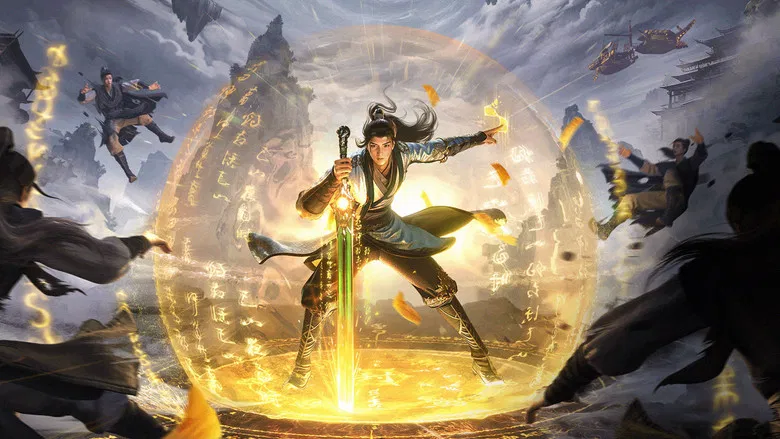
Ultimately, *A Record of a Mortal's Journey to Immortality* stands as a grim corrective to power fantasies. It suggests that immortality is not a glorious ascension, but a lonely attrition. We watch Han Li not because we expect him to conquer the heavens, but because we are terrified he won’t make it through the night. In a genre obsessed with gods, this series dares to focus on the desperate, shivering human hiding in the shadows, waiting for the right moment to strike—or to run.