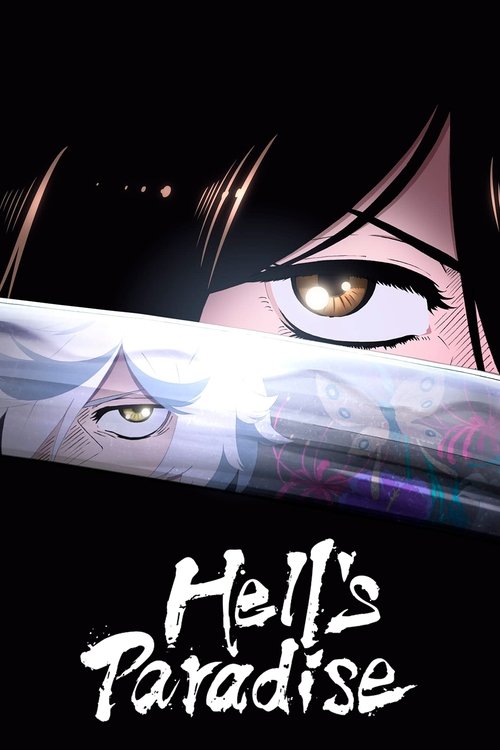
The Lotus and the BladeIn the modern landscape of animation, there is a pervasive trend toward nihilism—a "grimdark" aesthetic where suffering is the only currency. Yet, *Hell's Paradise* (2023), adapted from Yuji Kaku’s manga by the powerhouse studio MAPPA, offers a fascinating counter-thesis. It suggests that the most terrifying hell is not a place of darkness and shadow, but one of blinding, suffocating beauty. This is not merely an action series about ninjas and criminals; it is a theological thriller that interrogates the human desperation for survival against a backdrop of psychedelic horror.

The series distinguishes itself immediately through its visual language. While its contemporaries often lean into urban grit or gothic gloom, *Hell's Paradise* bathes its viewer in a sickly, vibrant luminescence. The setting—a mysterious island known as Shinsenkyo—is designed to look like a Pure Land Buddhist paradise. However, the director and animators at MAPPA utilize this imagery to create a profound sense of the uncanny. The flora is too lush, the colors too saturated, and the local wildlife—chimeras of fish with insect legs or butterflies with human faces—evoke a sense of biological wrongness.
The horror here is derived from the perversion of the sacred. The island is populated by statues of Bodhisattvas and Taoist deities that are not stone, but flesh—grinning, giggling monstrosities that dismantle the human body with the indifference of a gardener pruning a hedge. The visuals compel us to question the nature of divinity: if this is what "paradise" looks like, perhaps mortality is the safer harbor.

At the narrative’s center is Gabimaru the Hollow, a protagonist who deconstructs the archetype of the emotionless killer. Superficially, he fits the mold of the stoic assassin, yet the script quickly peels back this layer to reveal a man sustained entirely by a single, fragile tether: love. Unlike the grandiose ambitions often seen in the genre—to become a king, a hokage, or the strongest sorcerer—Gabimaru’s motivation is disarmingly domestic. He wants to return to his wife.
This humanizes the carnage. The violence, while explicit and kinetic, is never gratuitous; it is the desperate language of men and women who have been discarded by society. The relationship between Gabimaru and his executioner, Yamada Asaemon Sagiri, forms the emotional spine of the series. They are mirrors of one another—one a killer trying to reclaim his humanity, the other an executioner trying to reconcile her duty with her conscience. Their dynamic avoids cheap romance in favor of a profound, mutual recognition of burden.

Ultimately, *Hell's Paradise* stands as a meditation on the Taoist concept of the Middle Way, navigating the extremes of absolute apathy and overwhelming emotion. It posits that to survive in a world that seeks to consume you—literally and metaphorically—you must accept the contradictory nature of your own existence. It is a series that manages to be grotesque and graceful in equal measure, proving that even in a garden of atrocities, the human will to live remains the most potent force of all.