✦ AI-generated review
The Haunting of the American Dream
The history of the American television remake is a graveyard of good intentions, littered with the corpses of British sitcoms that died in translation. From the disastrous *Coupling* to the forgotten *Skins*, the Atlantic Ocean often proves too wide a gap for dry wit to cross without drowning in sentimentality. When CBS announced an adaptation of the beloved BBC series *Ghosts*, the skepticism was palpable. Yet, the 2021 iteration of *Ghosts*, developed by Joe Port and Joe Wiseman, manages a rare feat: it does not try to out-cynic its predecessor. Instead, it exorcises the British class anxiety of the original and replaces it with a distinctly American obsession—the desperate, optimistic struggle to reinvent oneself, even after death.
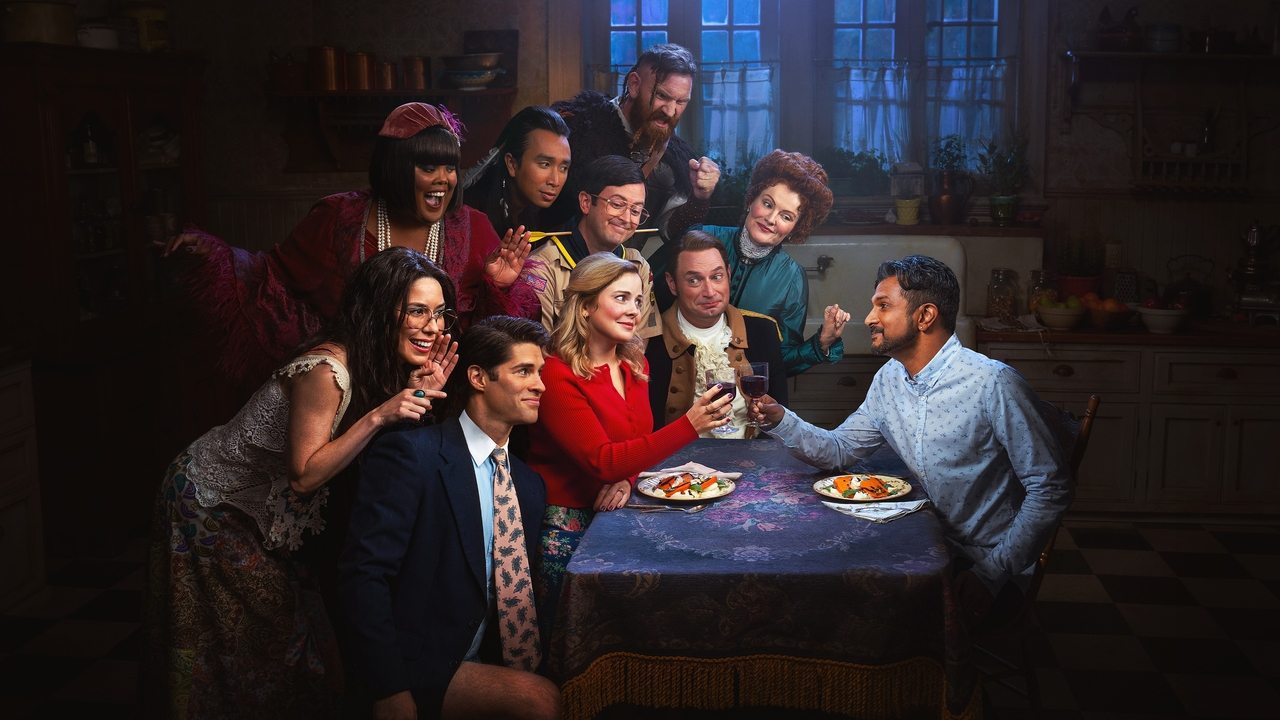
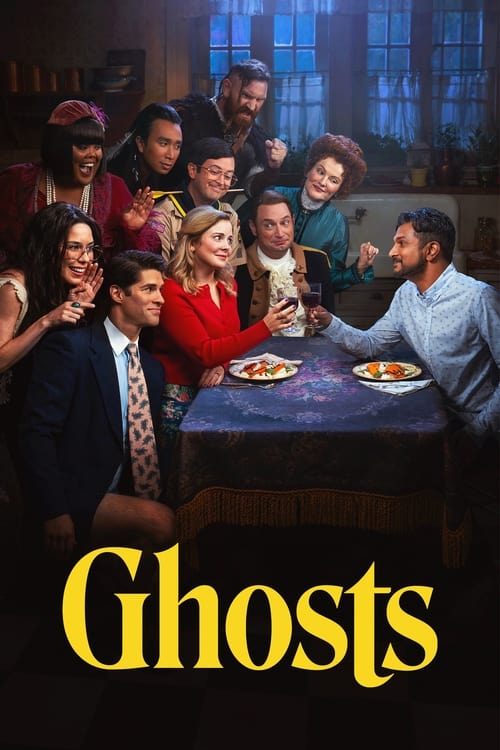
Visually, the series adheres to the bright, saturated aesthetics of the network sitcom, a choice that initially feels at odds with the gothic premise of a crumbling Hudson Valley manor. However, this visual language operates as a clever deception. By lighting the afterlife like a department store catalog, the show underscores the absurdity of its purgatory. The "lens" here is not one of shadow and horror, but of claustrophobic exposure. The ghosts—spanning a Viking explorer to a pantless 1990s finance bro—are trapped not in darkness, but in the relentless, unblinking light of the present day. The costume design does the heavy lifting of the narrative, creating a visual cacophony where a Revolutionary War coat clashes with a Jazz Age fringed dress, immediately signaling the central conflict: history is not a linear progression here, but a chaotic pile-up.
At the heart of the series lies a surprisingly tender exploration of the "found family," a trope often abused in American media but revitalized here by the permanence of the situation. In the pilot, when Samantha (Rose McIver) suffers the near-fatal fall that grants her the "sight," she isn’t entering a horror story; she is entering a chaotic roommates dispute that has lasted centuries. The standout performance comes from Brandon Scott Jones as Captain Isaac Higgintoot, a closeted Revolutionary War officer. Jones plays Isaac not just as a caricature of pompous masculinity, but as a man suffocating under two centuries of performative history. His envy of Alexander Hamilton—embodied in a recurring gag about the musical—is funny, yes, but it also speaks to the uniquely American anxiety of being left out of the narrative.
Where the British original leans into the dreary inevitability of being stuck with people you loathe, the American *Ghosts* pivots toward a more hopeful, if neurotic, hypothesis: that hell is indeed other people, but heaven might be learning to tolerate them. The relationship between Samantha and her husband Jay (Utkarsh Ambudkar) anchors this. Jay, who cannot see the spirits, represents the audience’s ideal proxy—blind faith and a willingness to engage with history he cannot touch. His enthusiastic participation (like playing Dungeons & Dragons with a dead scoutmaster he can’t see) transforms the show from a story about haunting to a story about listening.
Ultimately, *Ghosts* succeeds because it accepts its own nature as a comfort watch without sacrificing its bite. It suggests that the past isn’t something to be feared or exorcised, but something that simply needs a little attention. In a culture obsessed with moving forward, *Ghosts* makes a charming, subversive argument for standing still and listening to the dead—even if they just want to complain about the lack of good pizza.